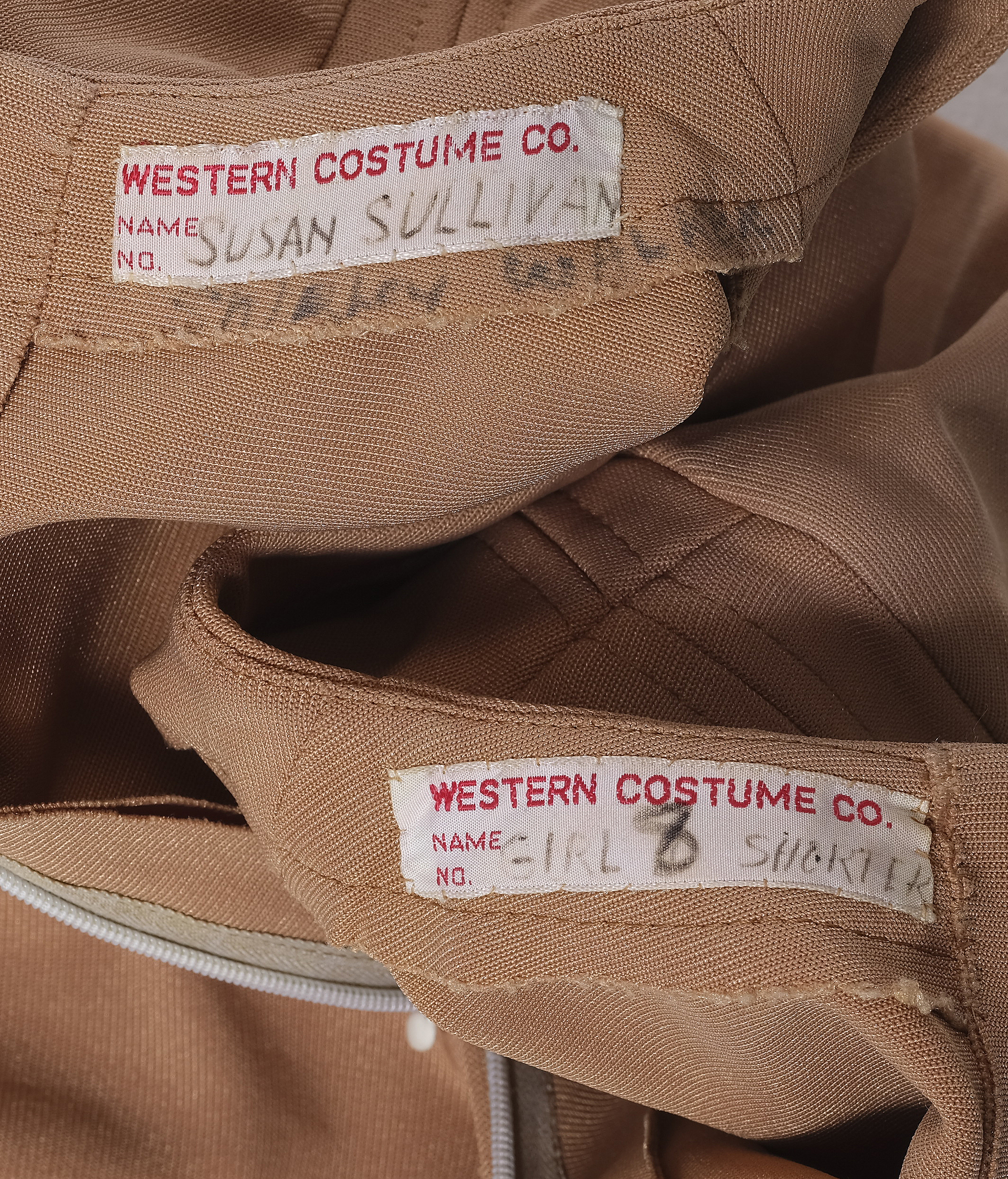
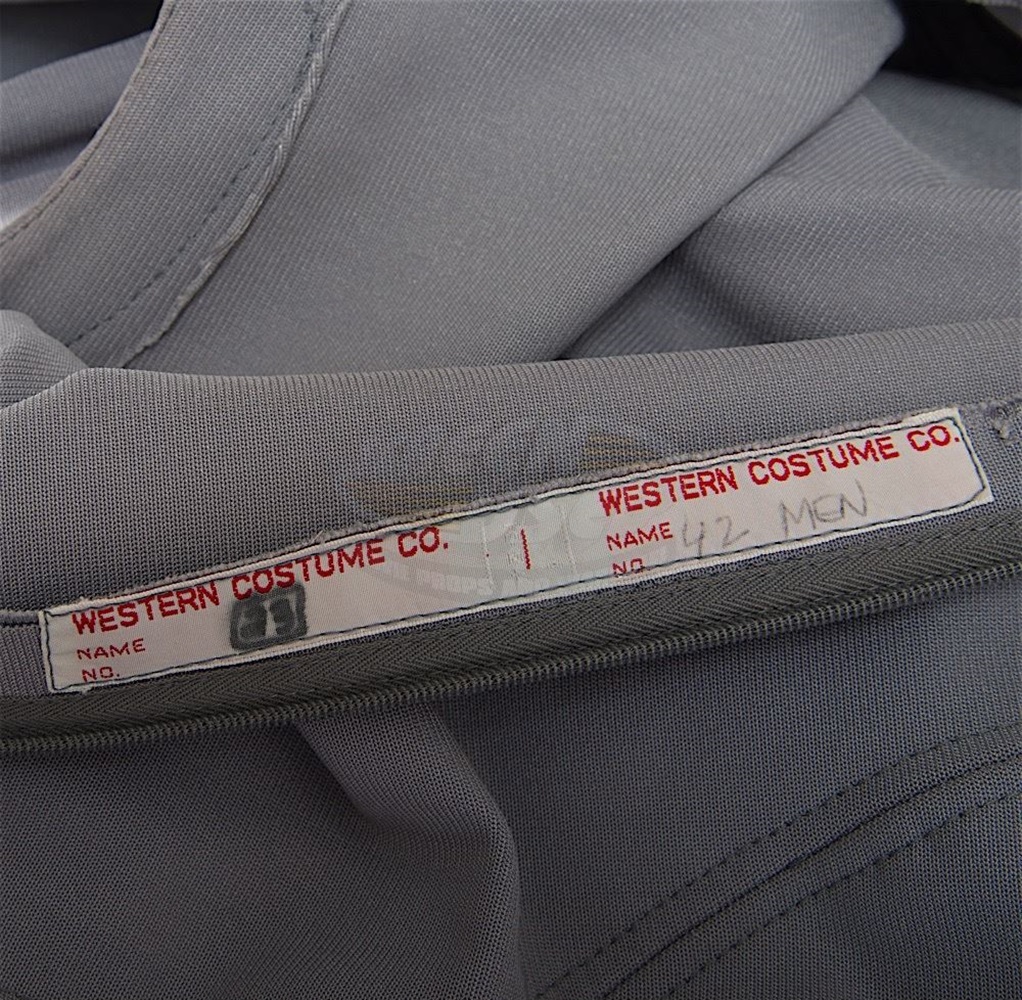
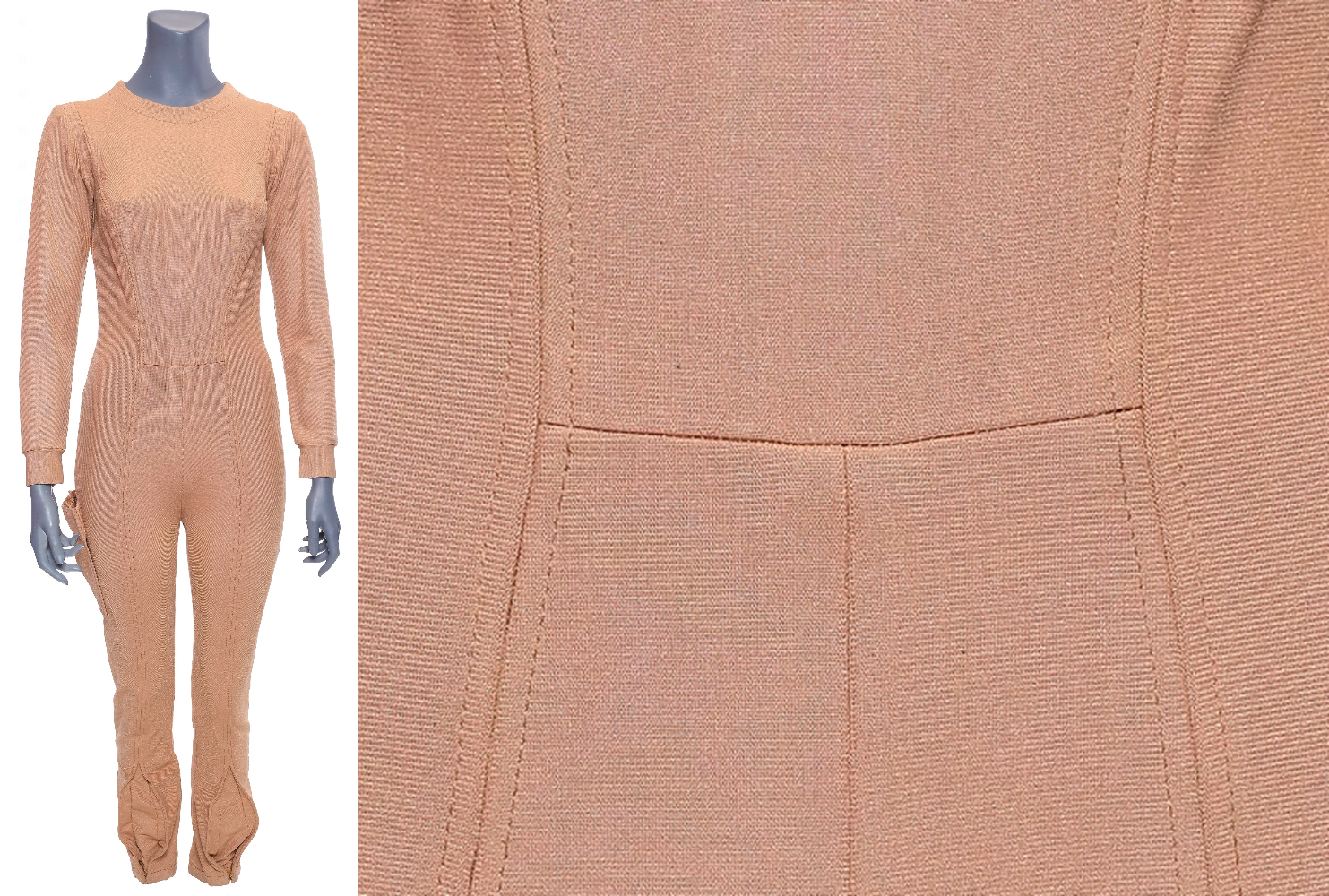
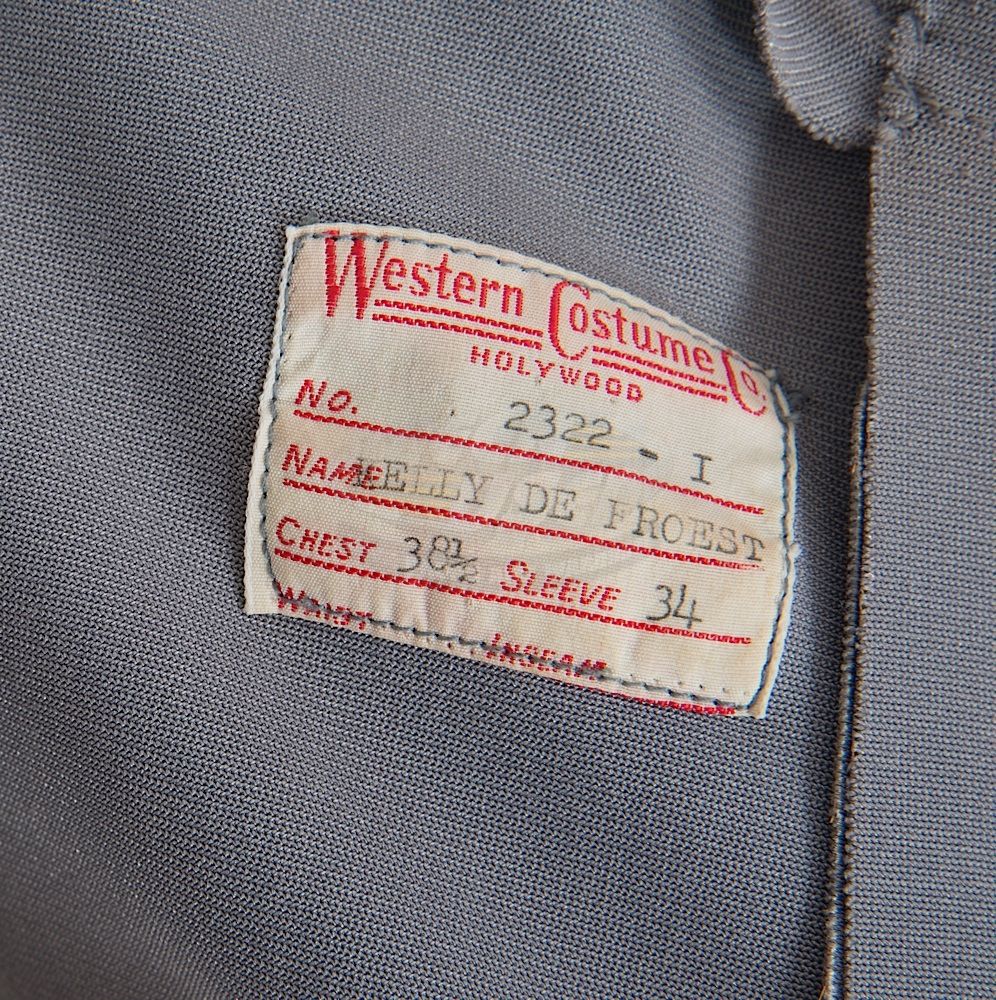
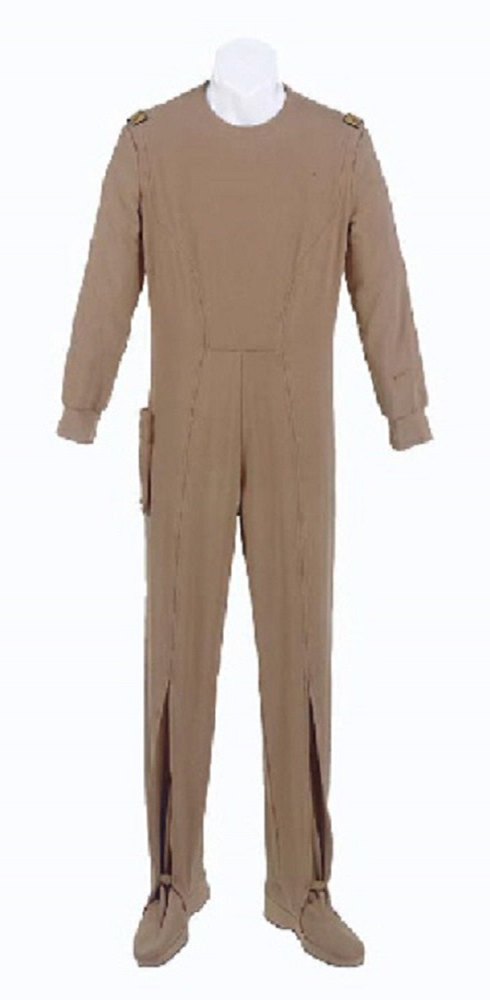
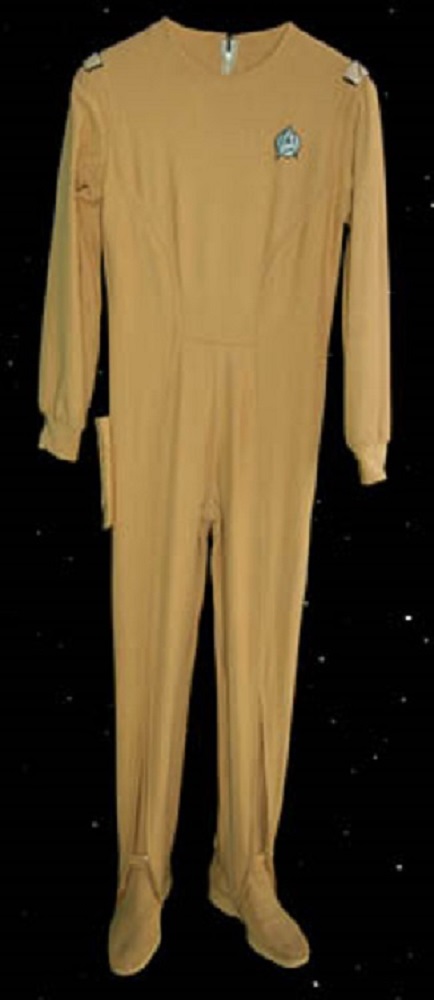
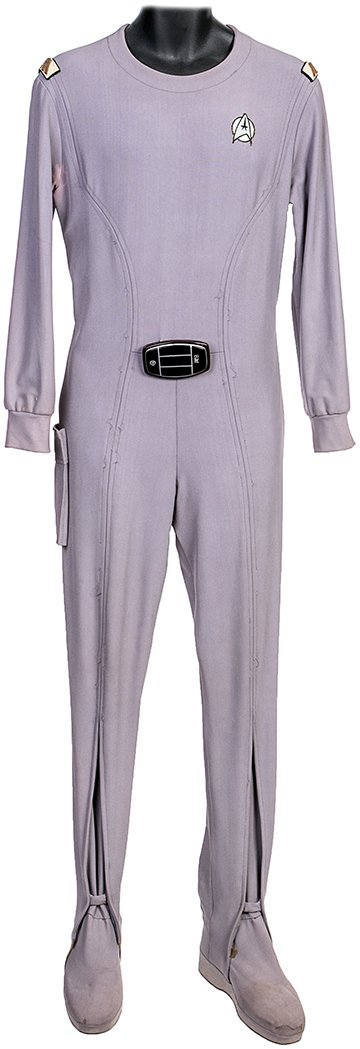
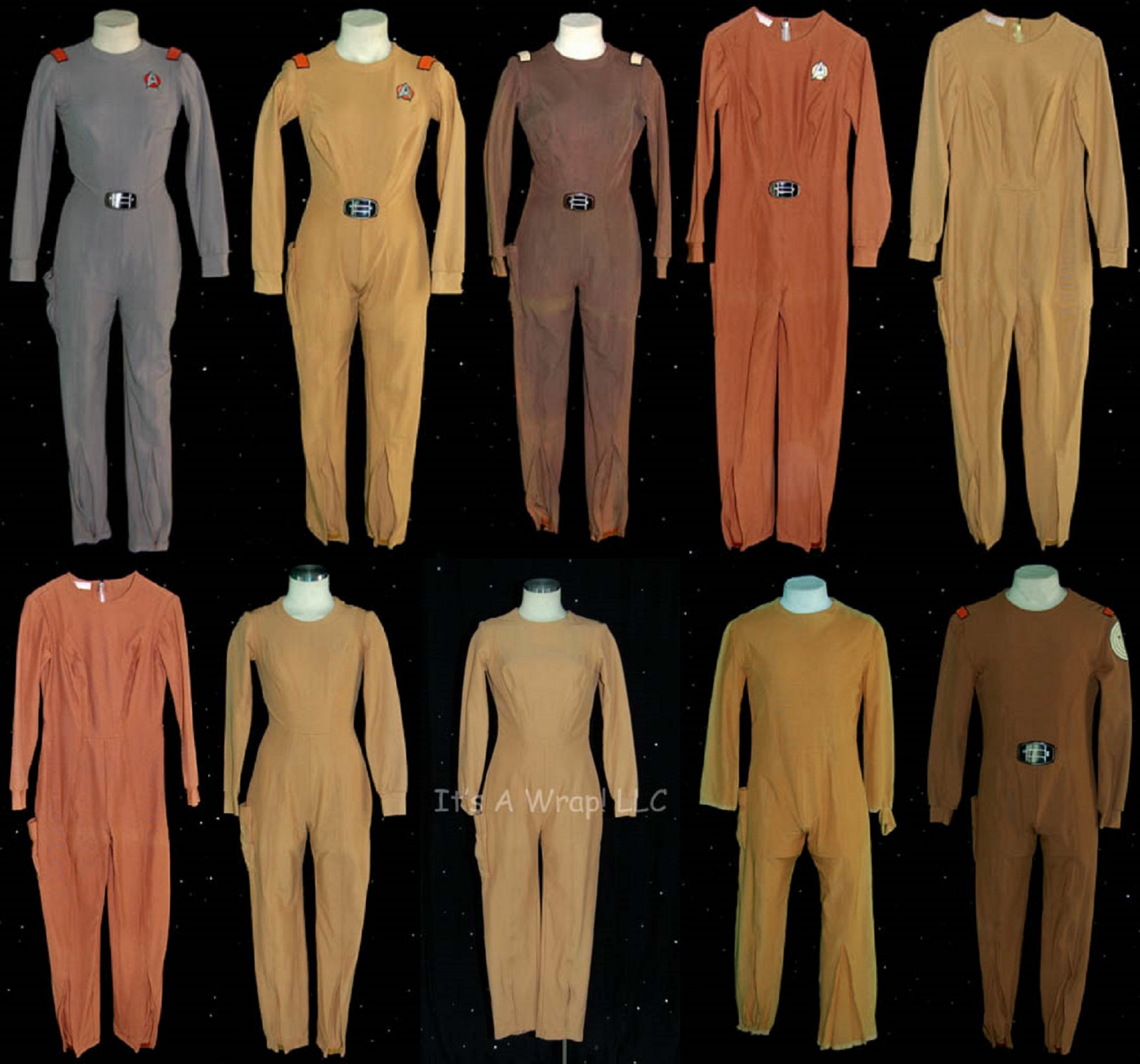
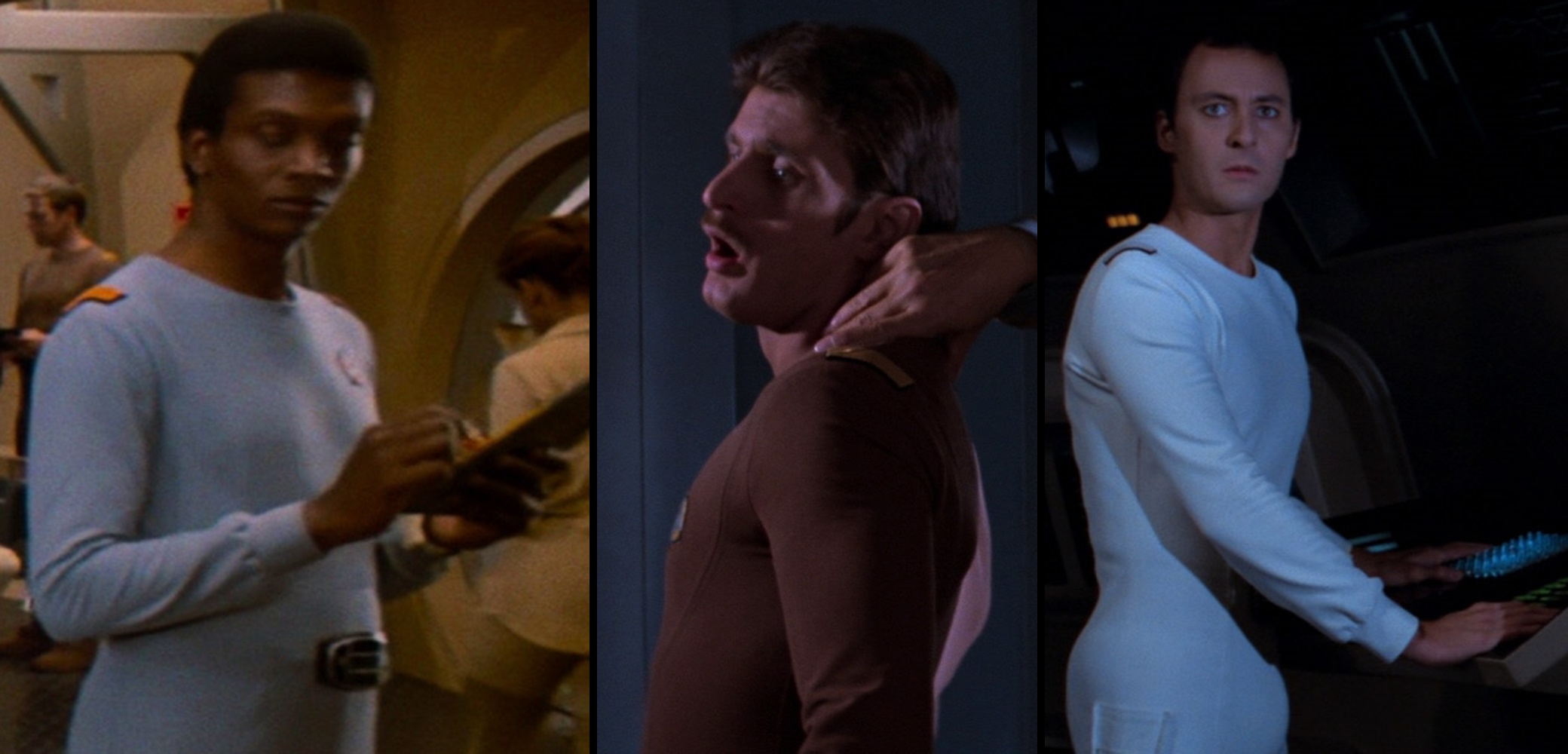
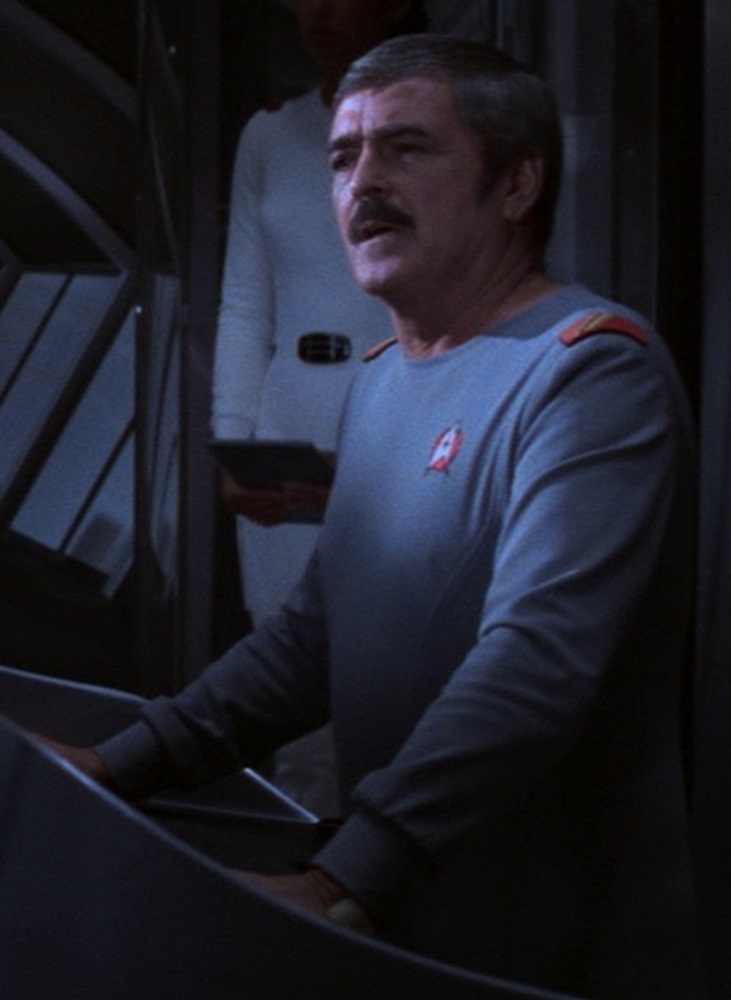
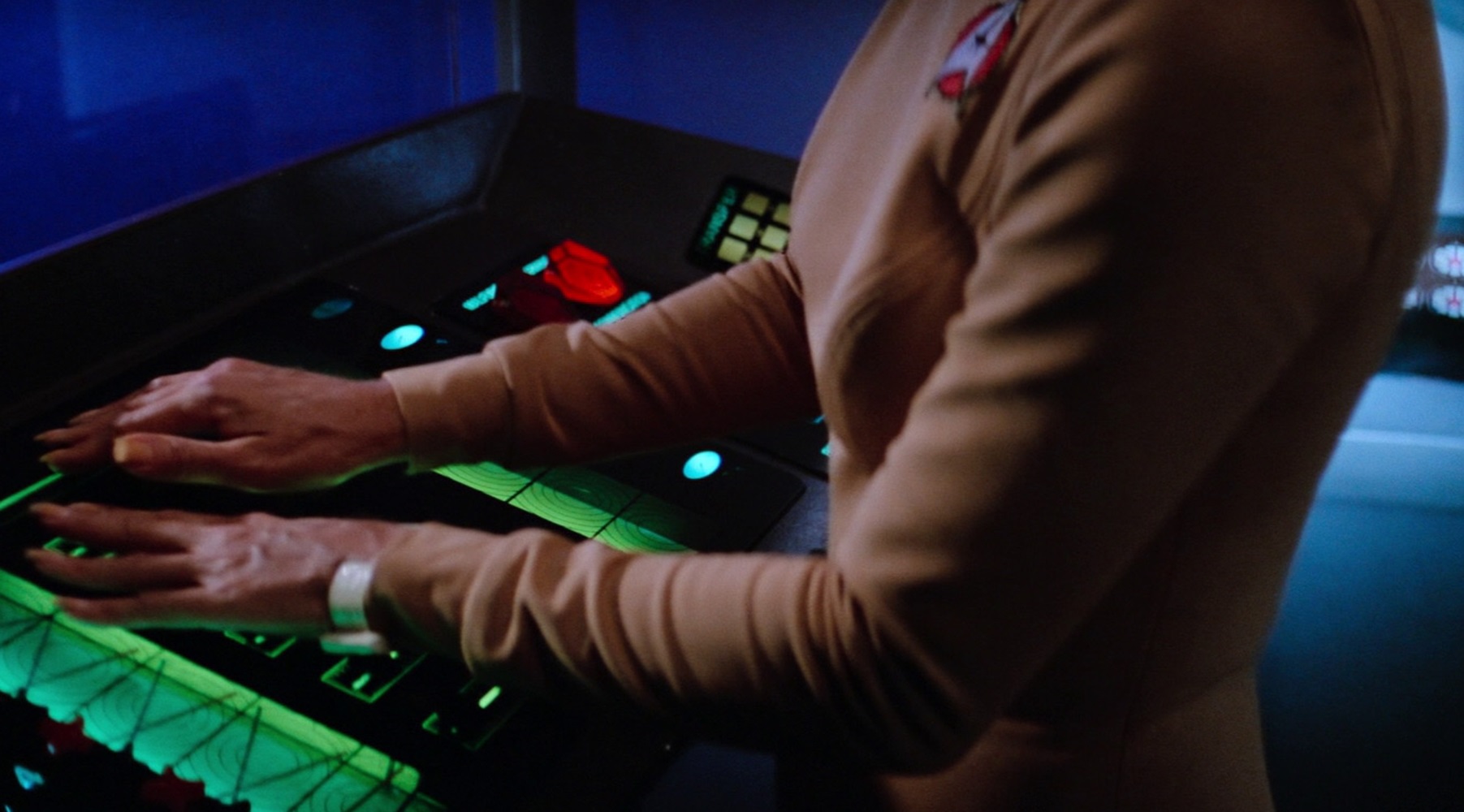
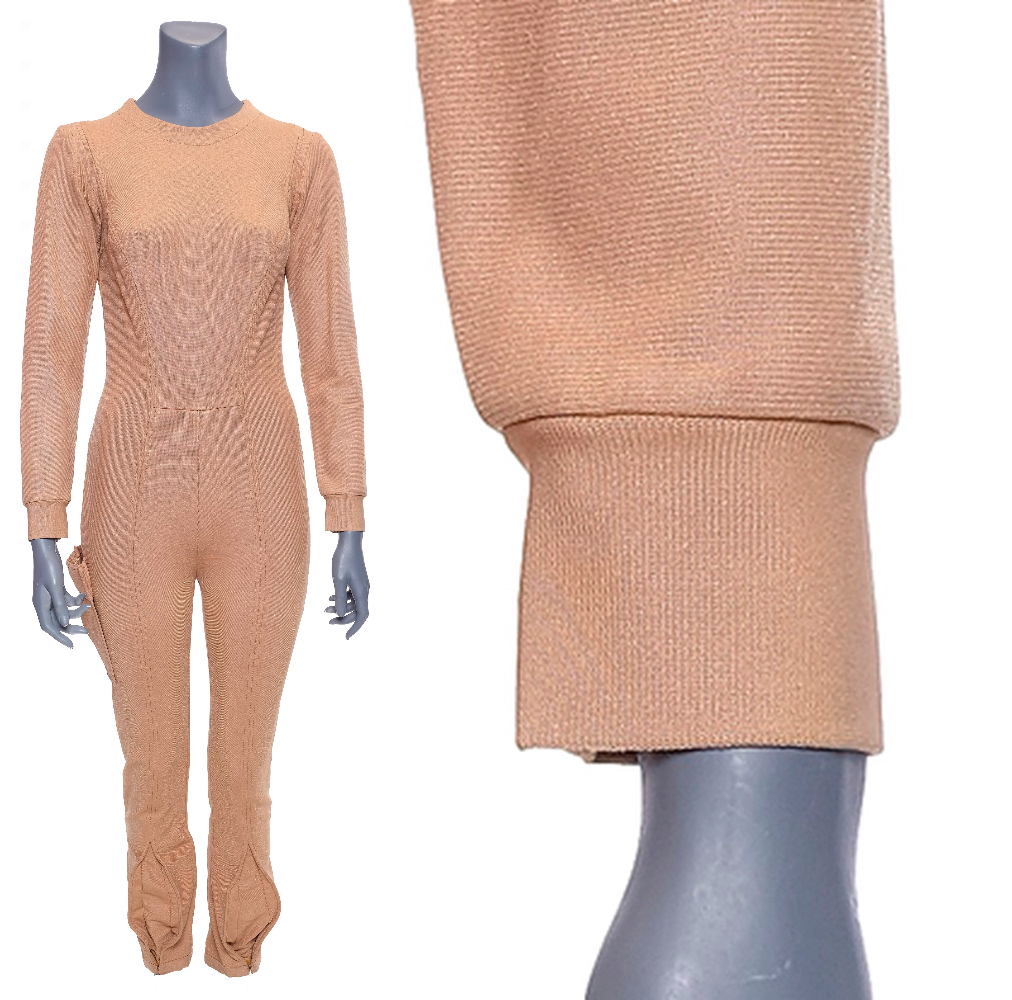
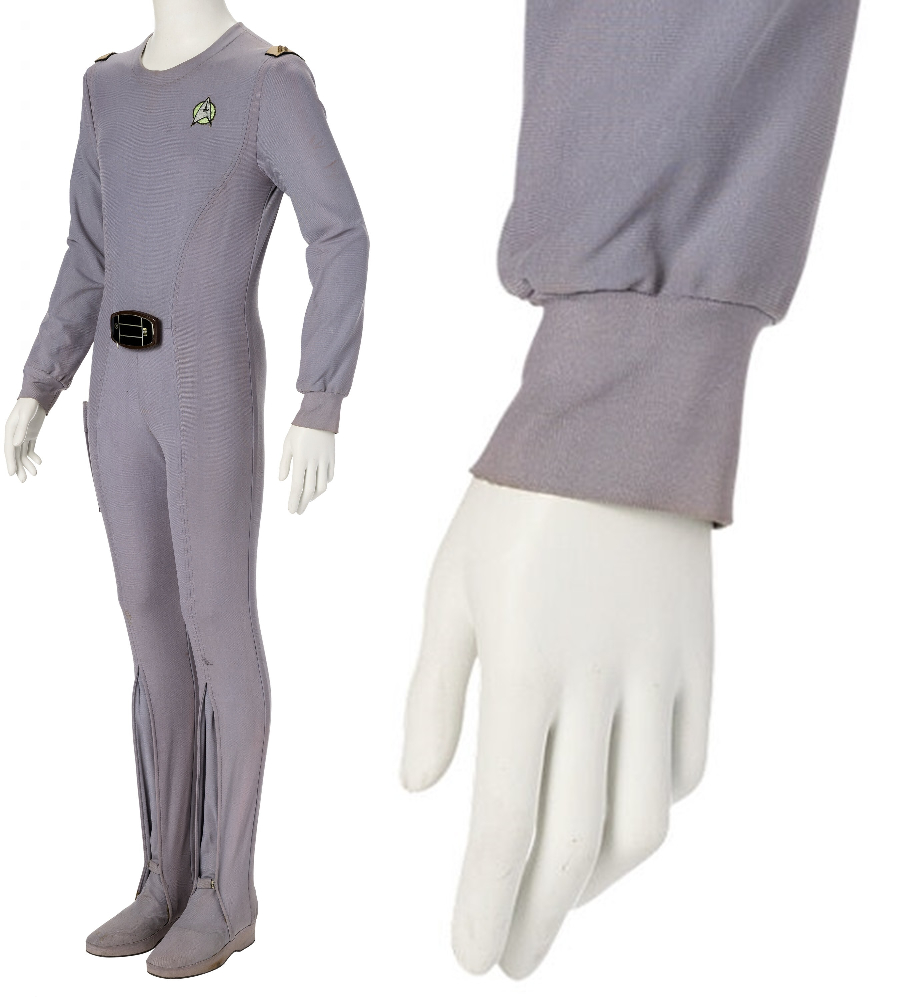
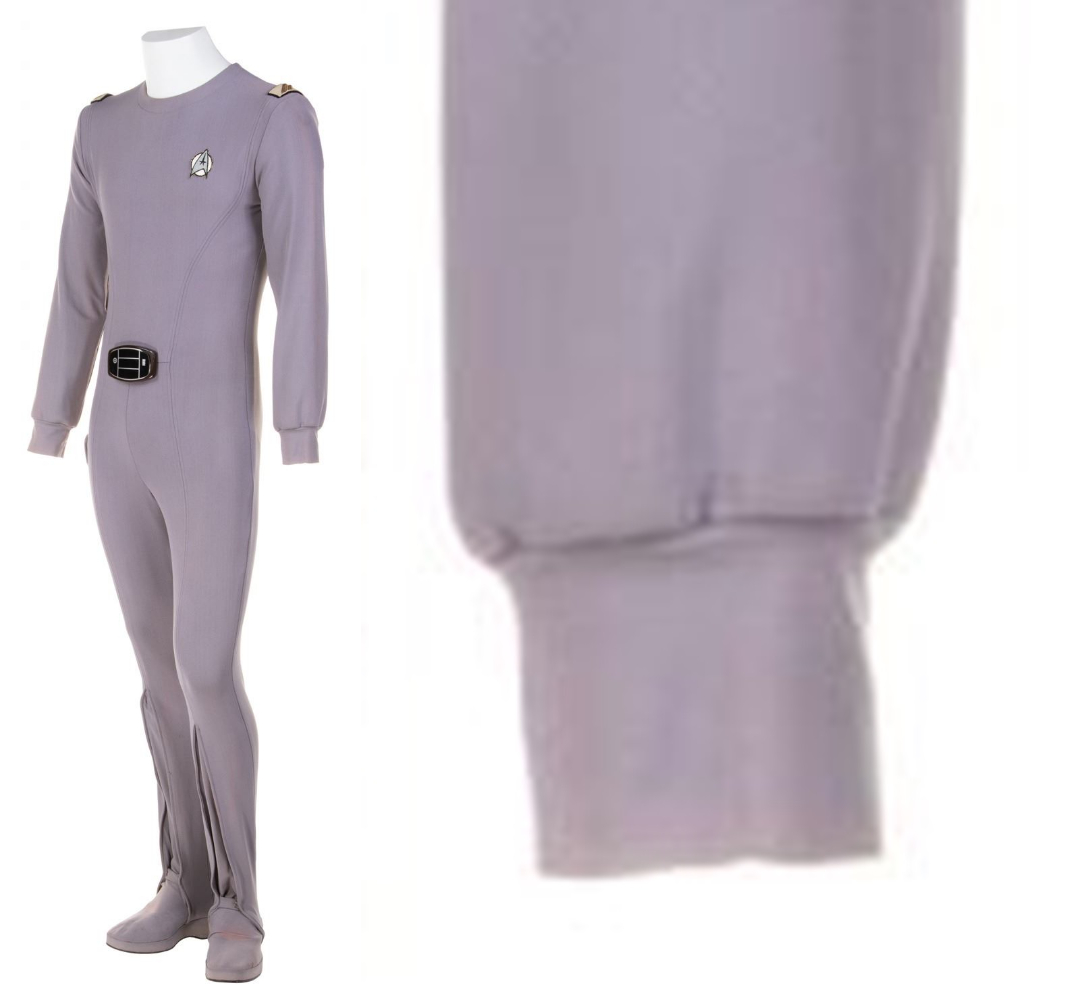
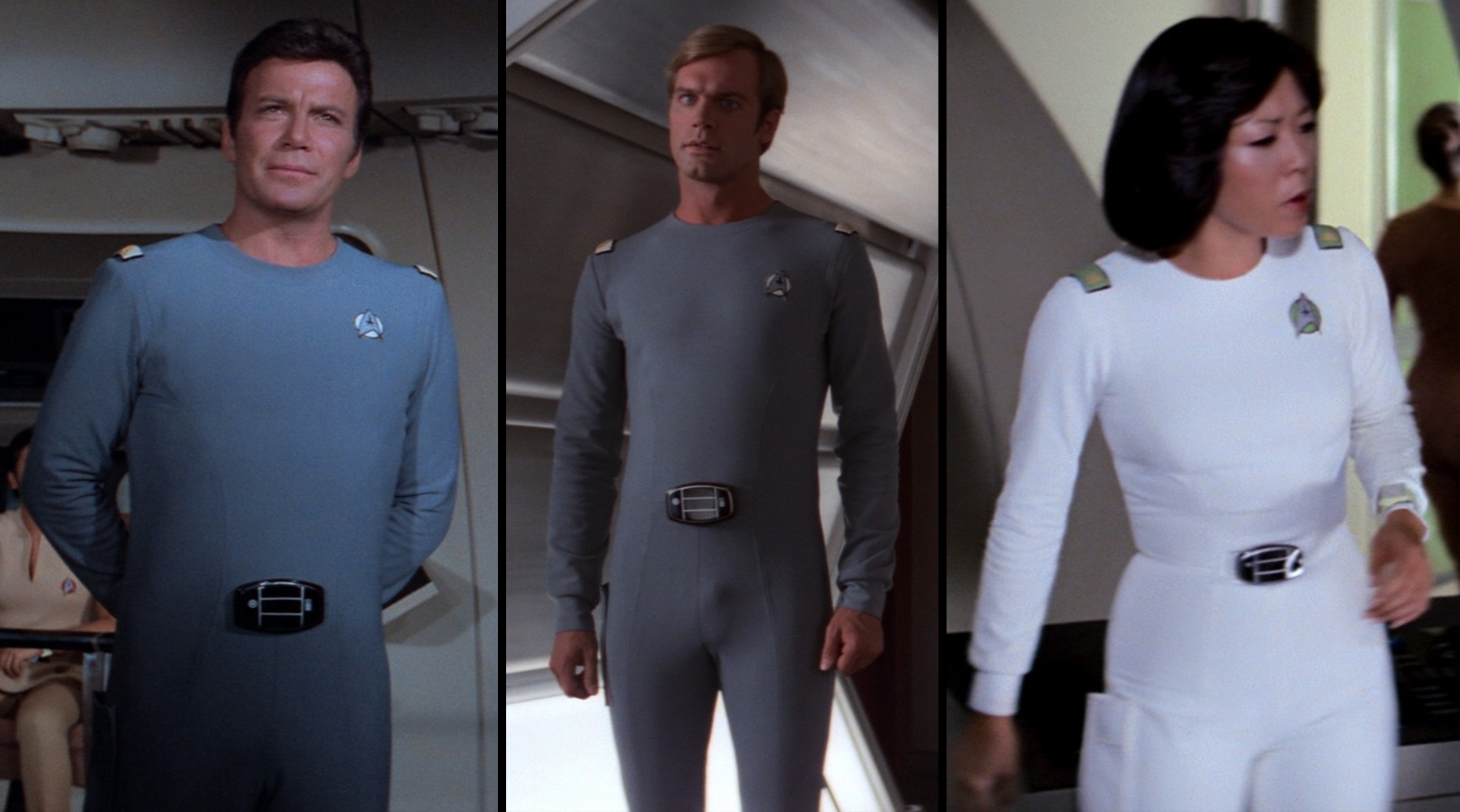
The TMP “Class D” jumpsuits were made with heavy jumbo spandex.
TMP "Class D" jumpsuit auction photos
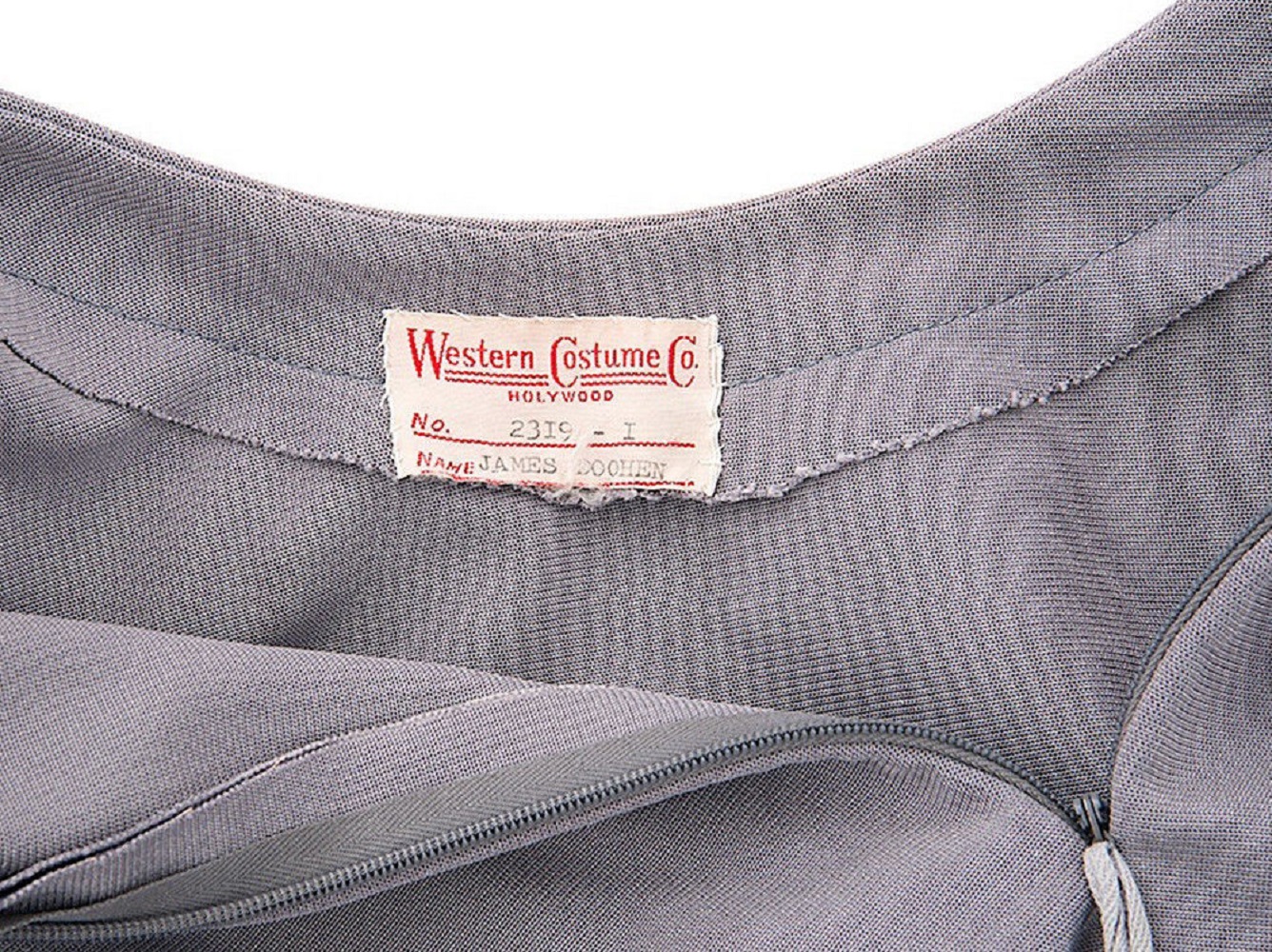
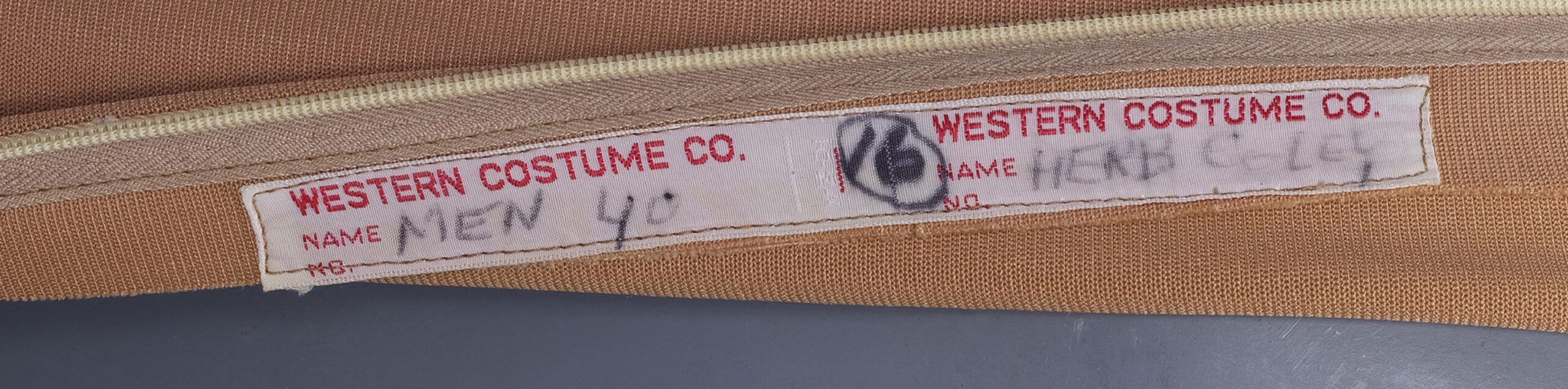
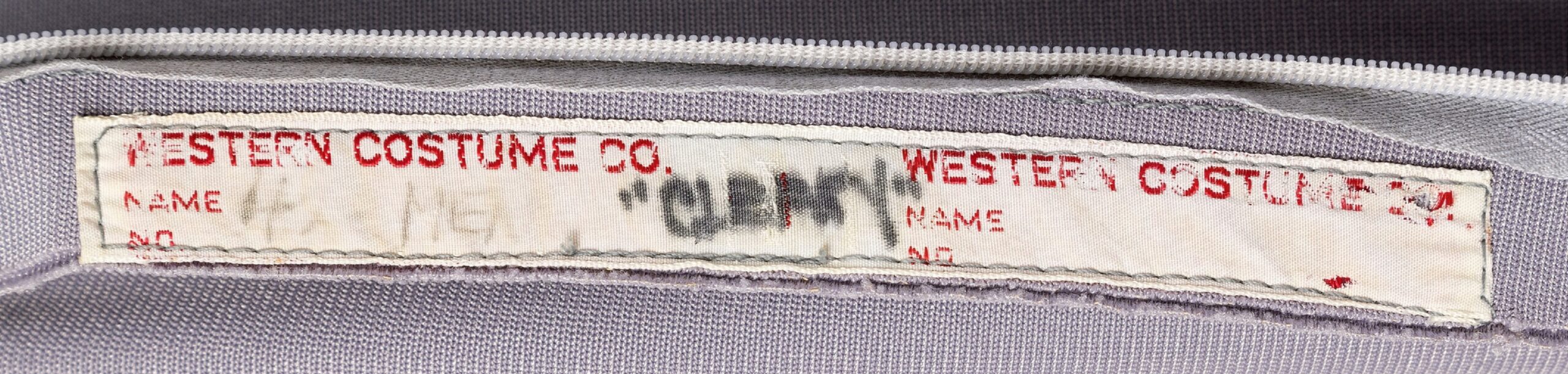
In fact, these jumpsuits were double-layered jumbo spandex, with the “shiny” sides together and the “dull” sides used for both the outside and interior.
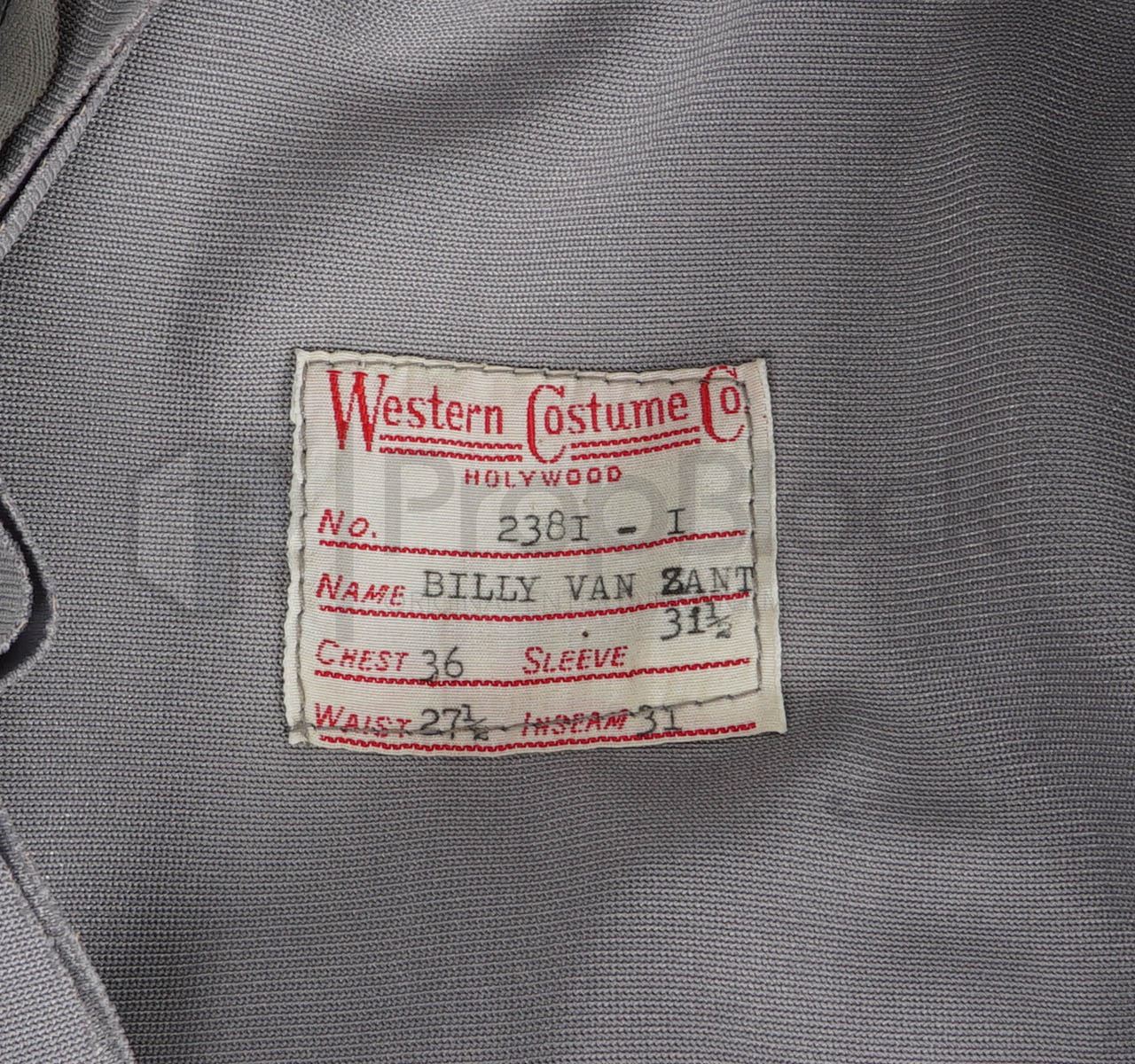
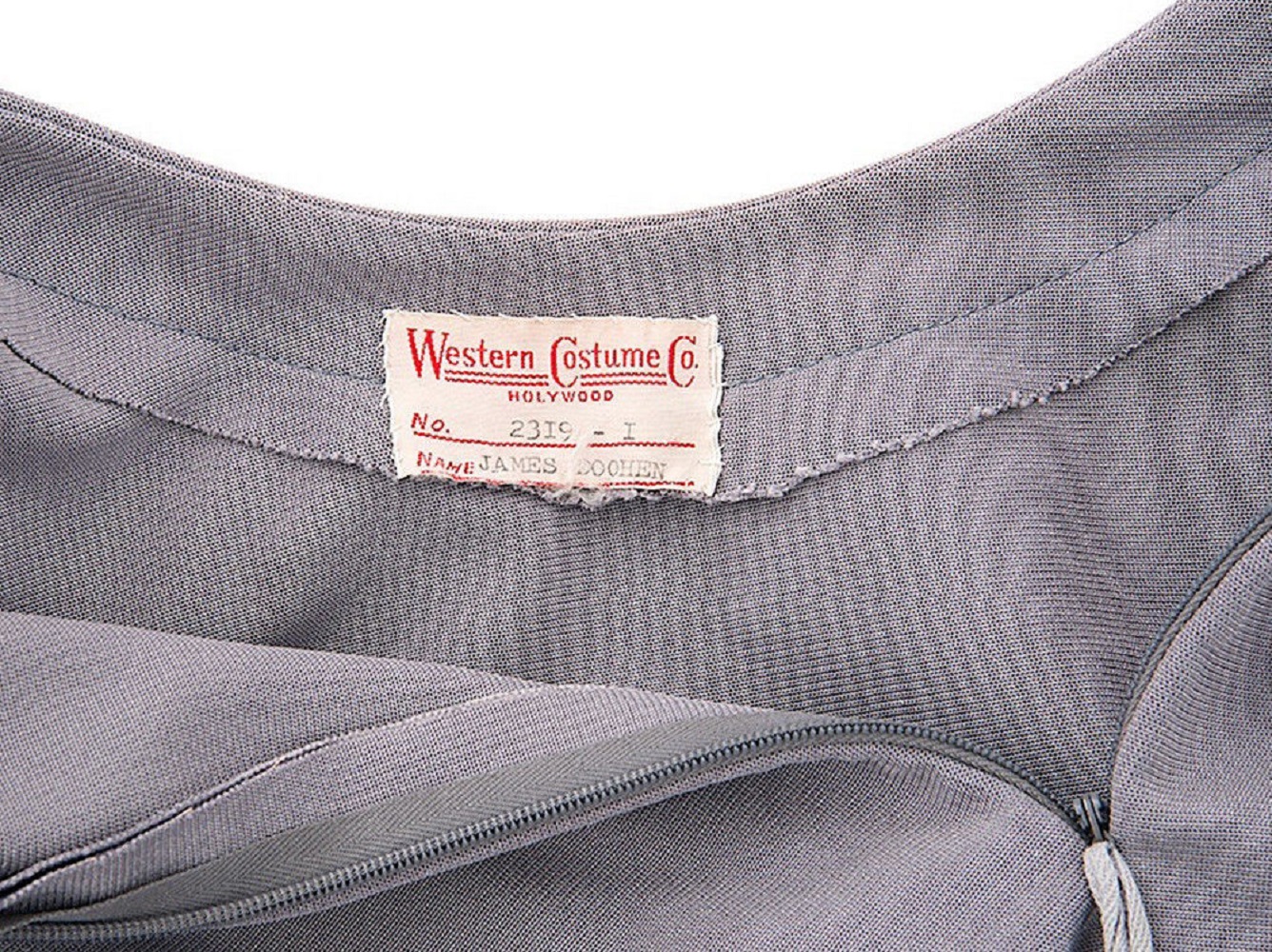
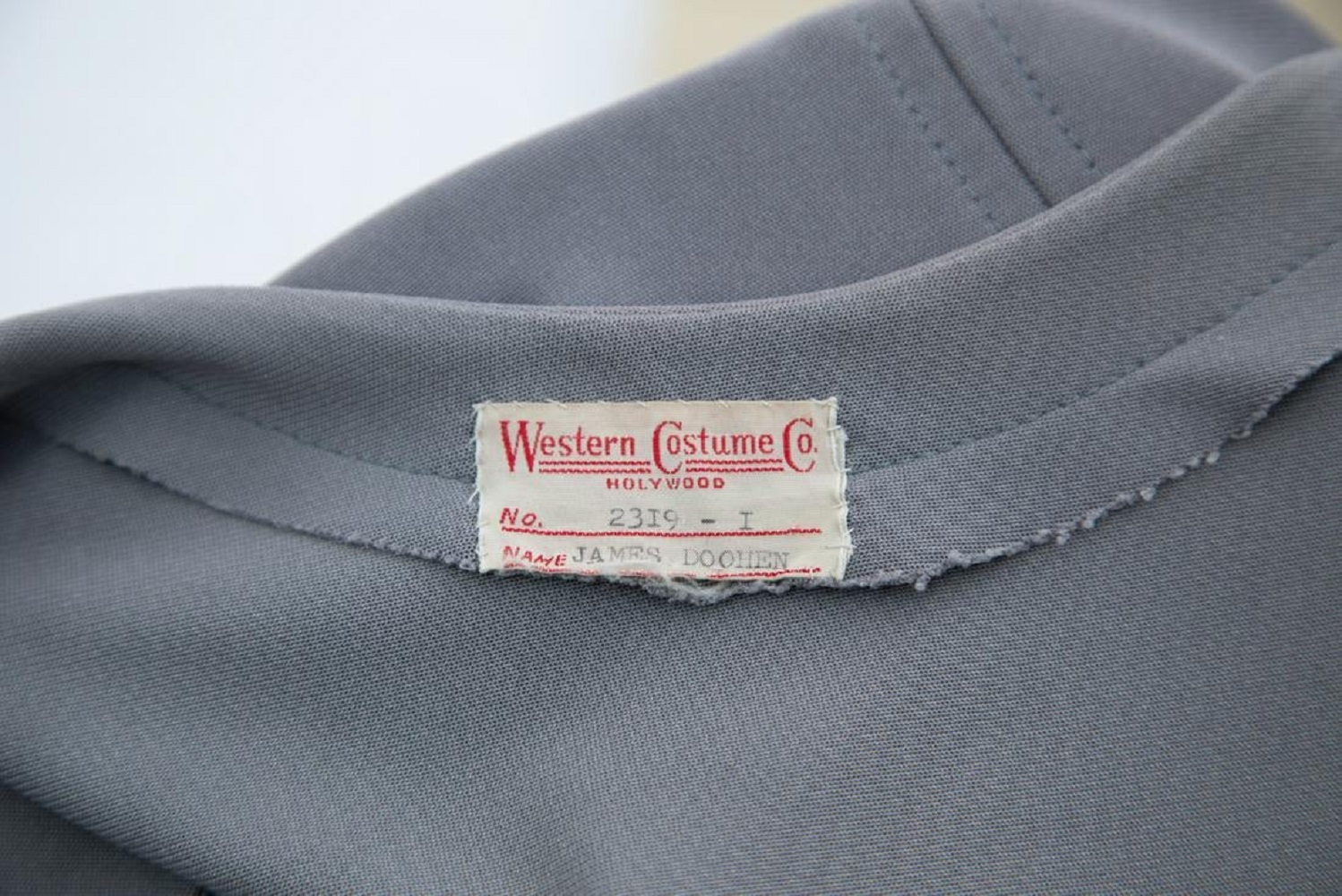
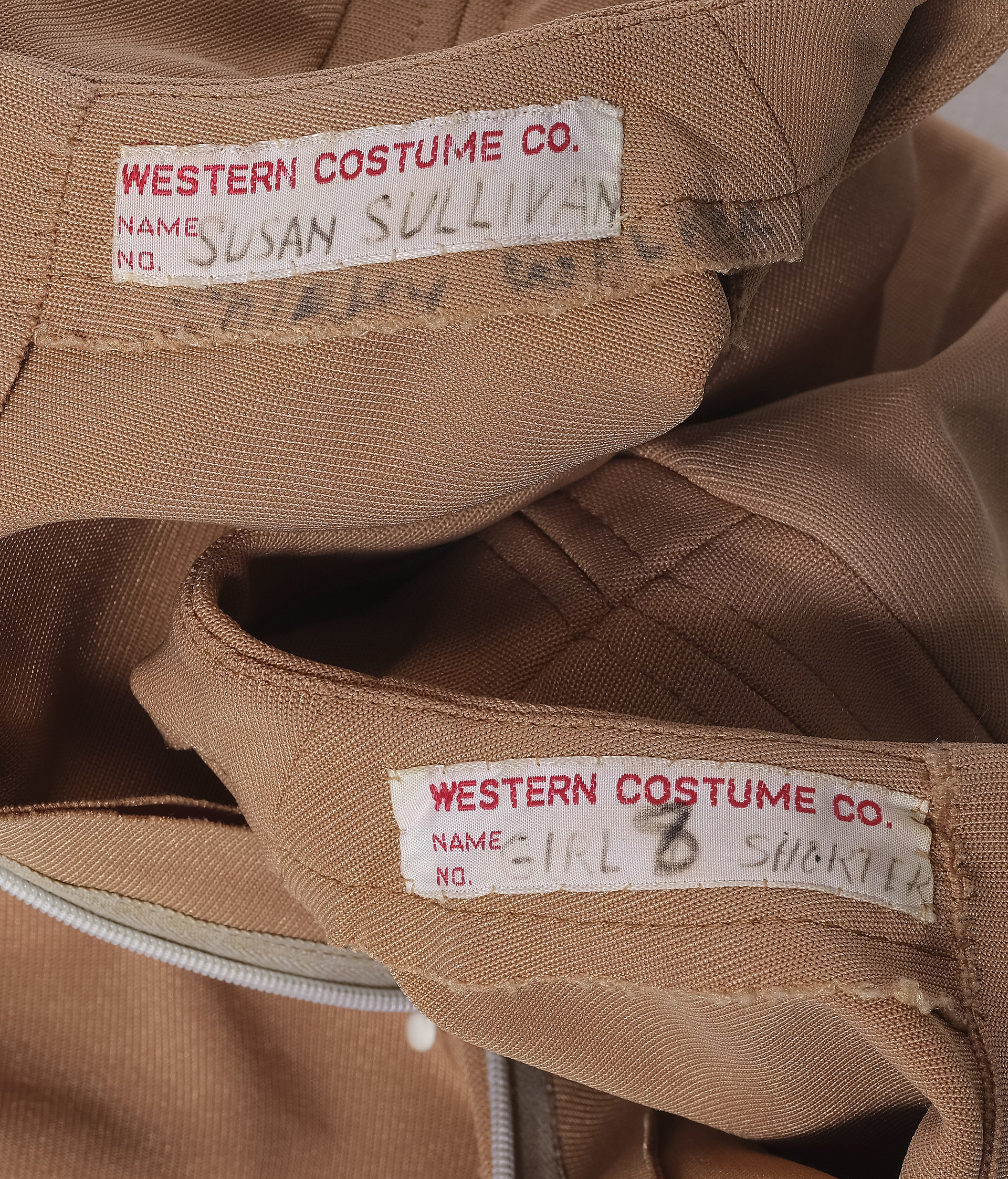
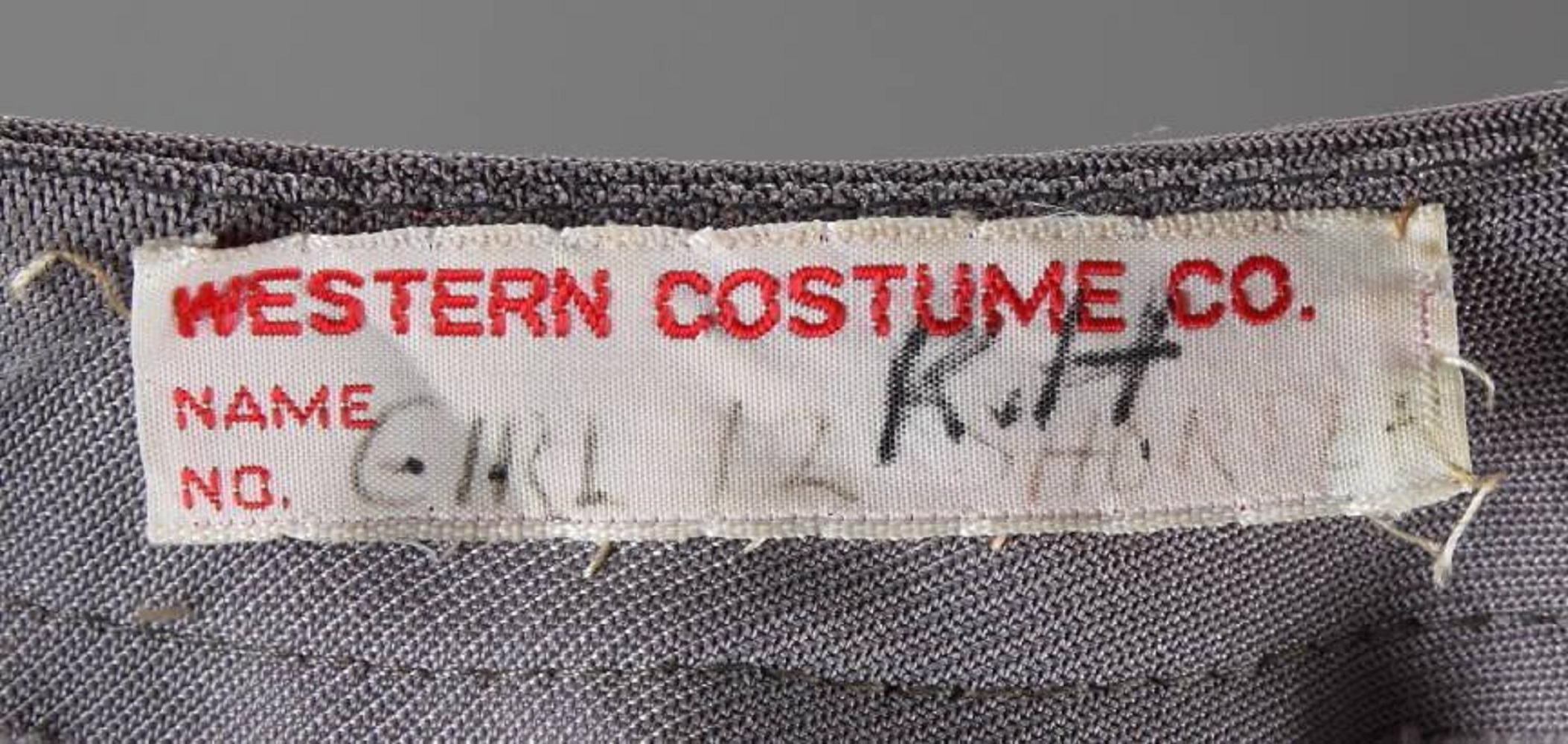
In these auction photos, we can see the two layers of spandex along the jumpsuits’ interior allowances.
TMP "Class D" jumpsuit auction photos
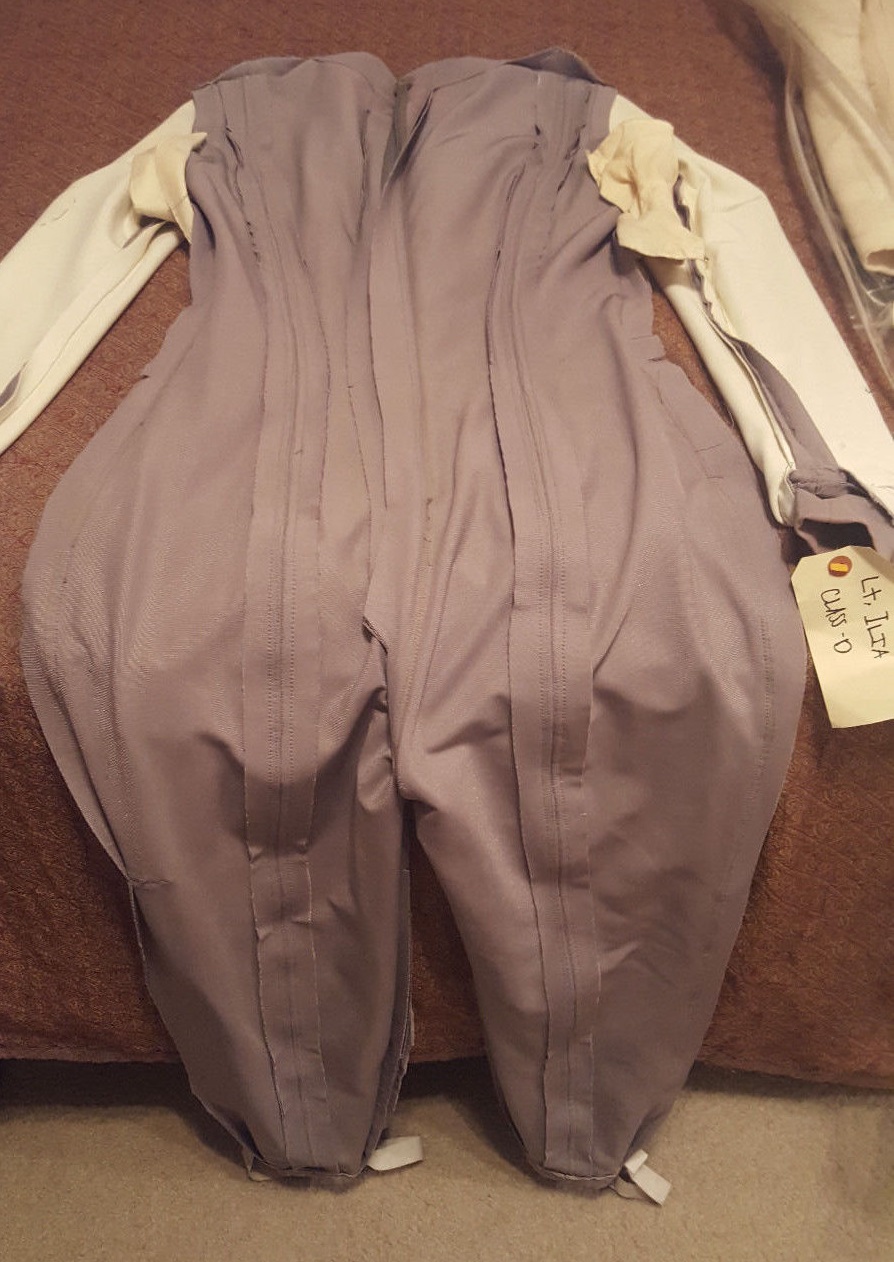
In most cases the jumbo spandex was simply backed with another layer of the same spandex, but on at least one jumpsuit the sleeves were backed with white:
TMP "Class D" jumpsuit auction photo
Fit
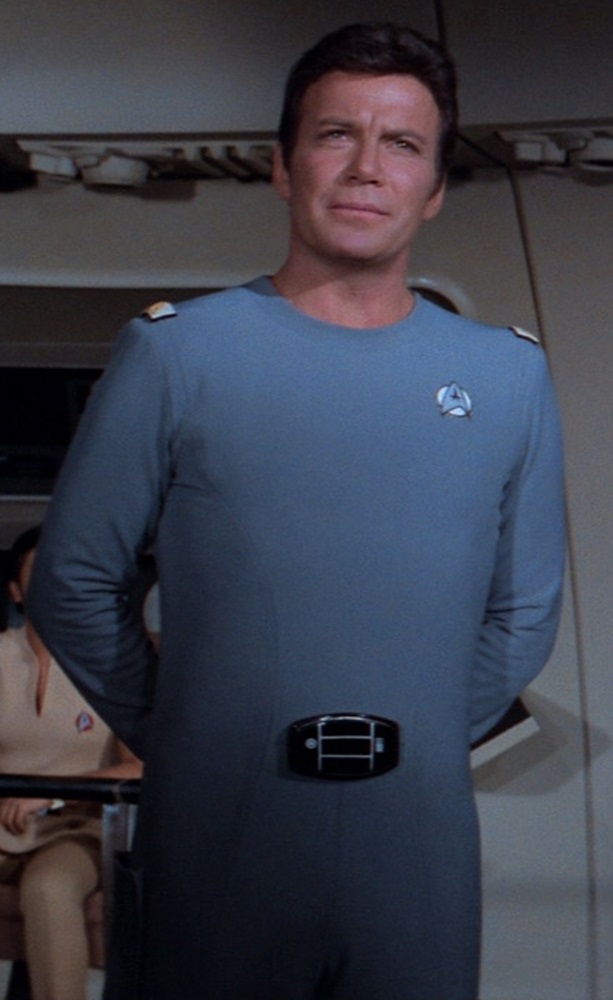
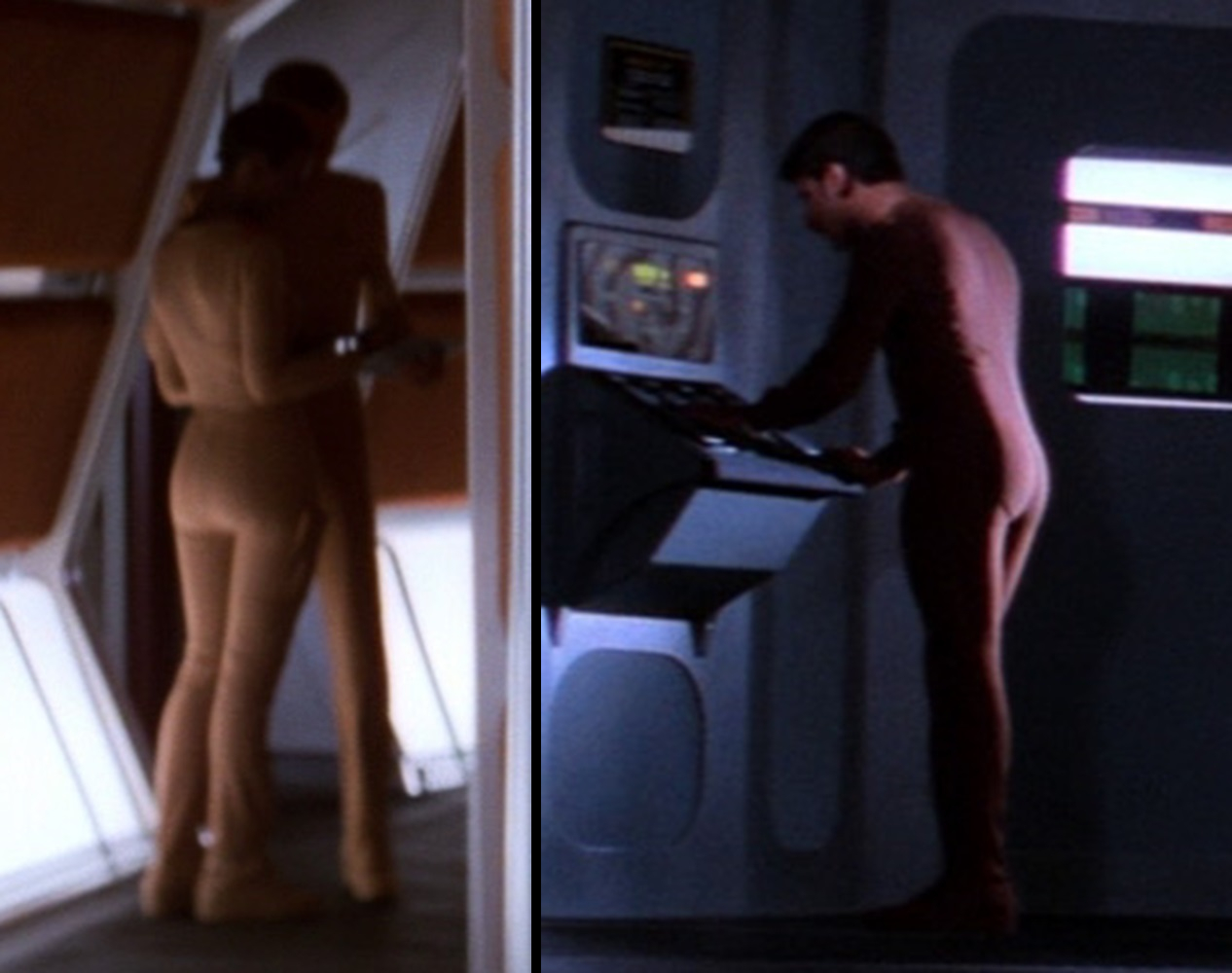
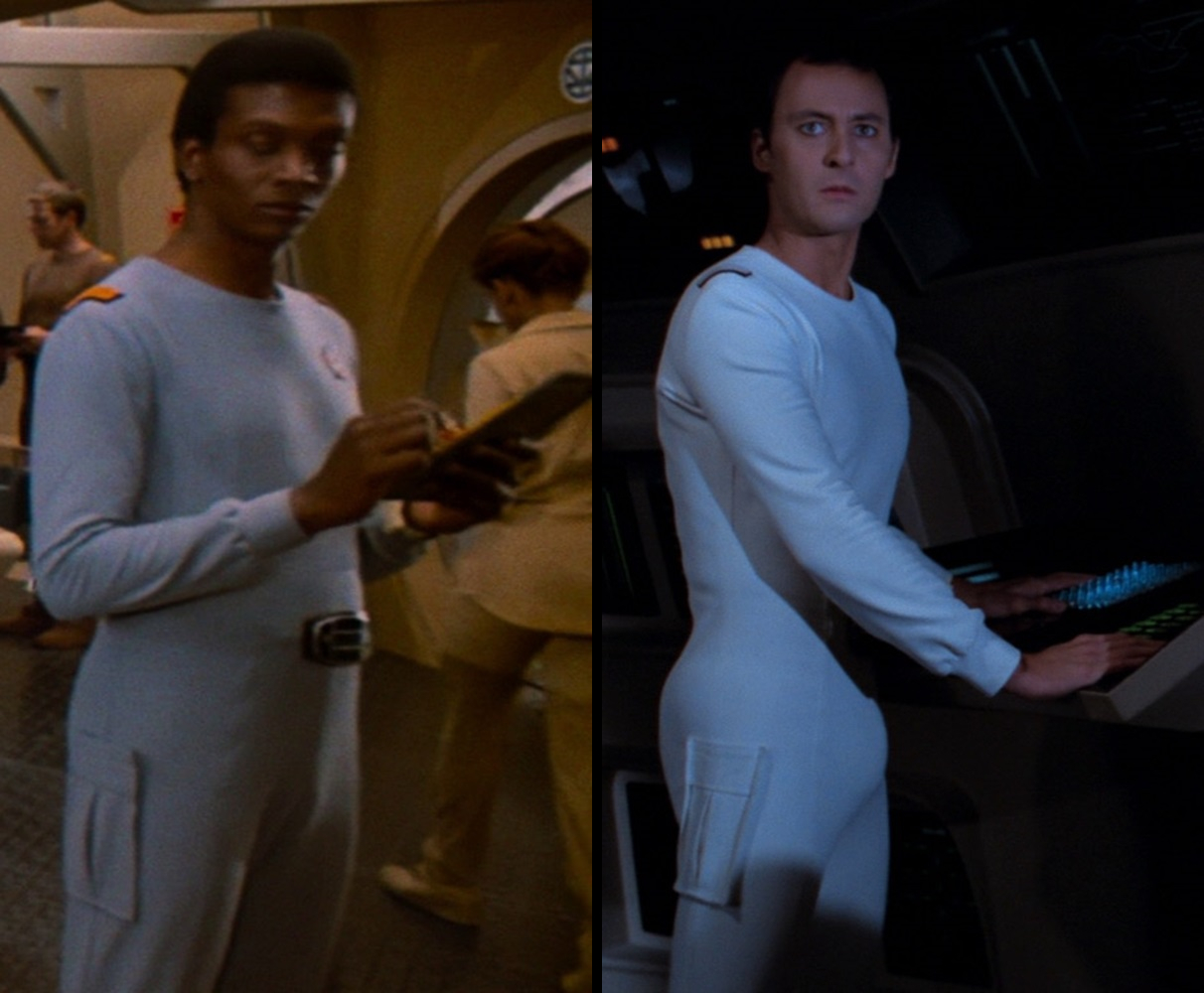
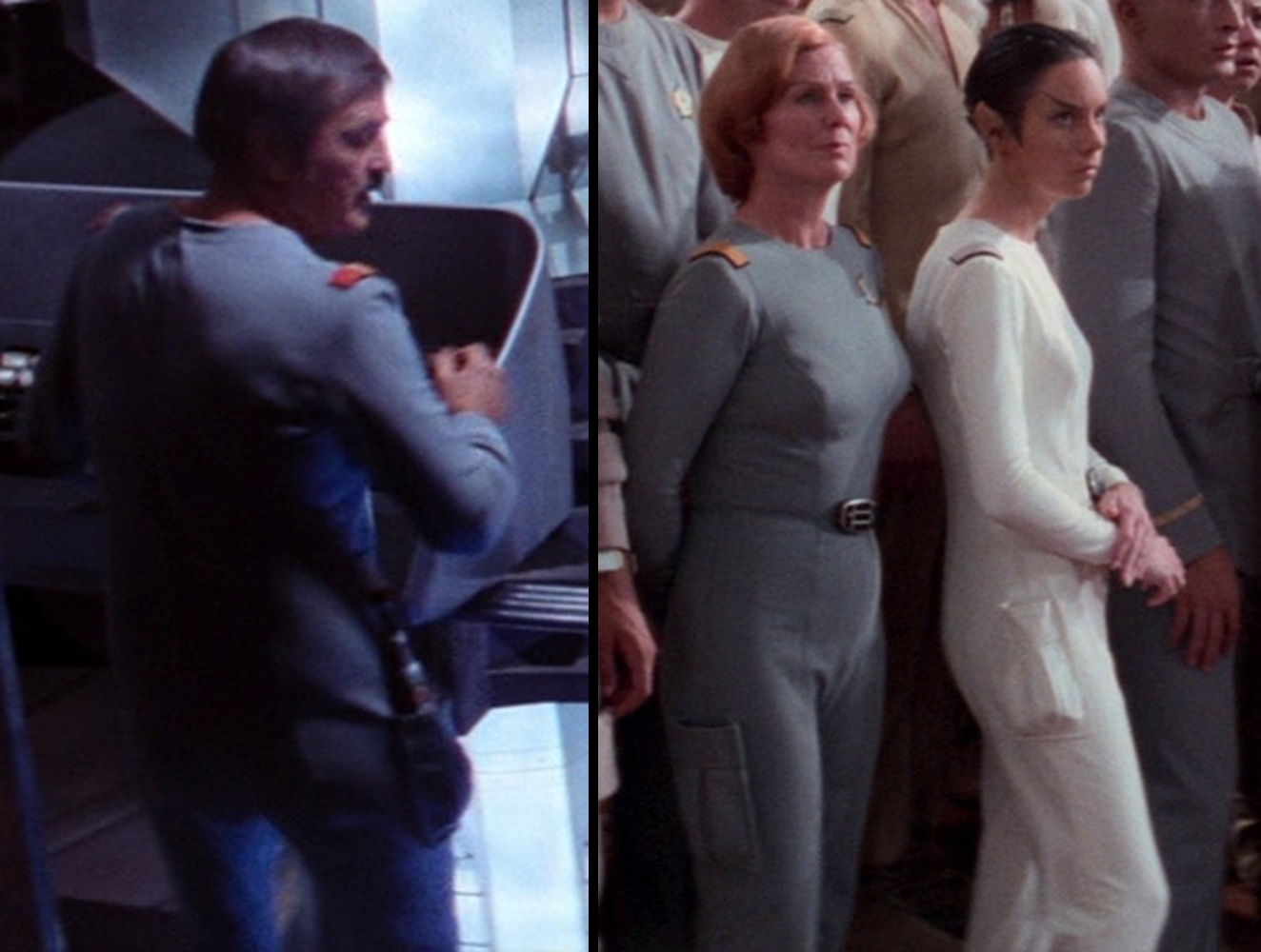
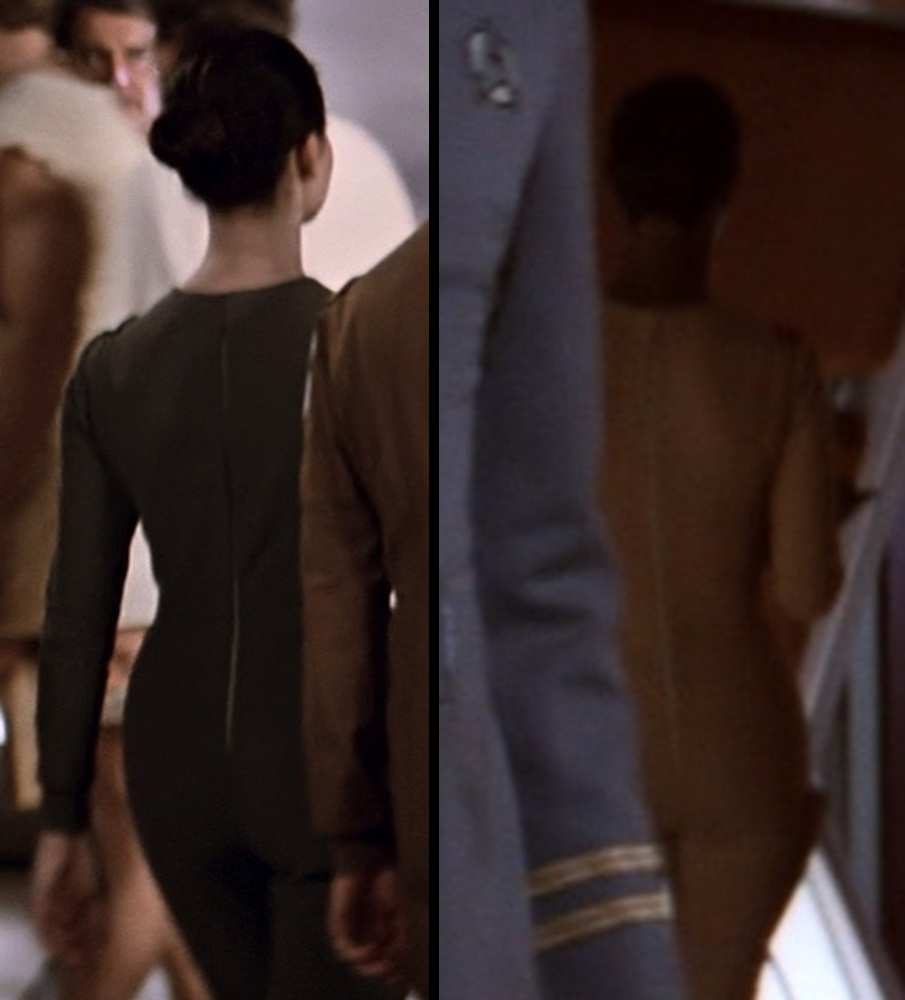
These “Class D” jumpsuits were typically very tight and form-fitting.
Between the skin-tight fits and flesh-tone colors, every time I watch the movie, for a split second I honestly think these extras were actually naked.
Between the skin-tight fits and flesh-tone colors, every time I watch the movie, for a split second I honestly think these extras were actually naked.
Colors
I already discussed this a bit in my TMP Uniform Paradigm post and video, so I’ll just briefly mention the uniform colors here.
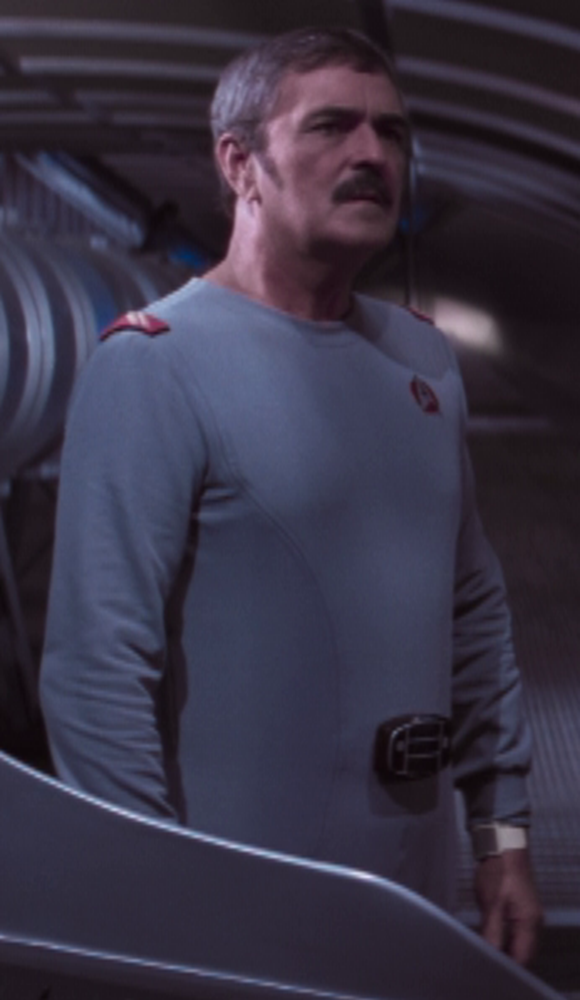
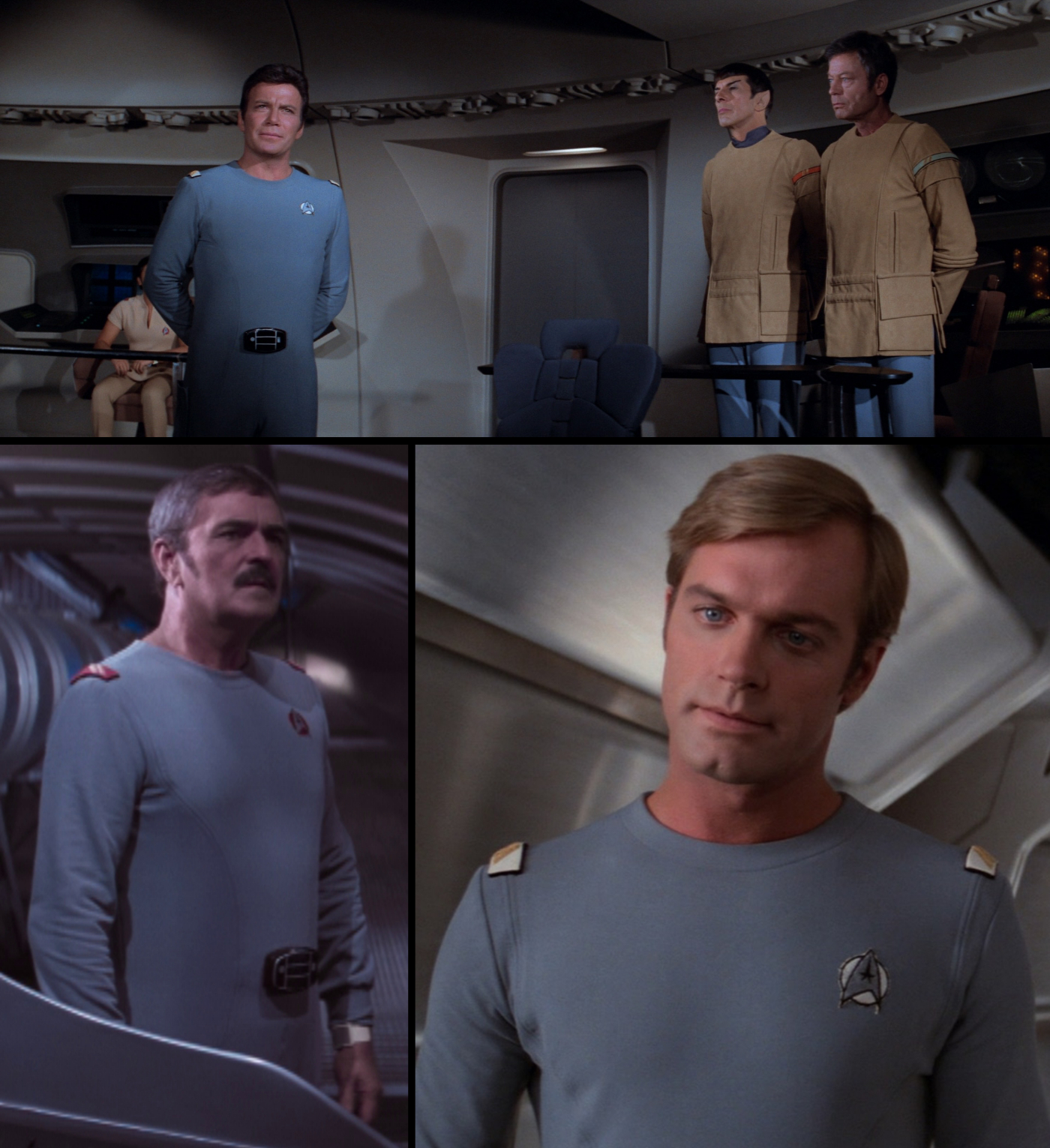
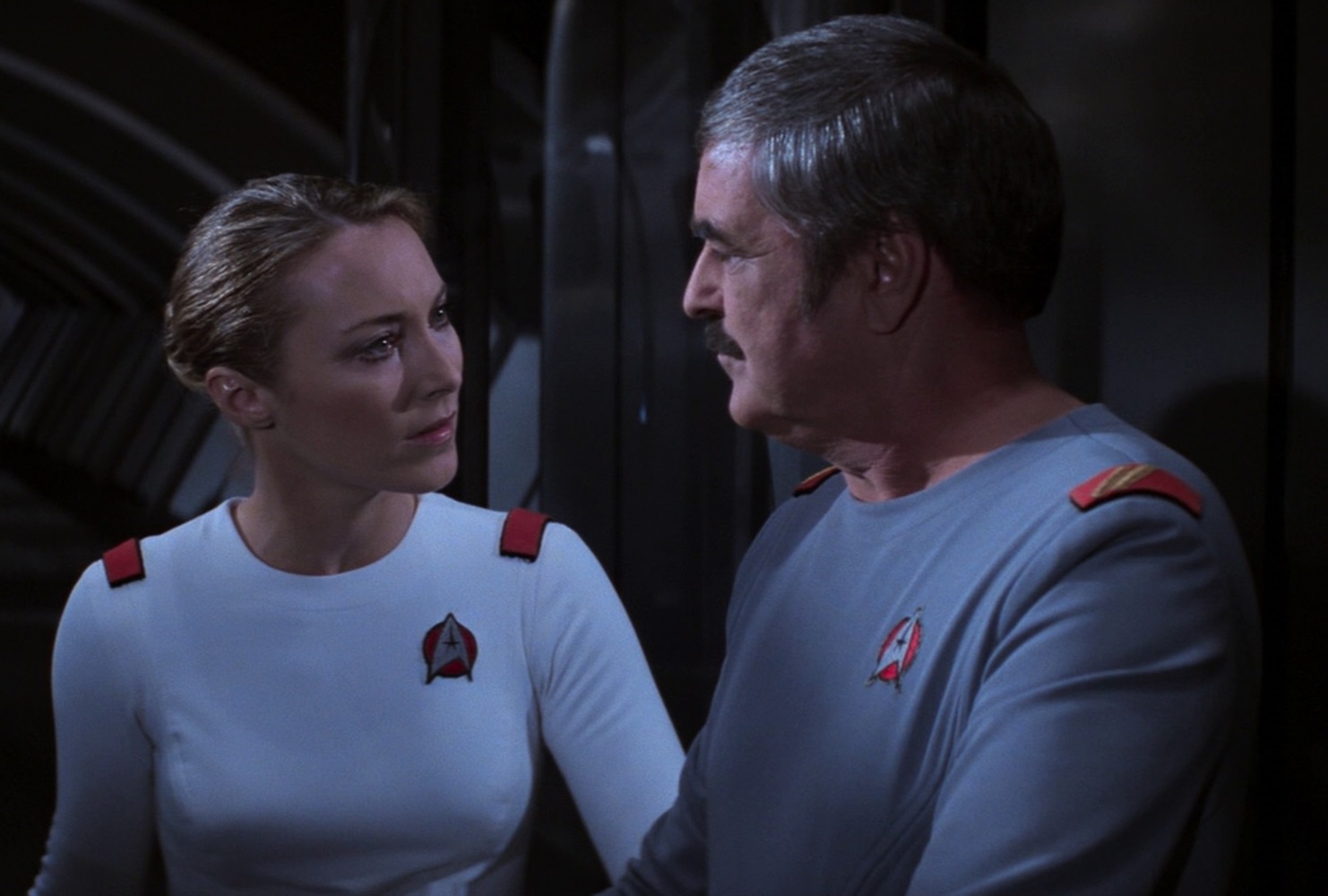
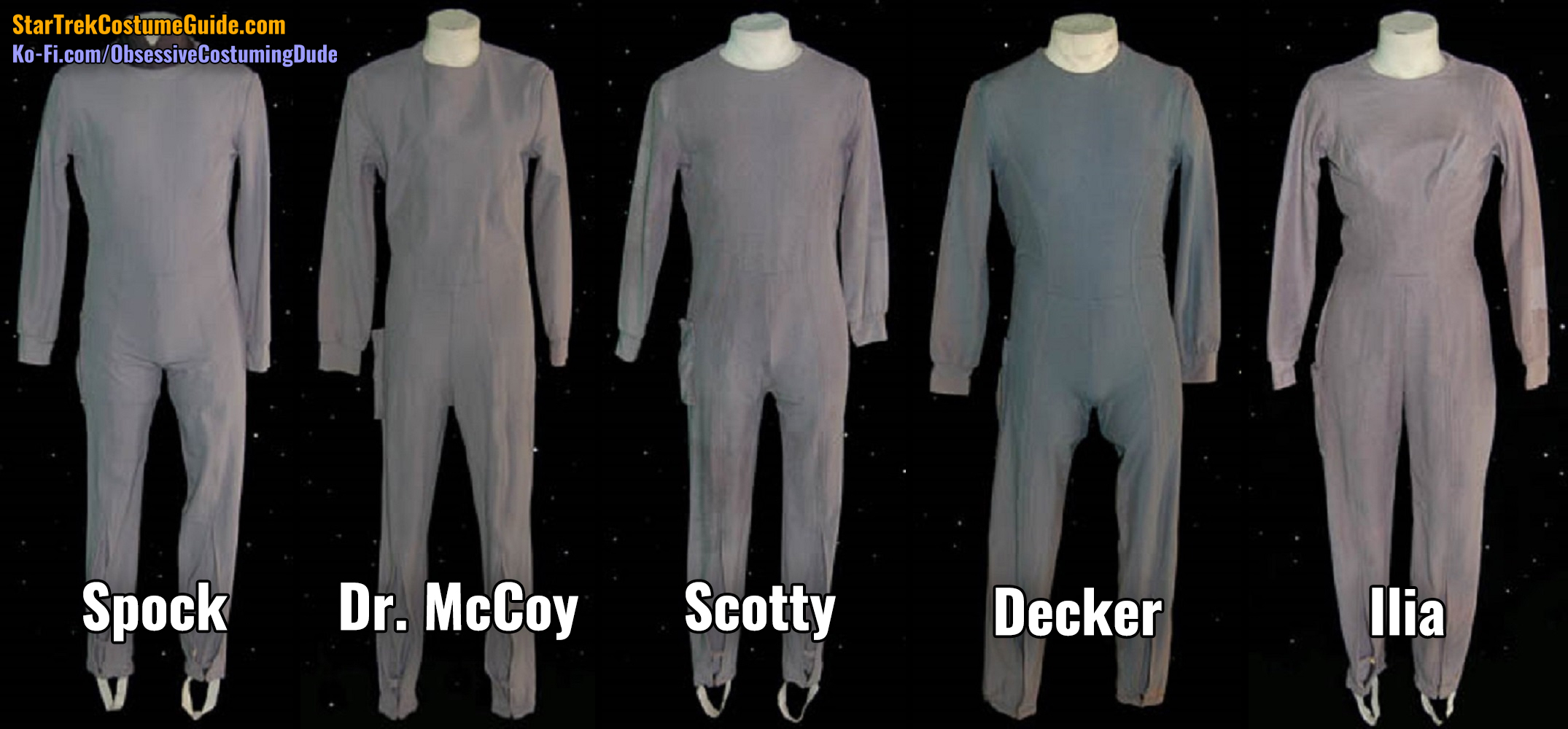
Most of the main cast jumpsuits – Kirk, Spock, McCoy, Scotty, and Decker – were gray.
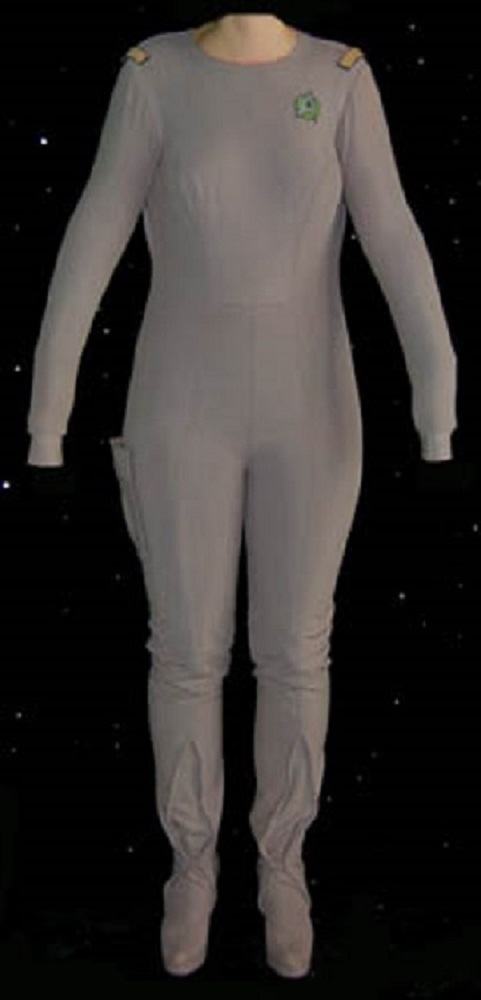
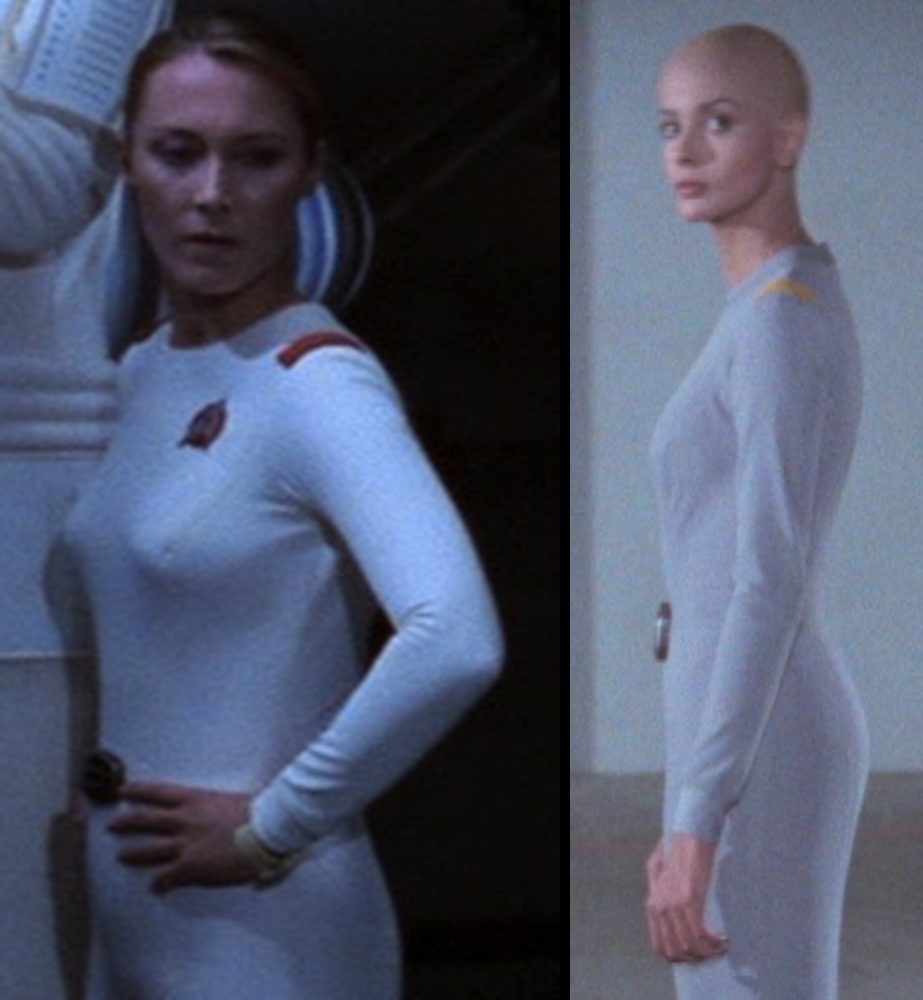
Dr. Chapel wore a gray jumpsuit in the aforementioned cast publicity photos, so she would’ve presumably worn gray in the movie itself.
Chapel TMP “Class D” uniform auction photo
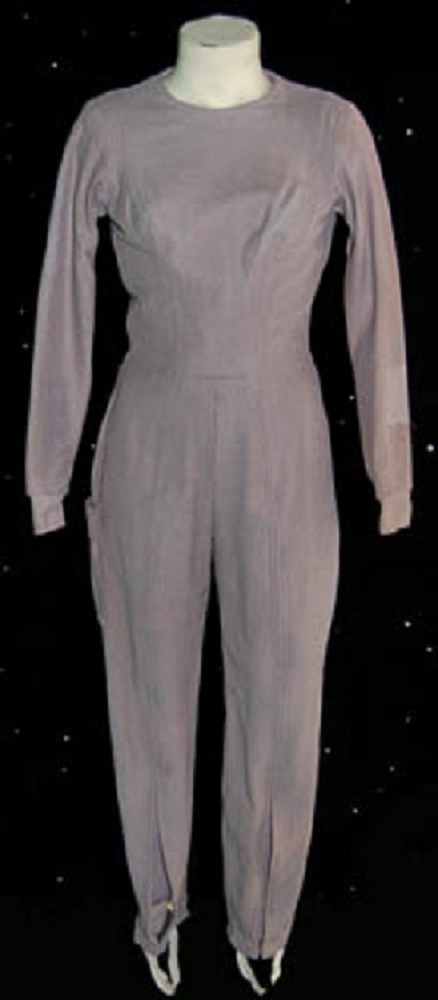
Ilia wore a gray jumpsuit in the aforementioned costume test footage, and would’ve presumably worn gray in the movie as well.
Ilia TMP “Class D” uniform auction photo
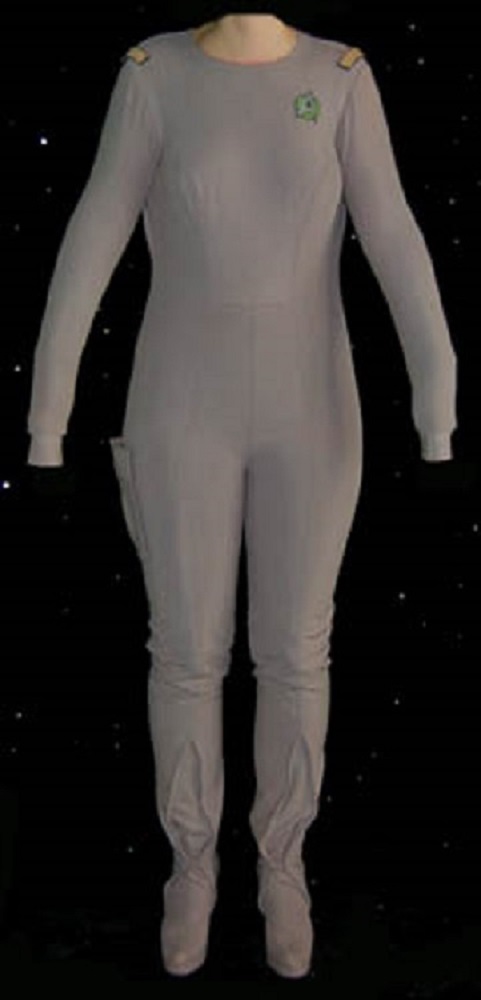
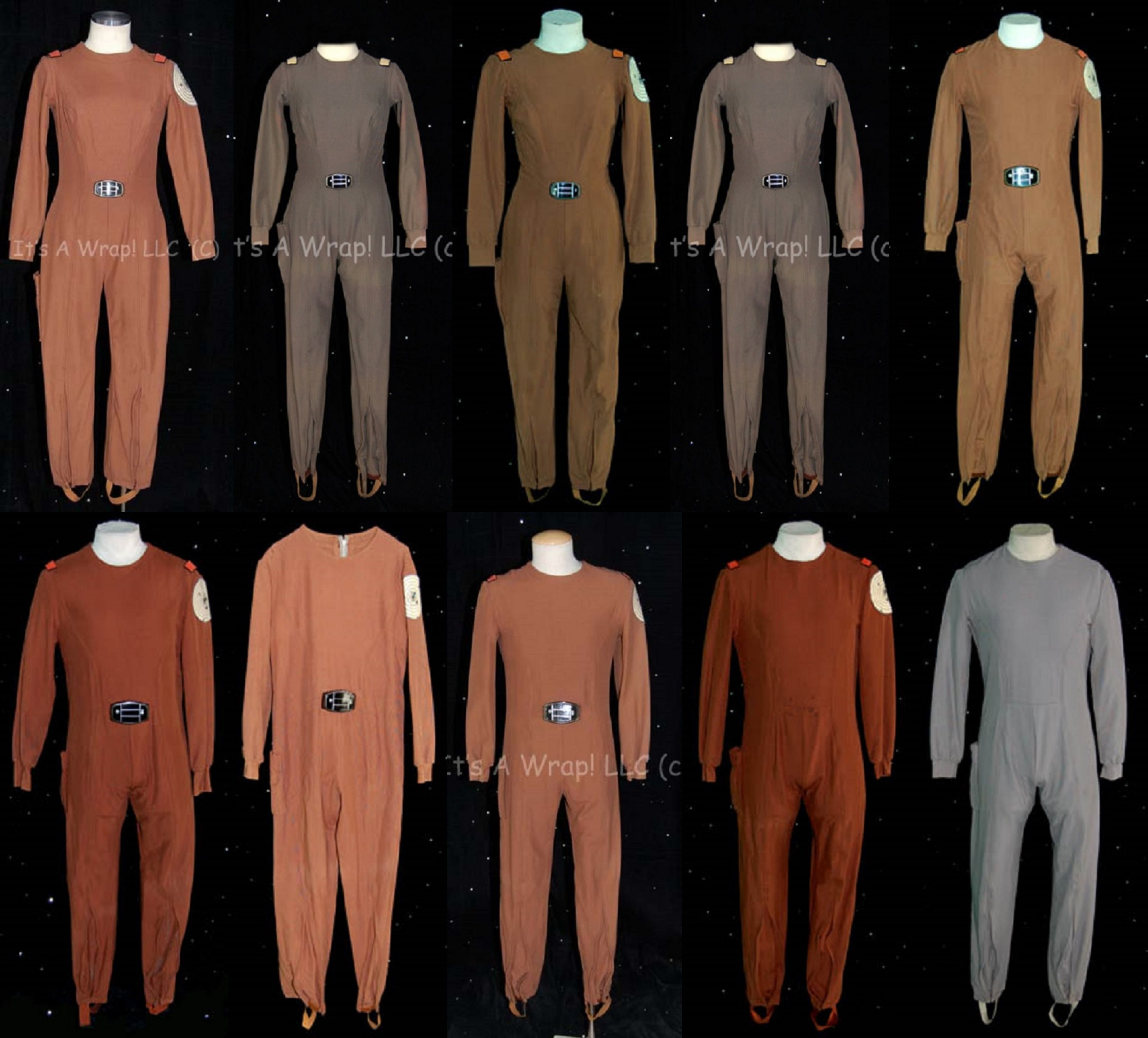
There was also a darker gray color used for some extras’ jumpsuits.
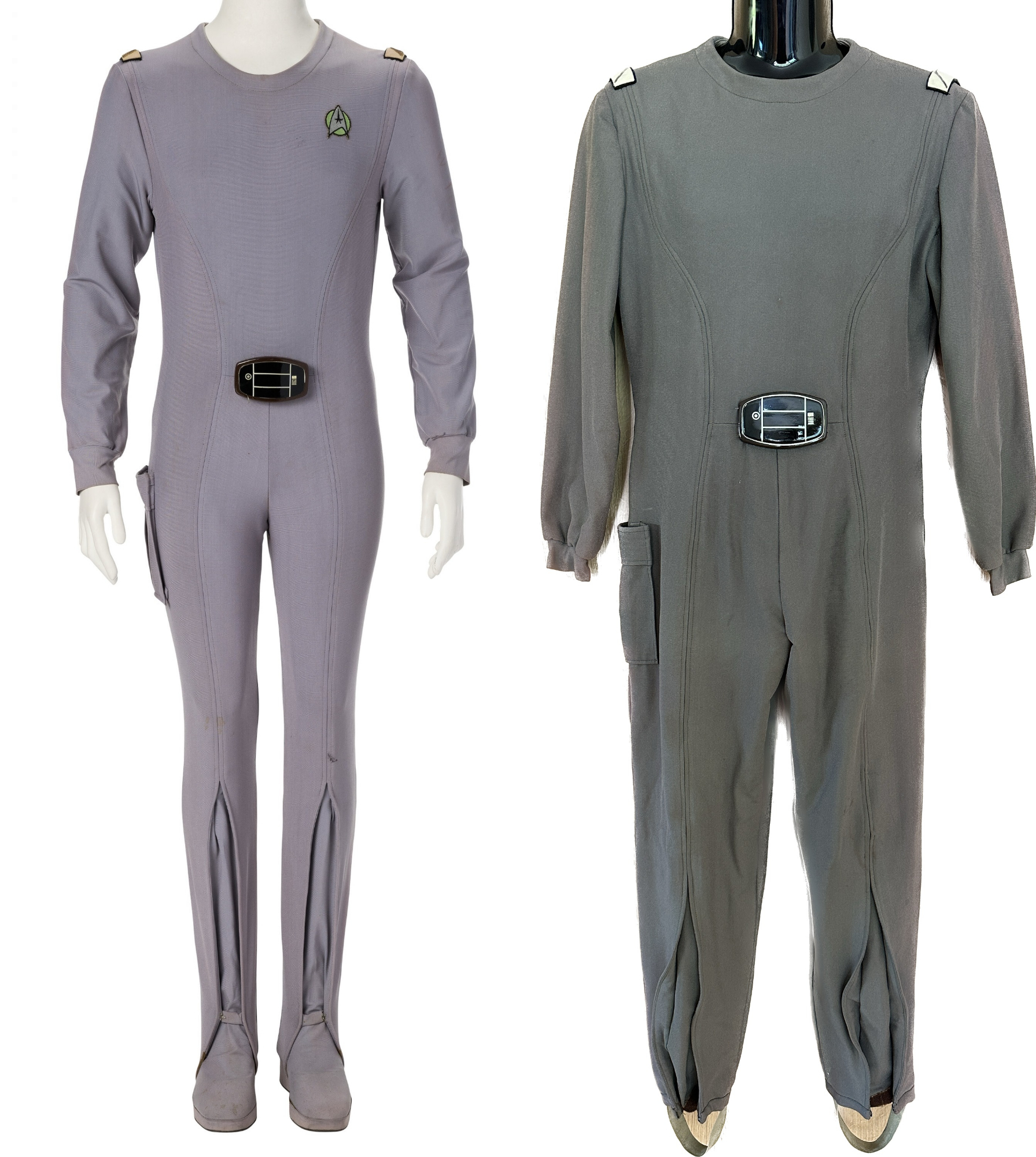
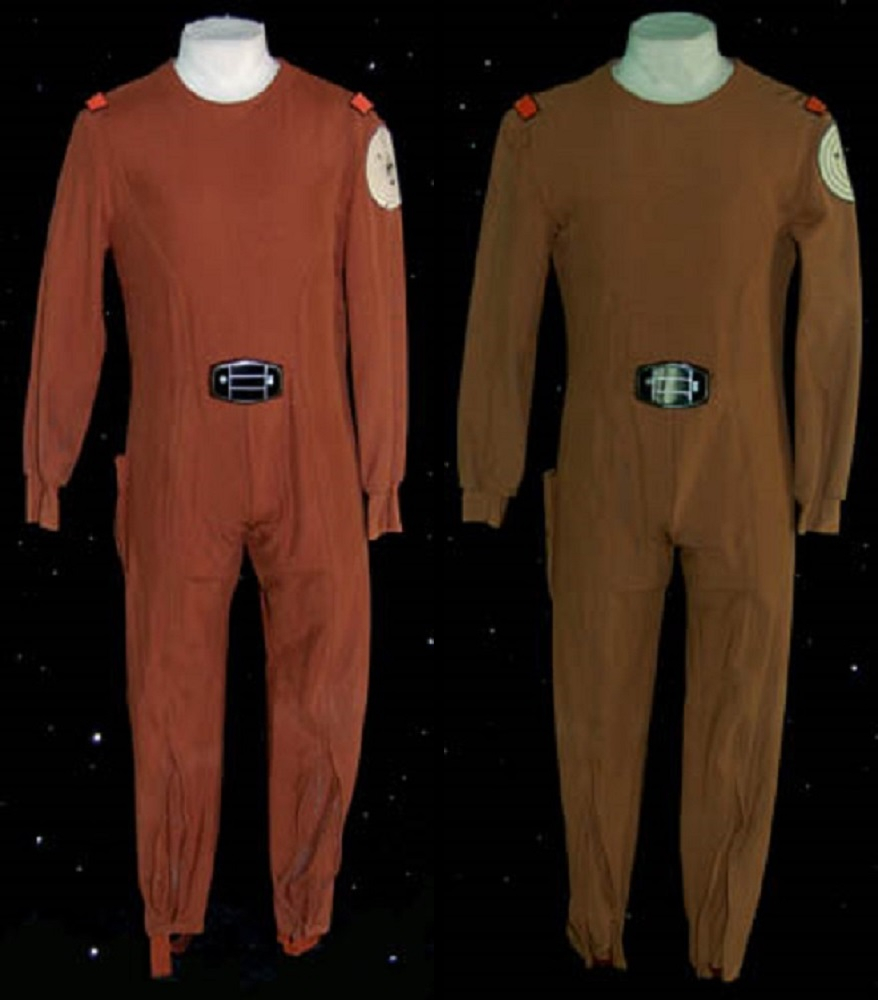
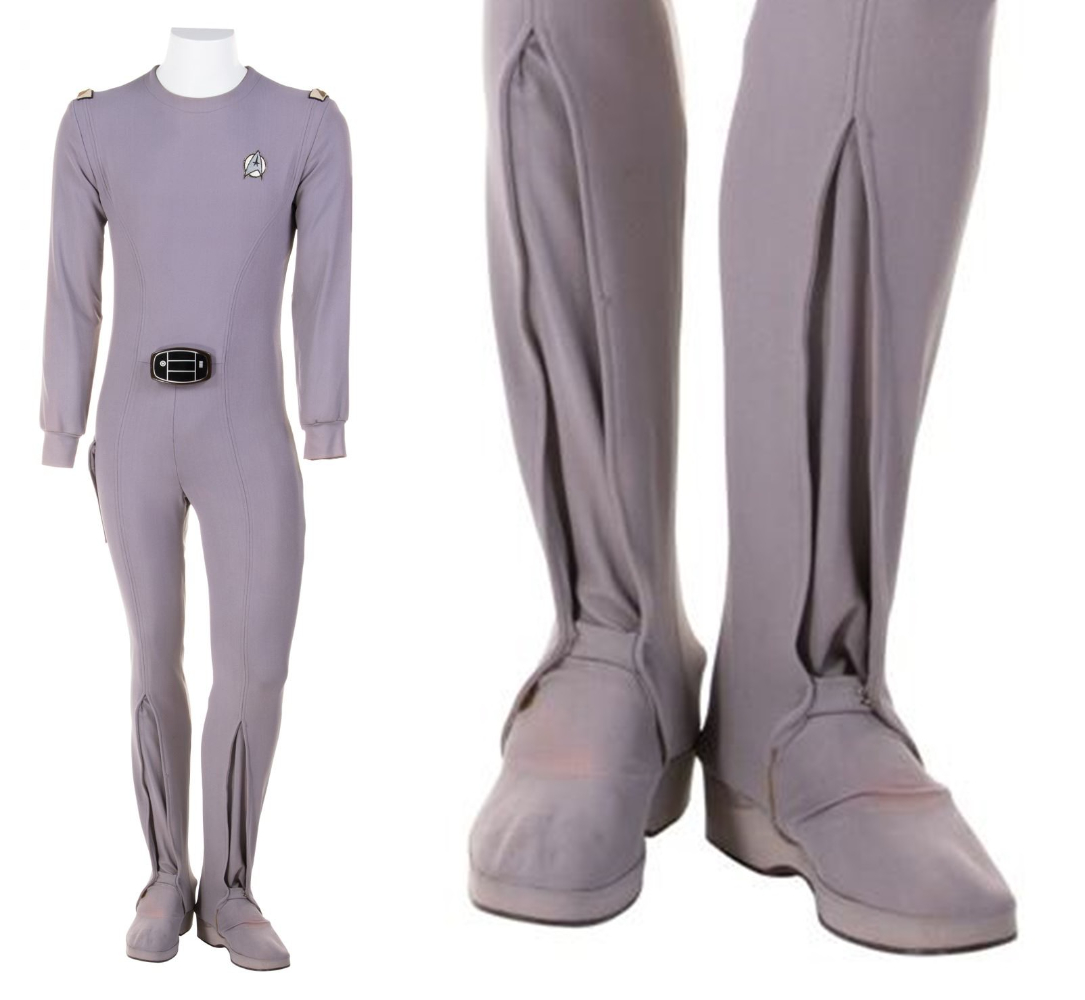
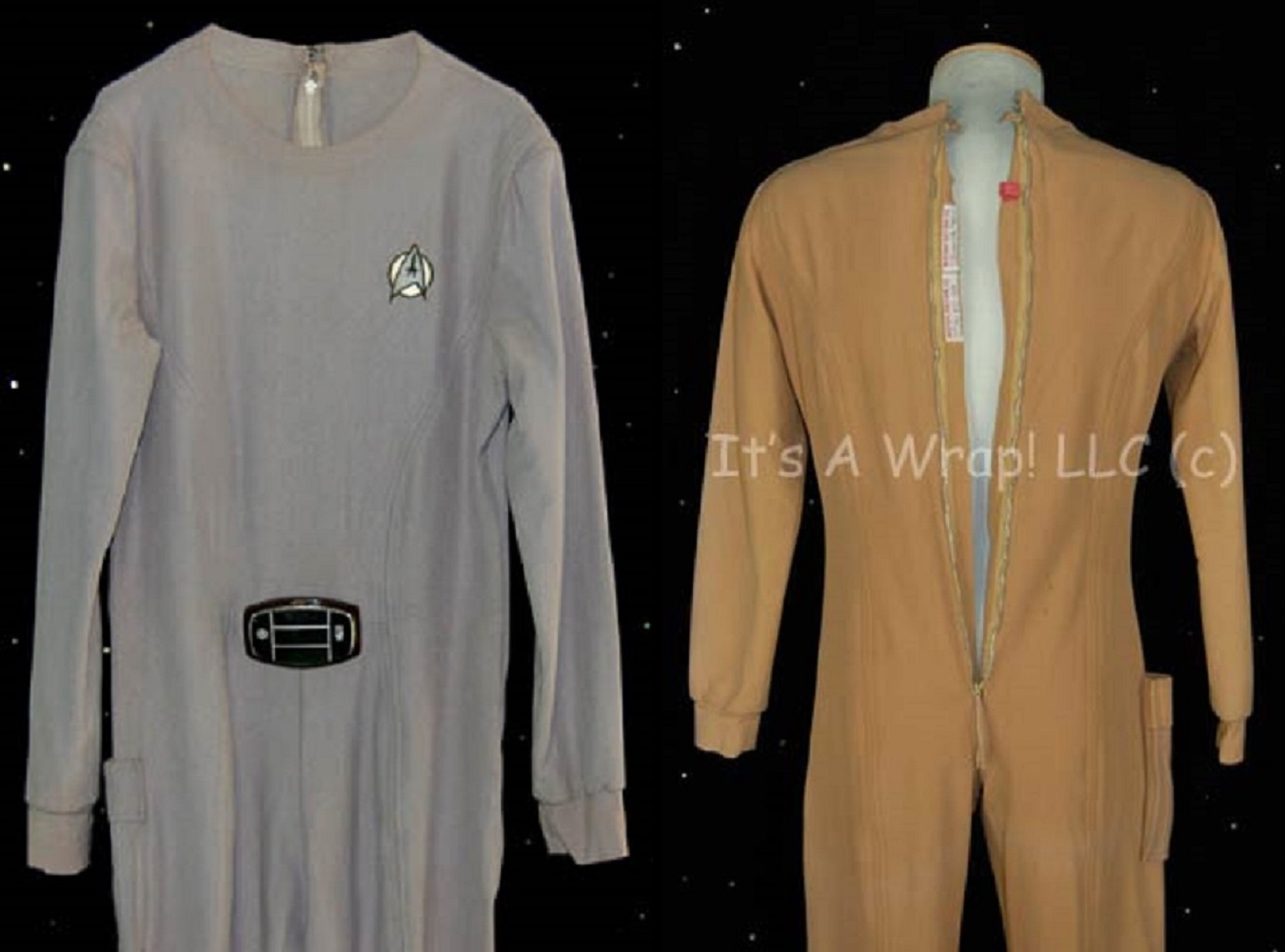
Men's TMP "Class D" uniform auction photos
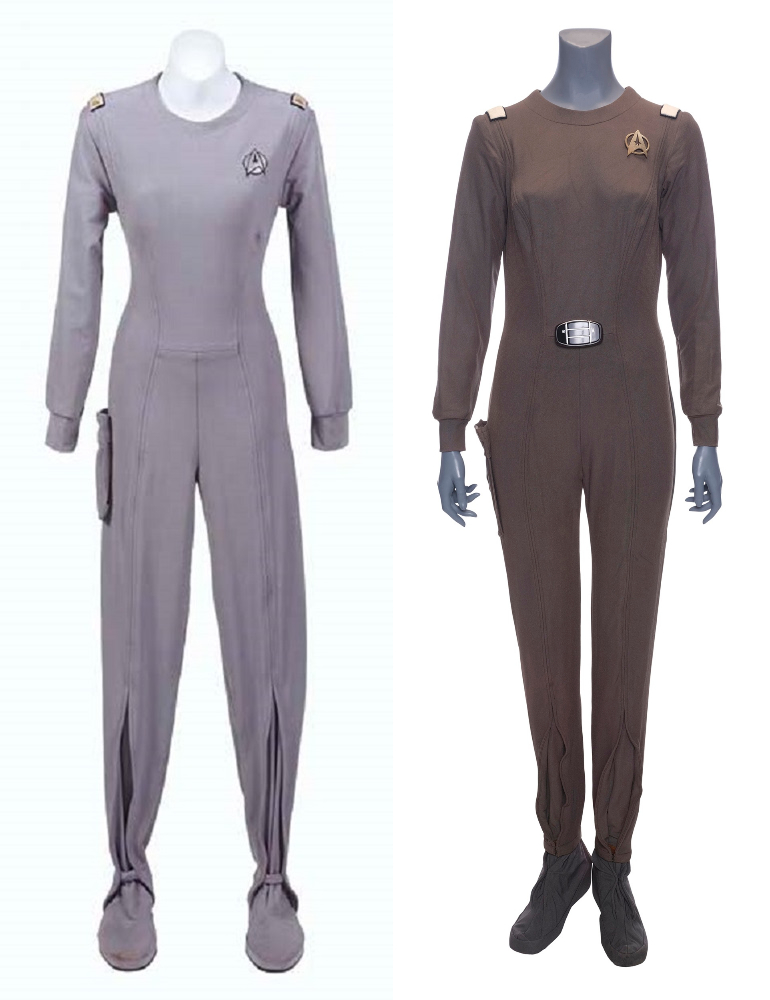
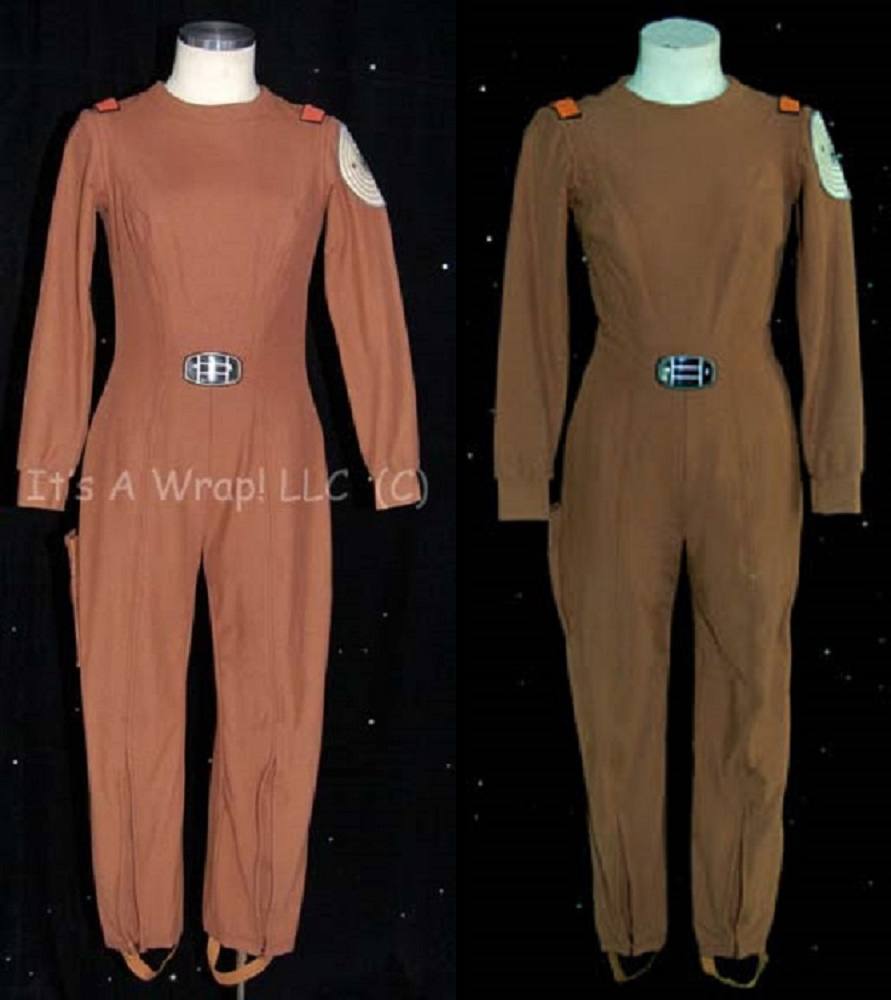
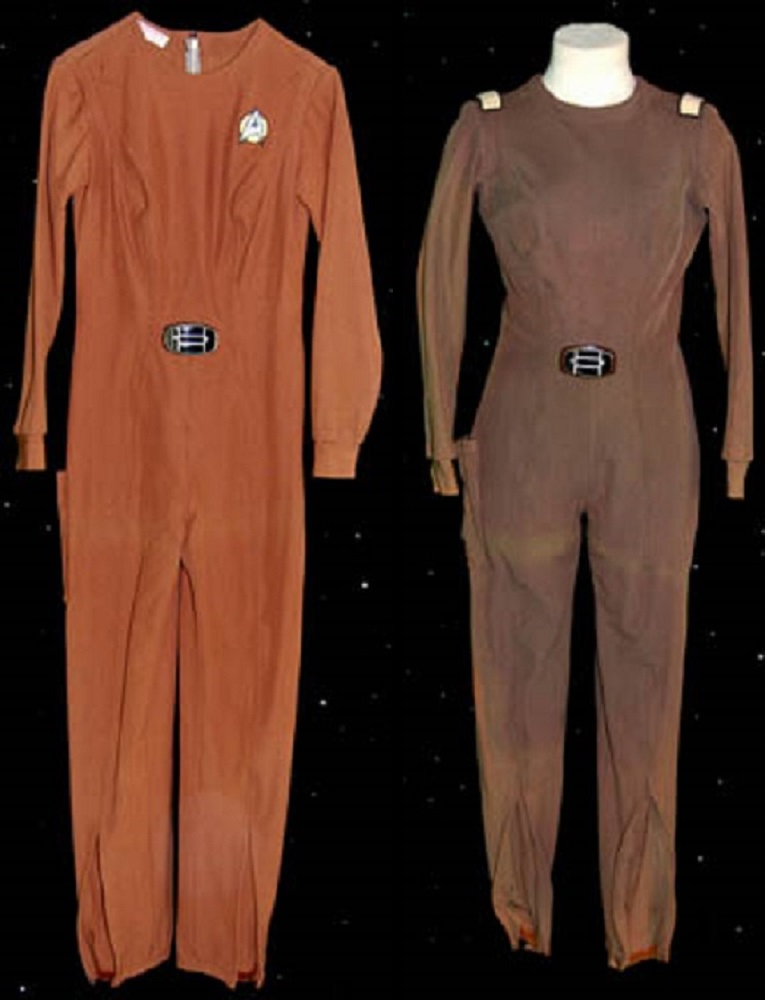
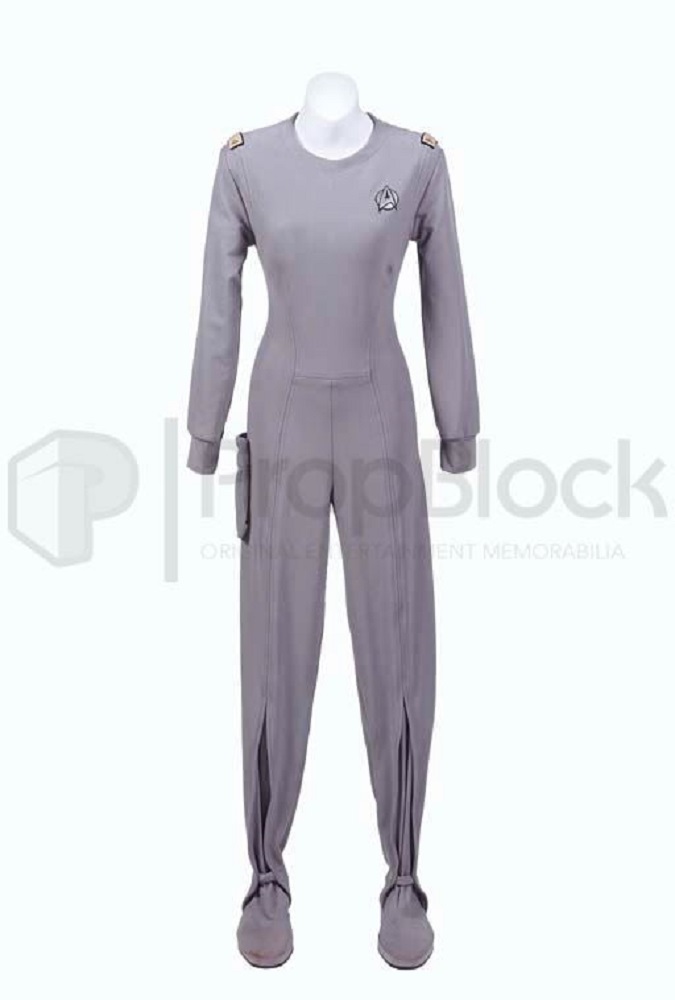
Women's TMP "Class D" uniform auction photos
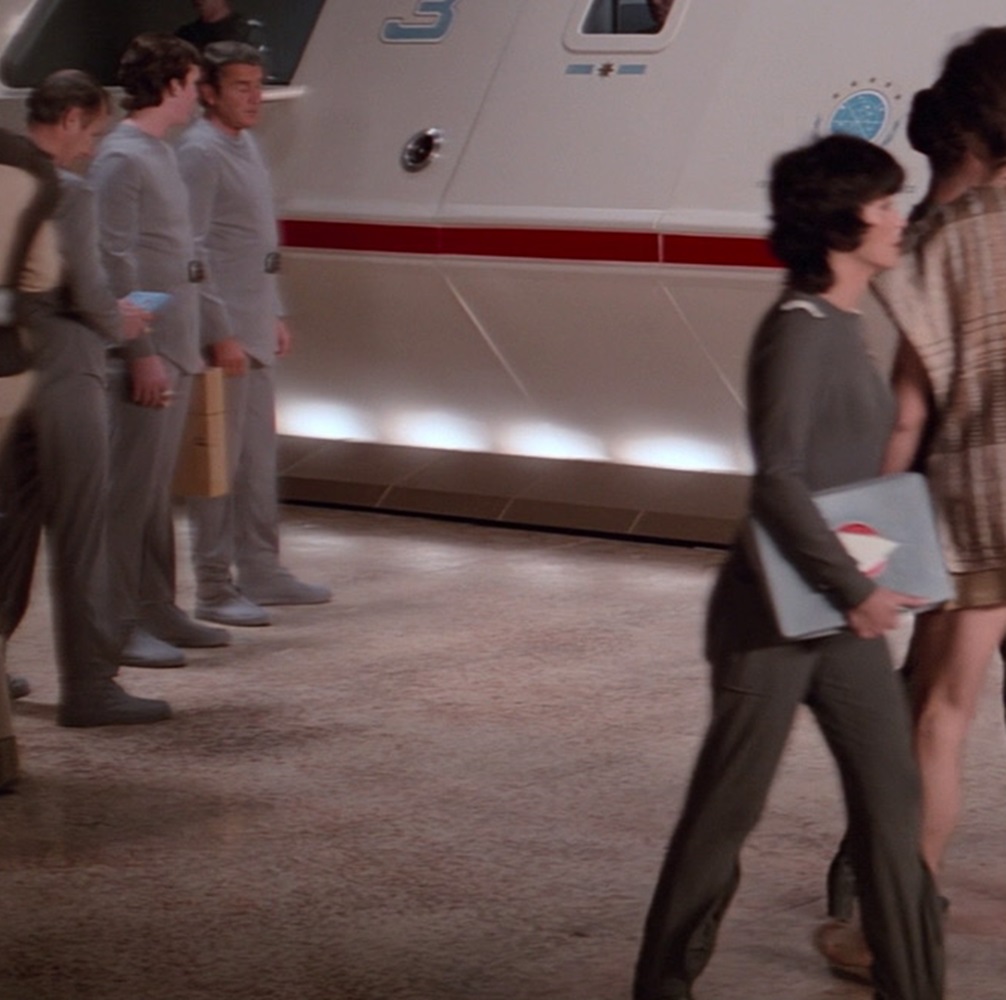
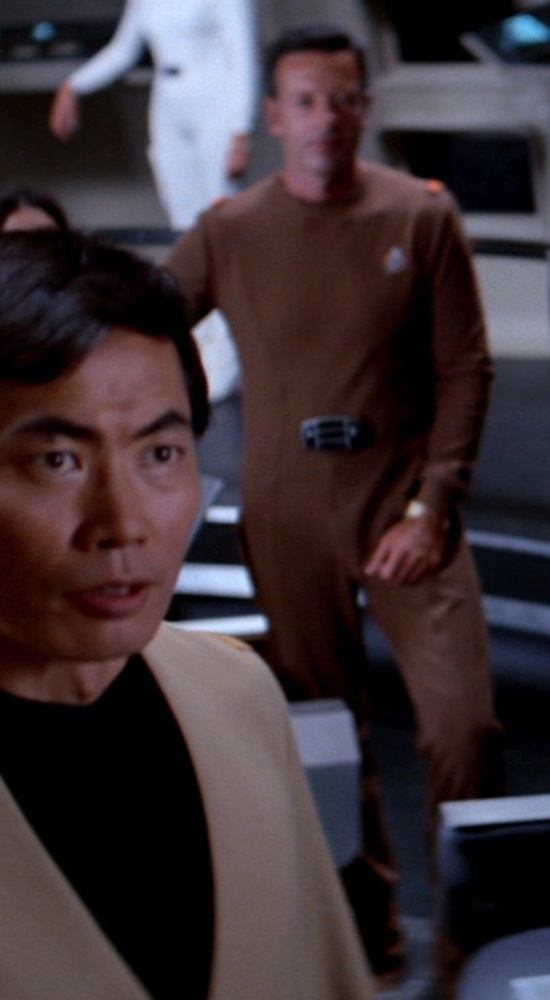
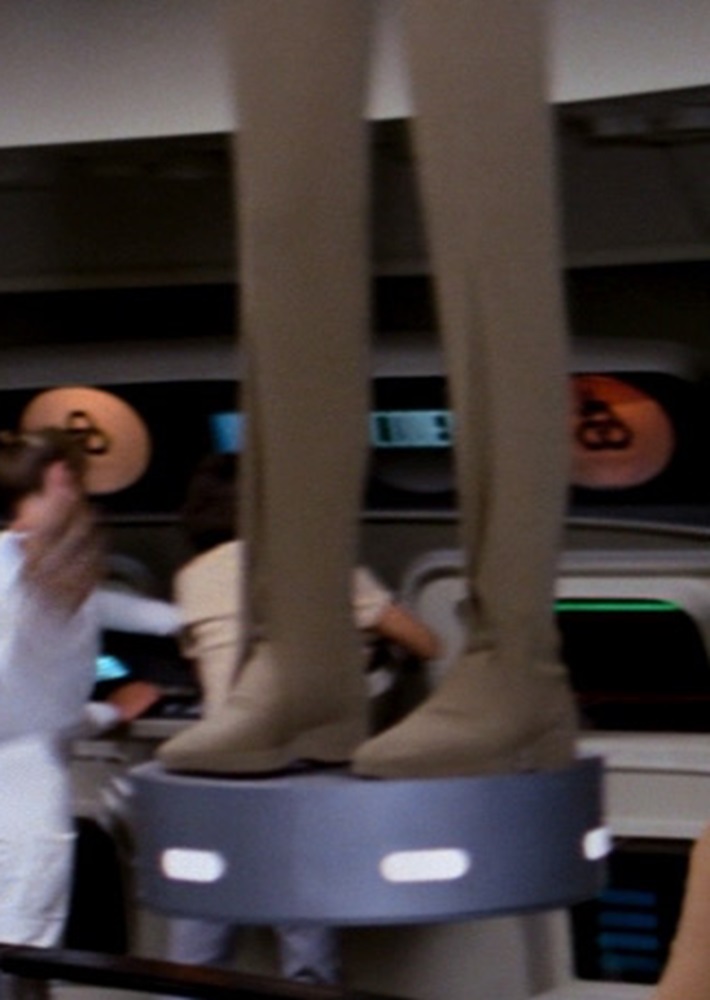
This isn’t just a case of notoriously inconsistent auction photos; in this (cropped) screencap we can observe some standard gray uniforms to the left, and a darker gray “Class D” jumpsuit to the right.
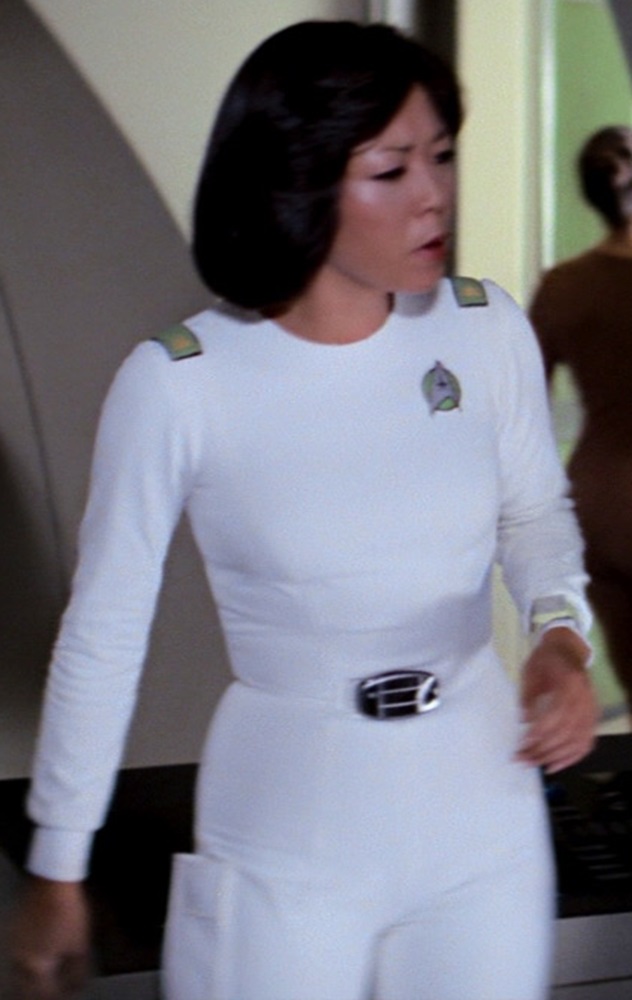
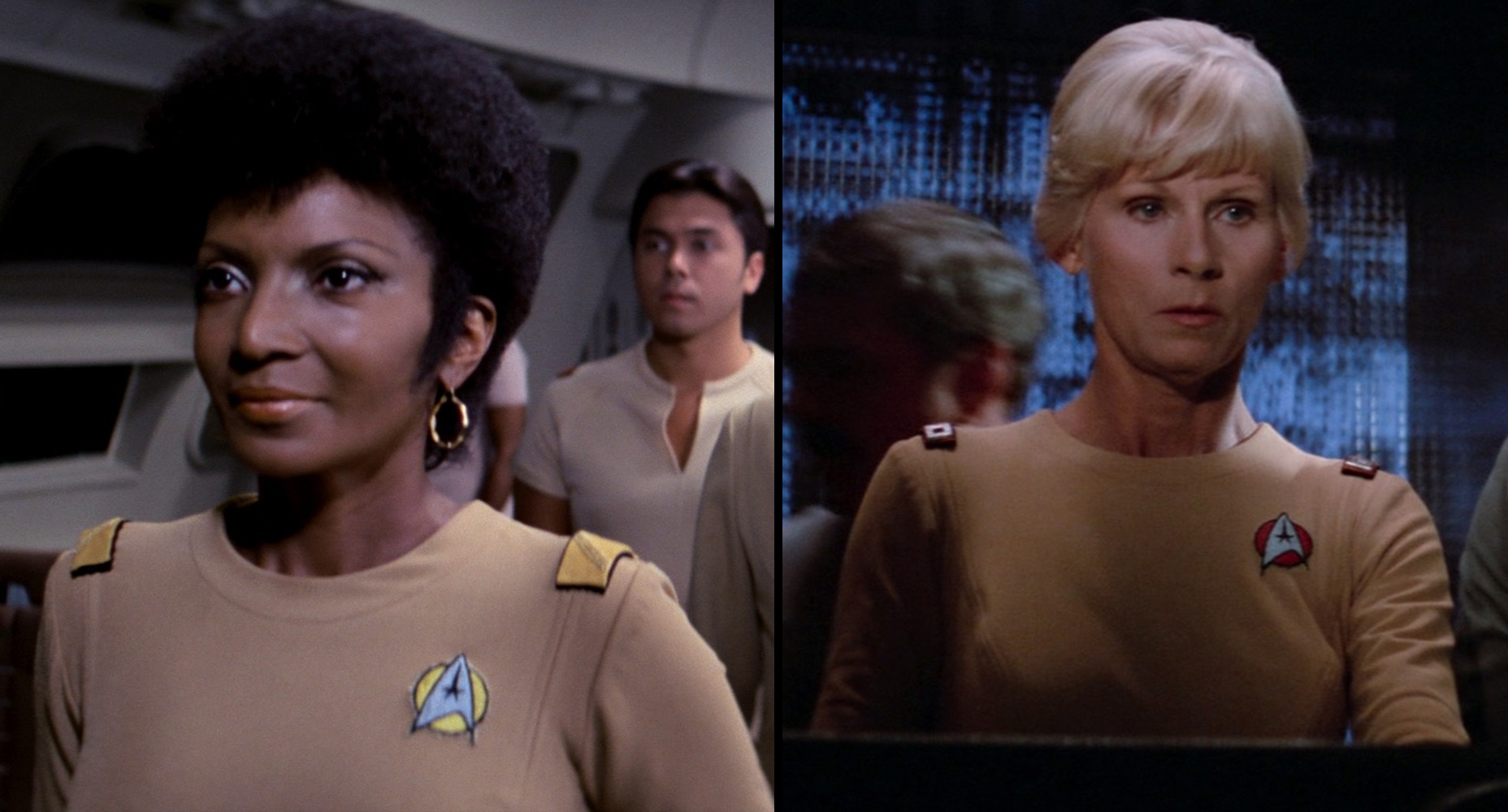
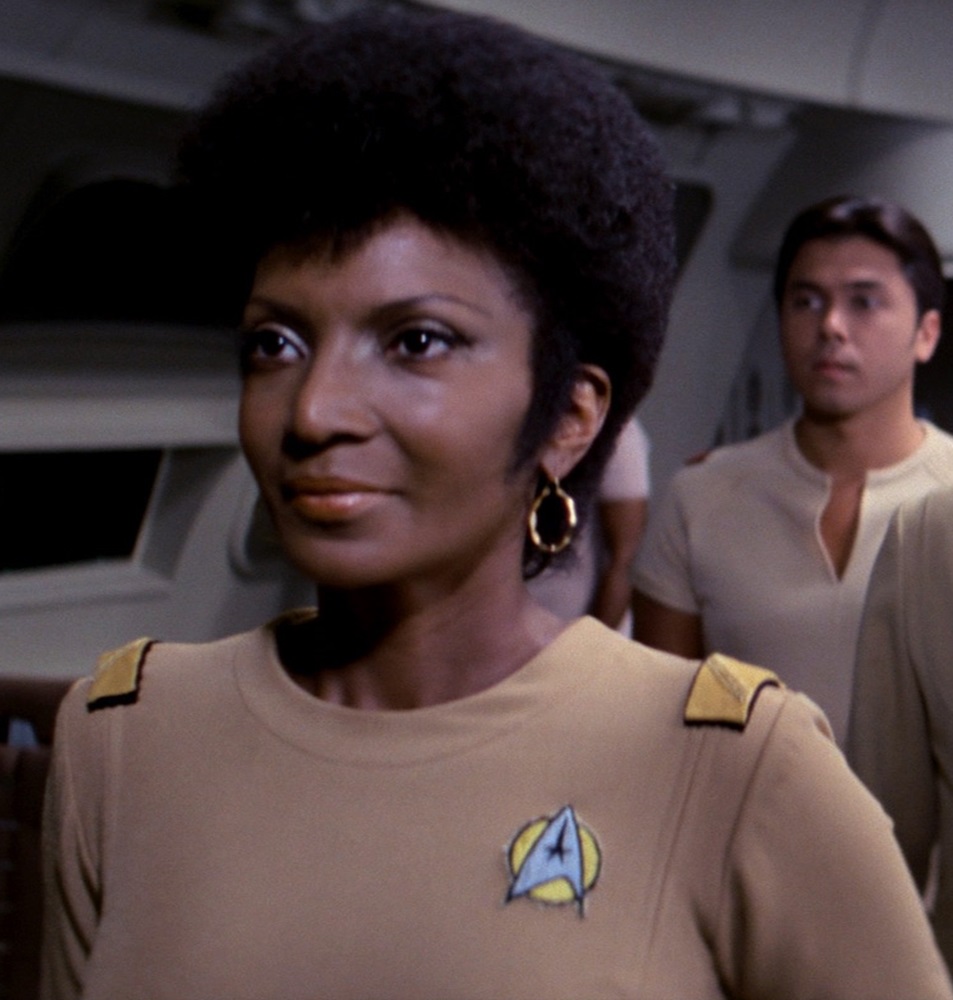
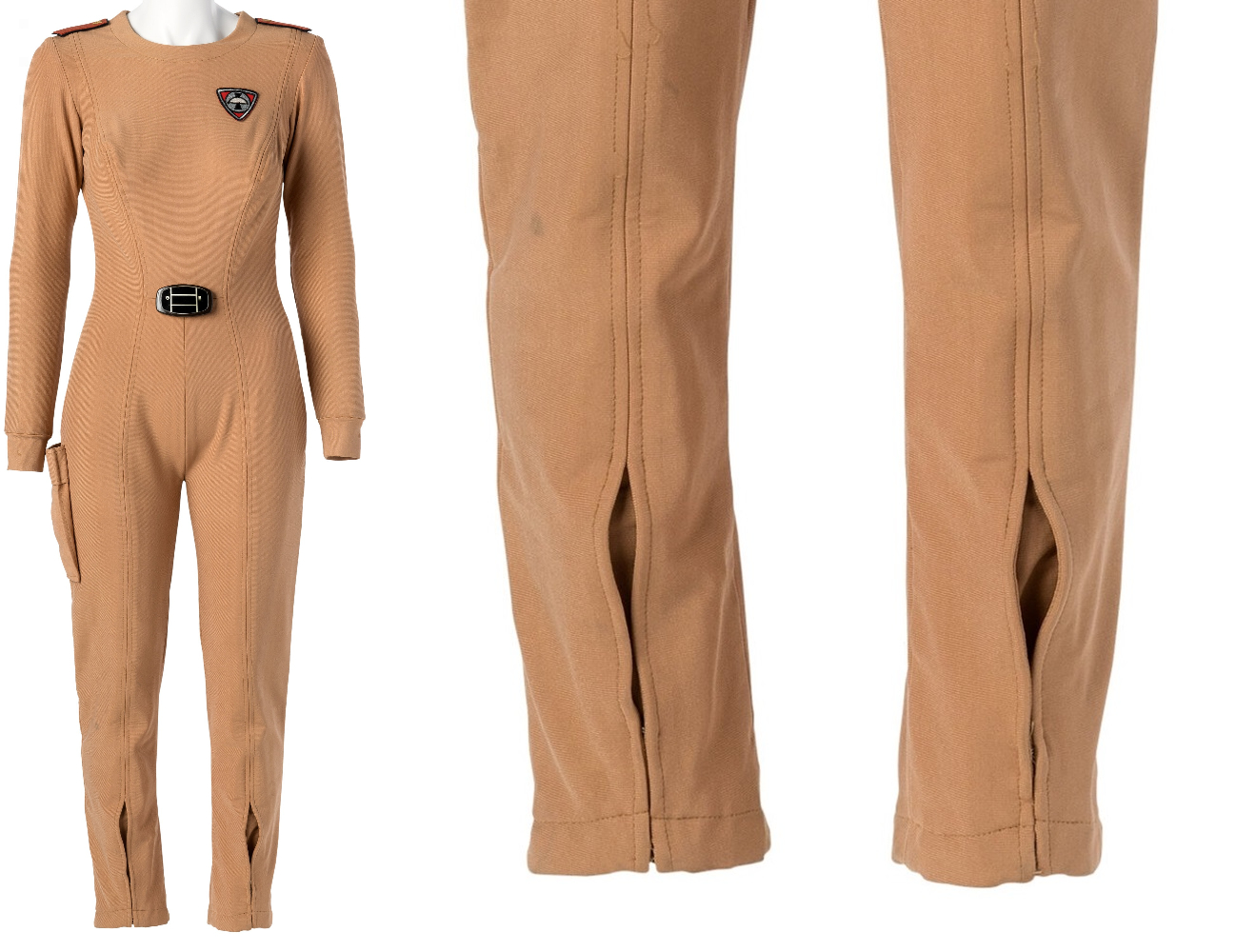
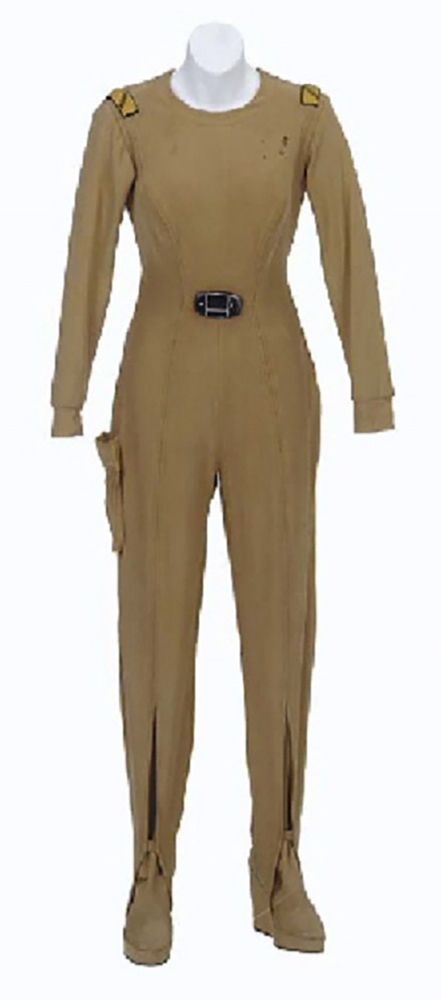
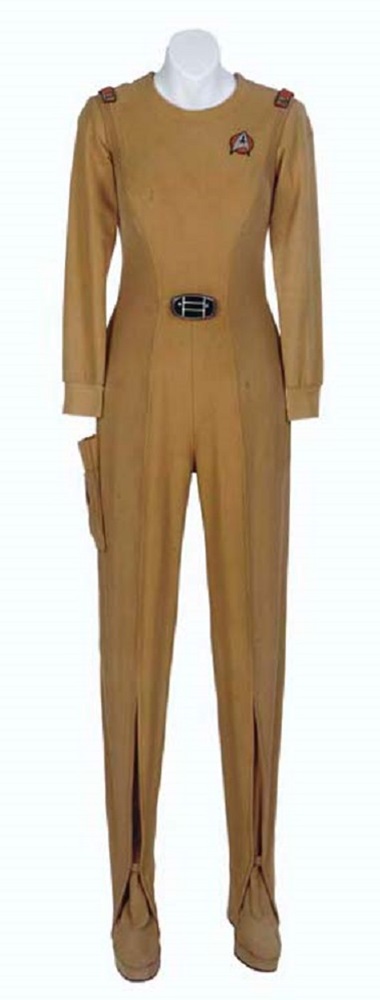
Uhura and Rand wore tan “Class D” jumpsuits.
Sulu and Chekov would have presumably worn tan jumpsuits as well.
Sulu TMP "Class D" uniform auction photo
Chekov TMP "Class D" uniform auction photo
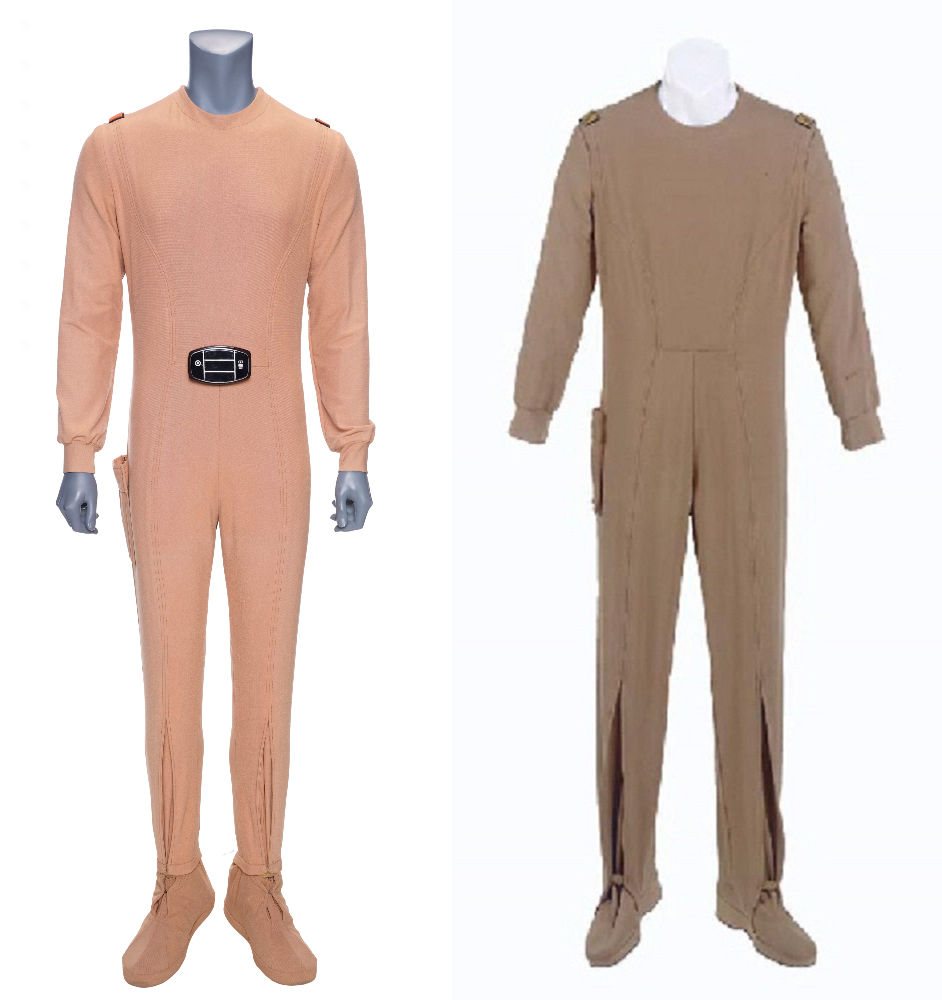
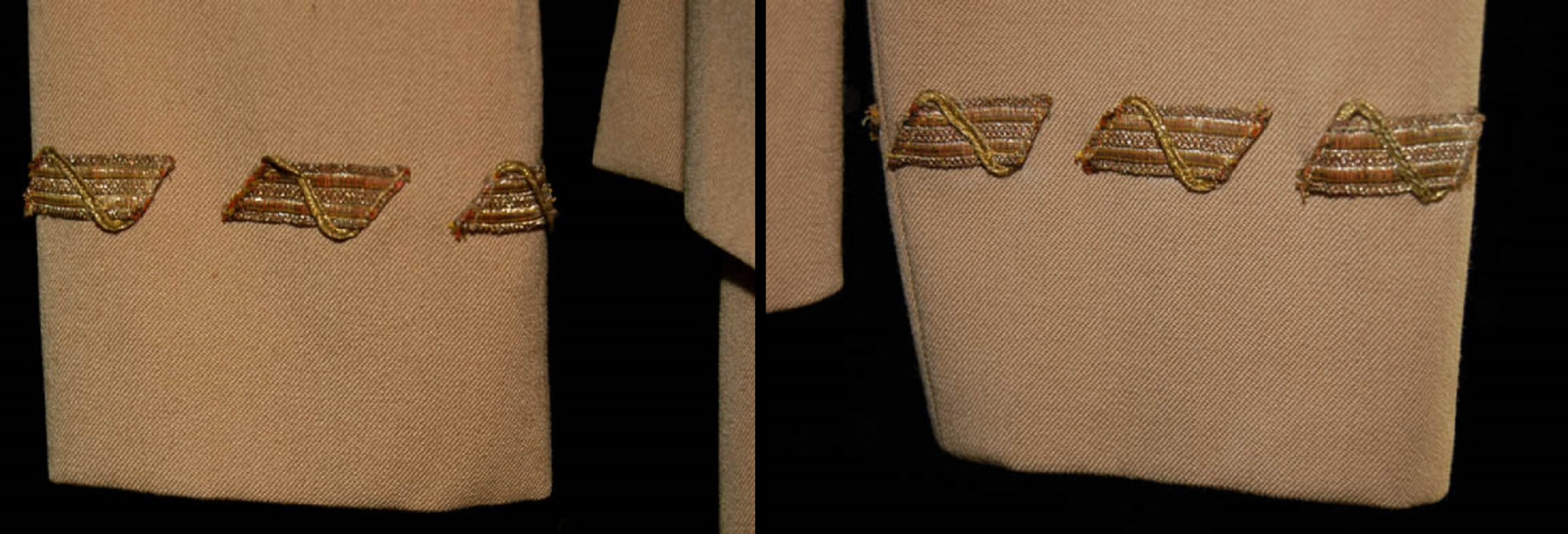
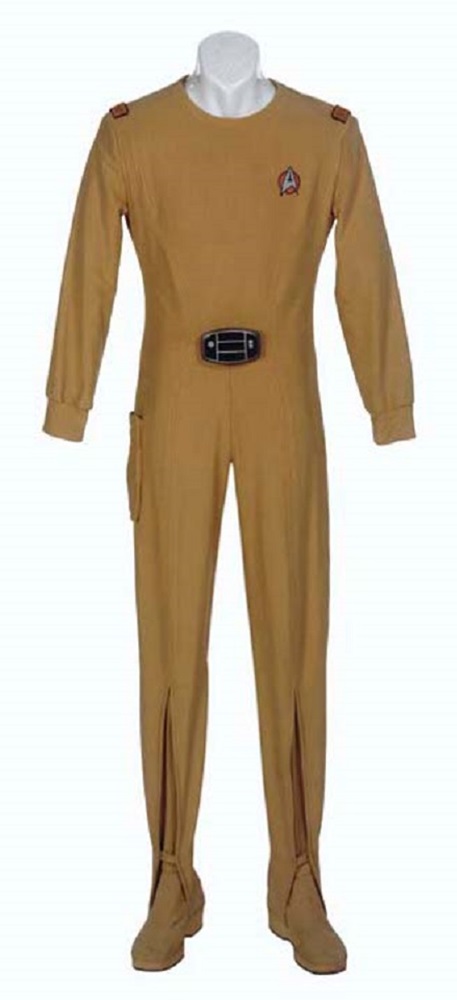
There were at least two different tan colors used – a pale, reddish “peach” (left) and a more neutral “khaki” (right).
TMP "Class D" uniform auction photos
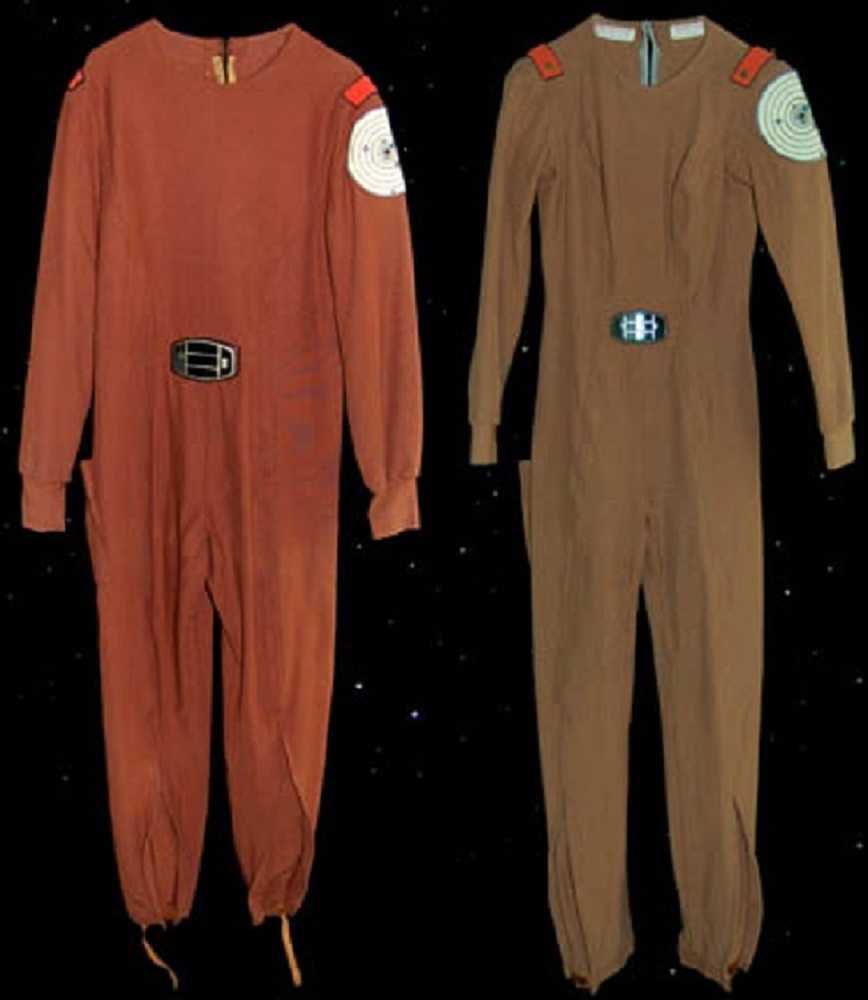
And of course, there was brown.
I think there may have actually been two different browns used – a lighter reddish brown, and a darker greenish brown – but as of the writing of this analysis, I haven’t come across any direct side-by-side comparisons or definitive proof.
Auction photos (especially older ones) are notoriously unreliable for color reference, but if I pair them together a certain way there appears to be enough of a consistent trend to differentiate the two brown colors I mentioned.
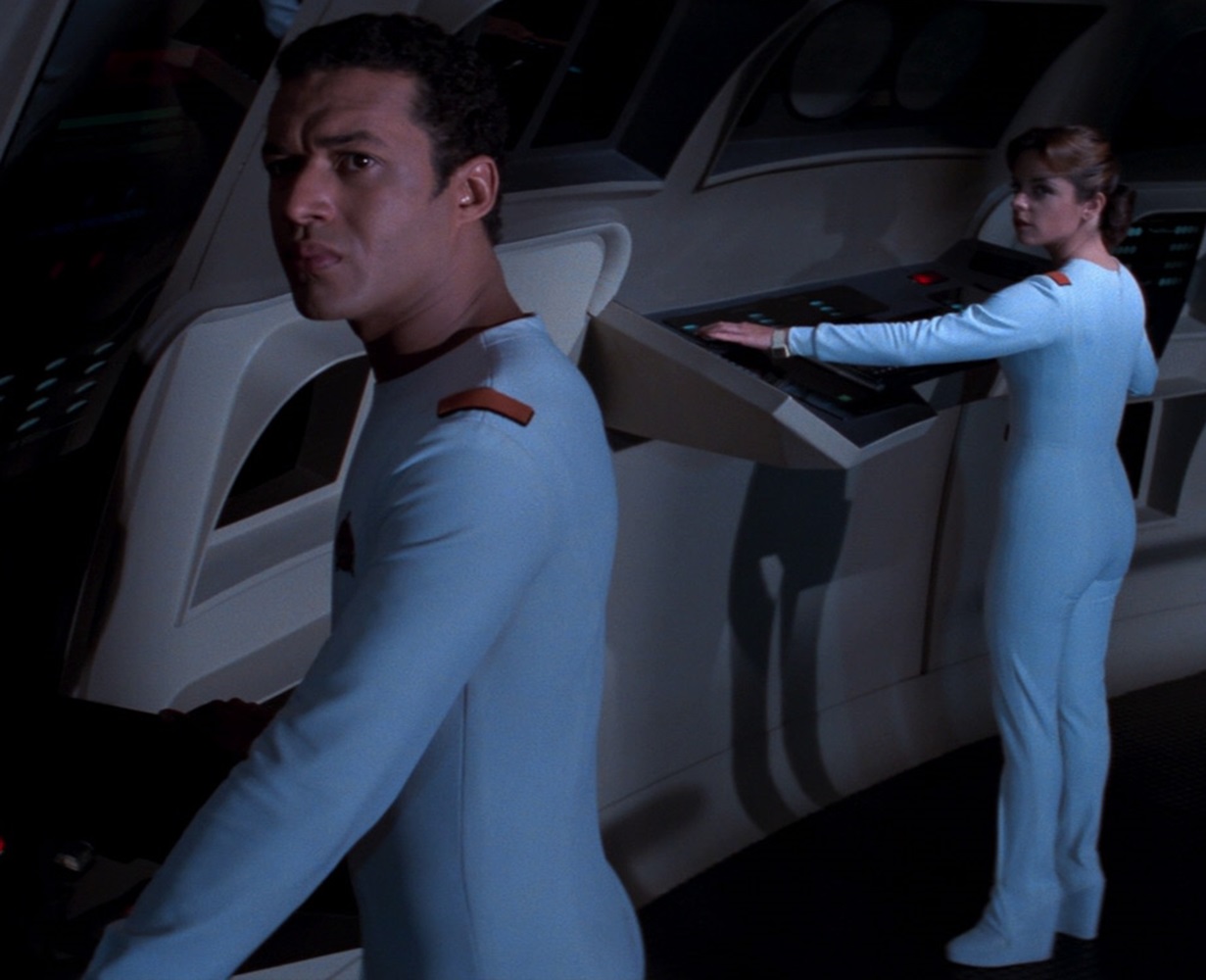
As I mentioned earlier, “white” (which was actually an off-white cream color that only looked white on-camera) was commonly worn by extras on the bridge and in engineering.
Neckline
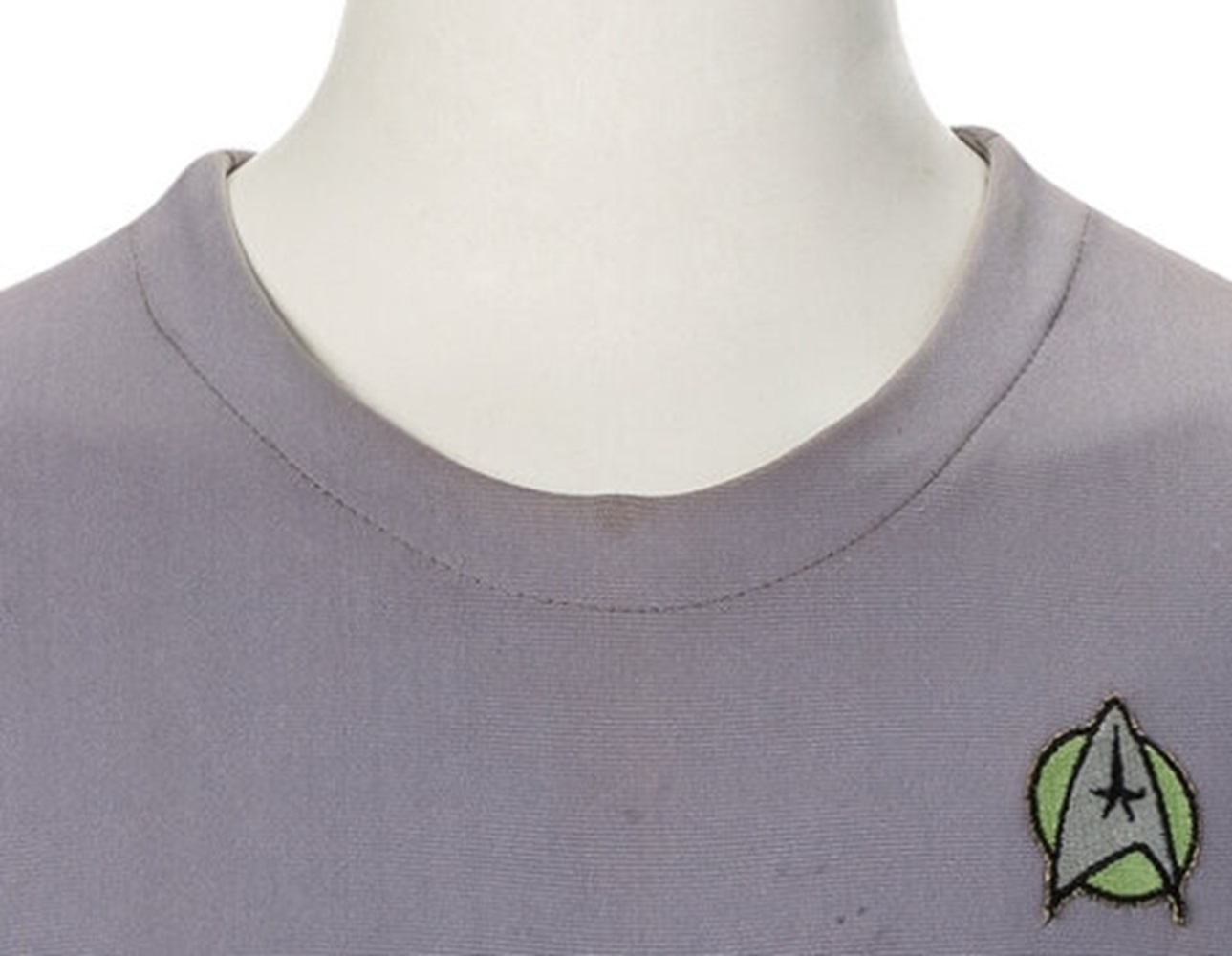
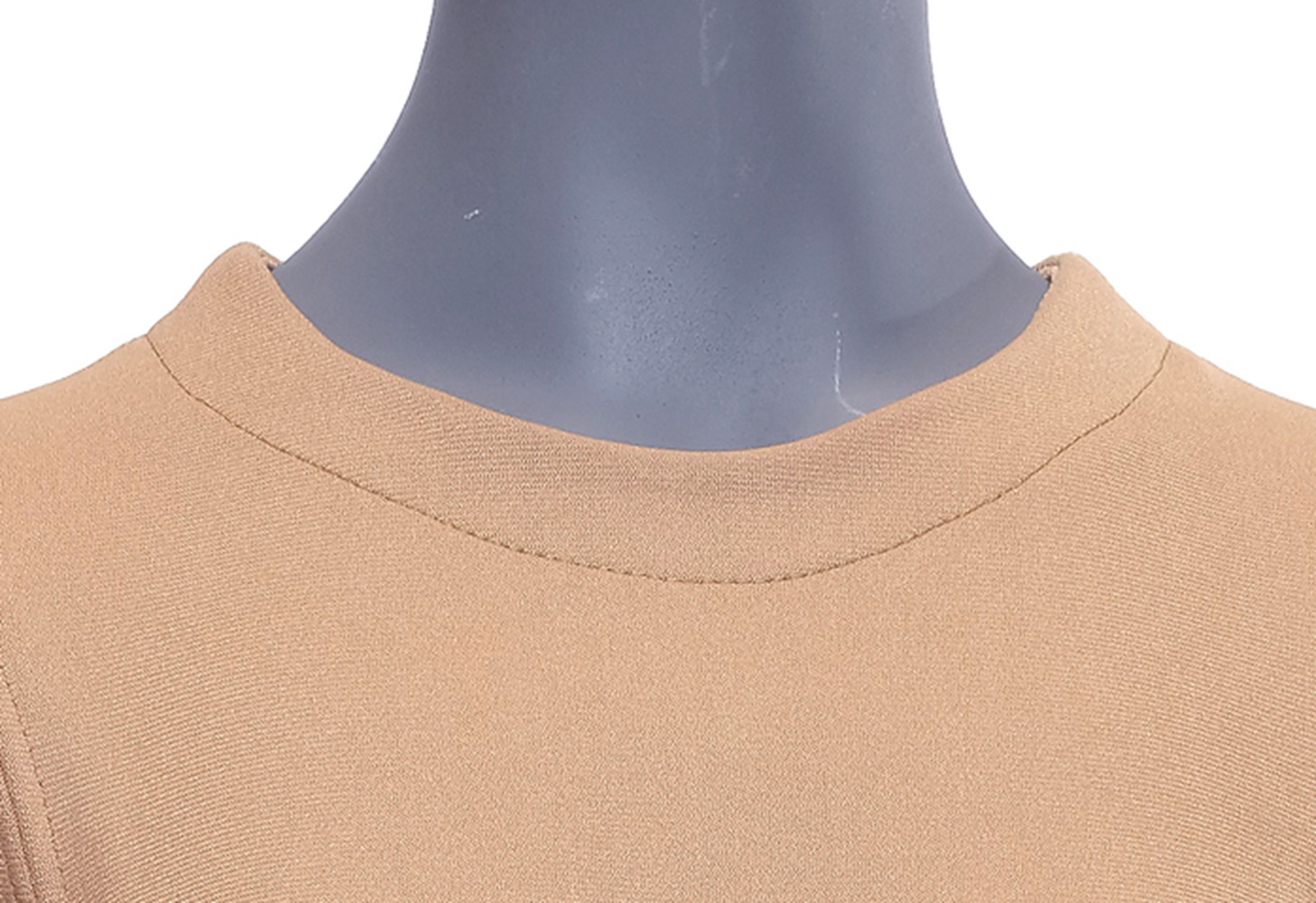
The “Class D” jumpsuit had an open neckline with no collar.
The neckline was accented with a row of topstitching in matching thread.
The topstitching registered somewhat subtly on-camera, but it’s easier to see in high-resolution auction photos.
The neckline was finished with a narrow facing, which was turned under and fastened into place by the topstitching.
On these jumpsuits, the facing was also understitched close to the seam line.
Shoulder Seams
The jumpsuits had conventional shoulder seams – perhaps slightly higher/toward the back than usual, perhaps with a minor bit of curve, but basically typical shoulder seams.
As best I’ve been able to determine, these jumpsuits had no shoulder pads.
Shoulder Tabs
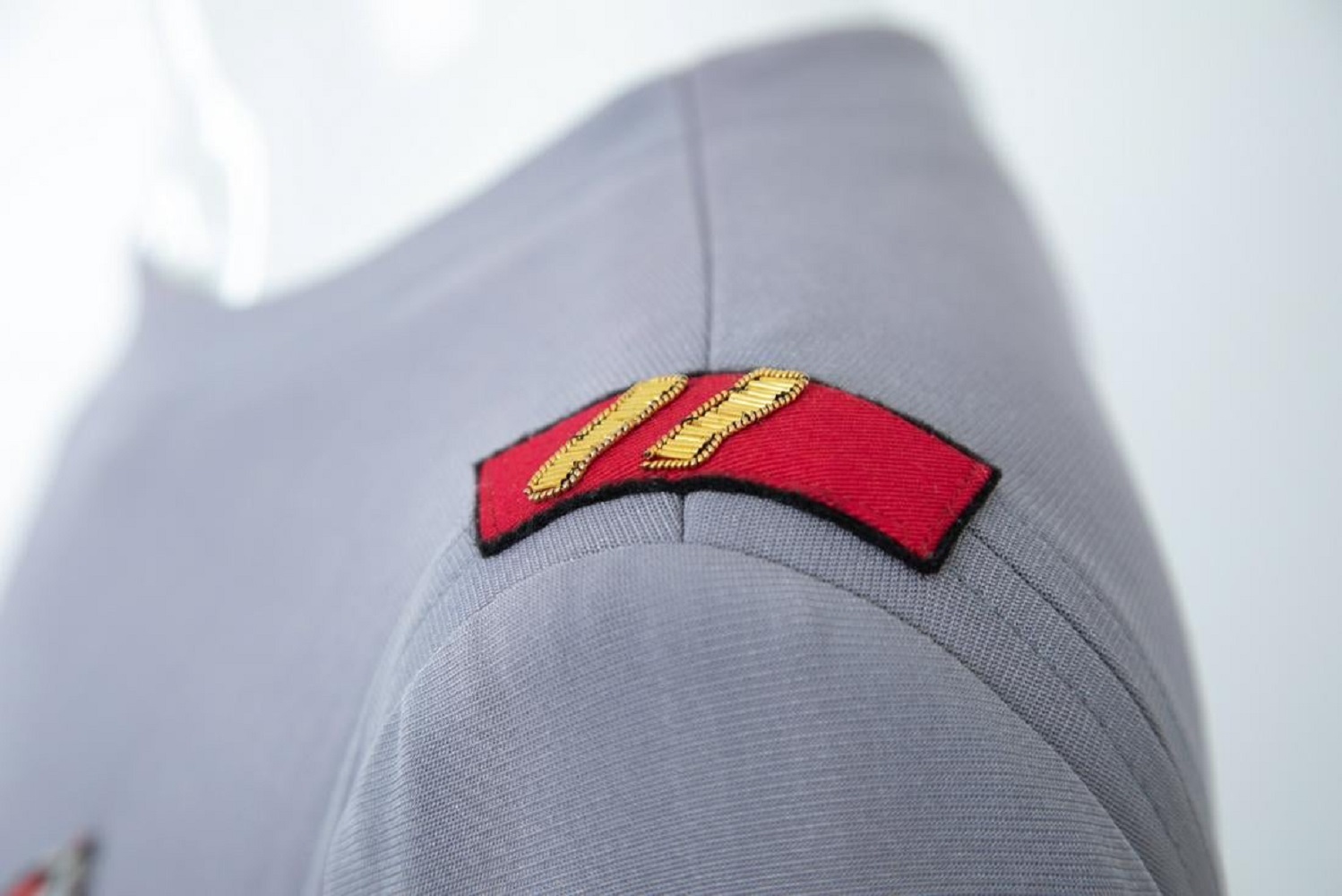
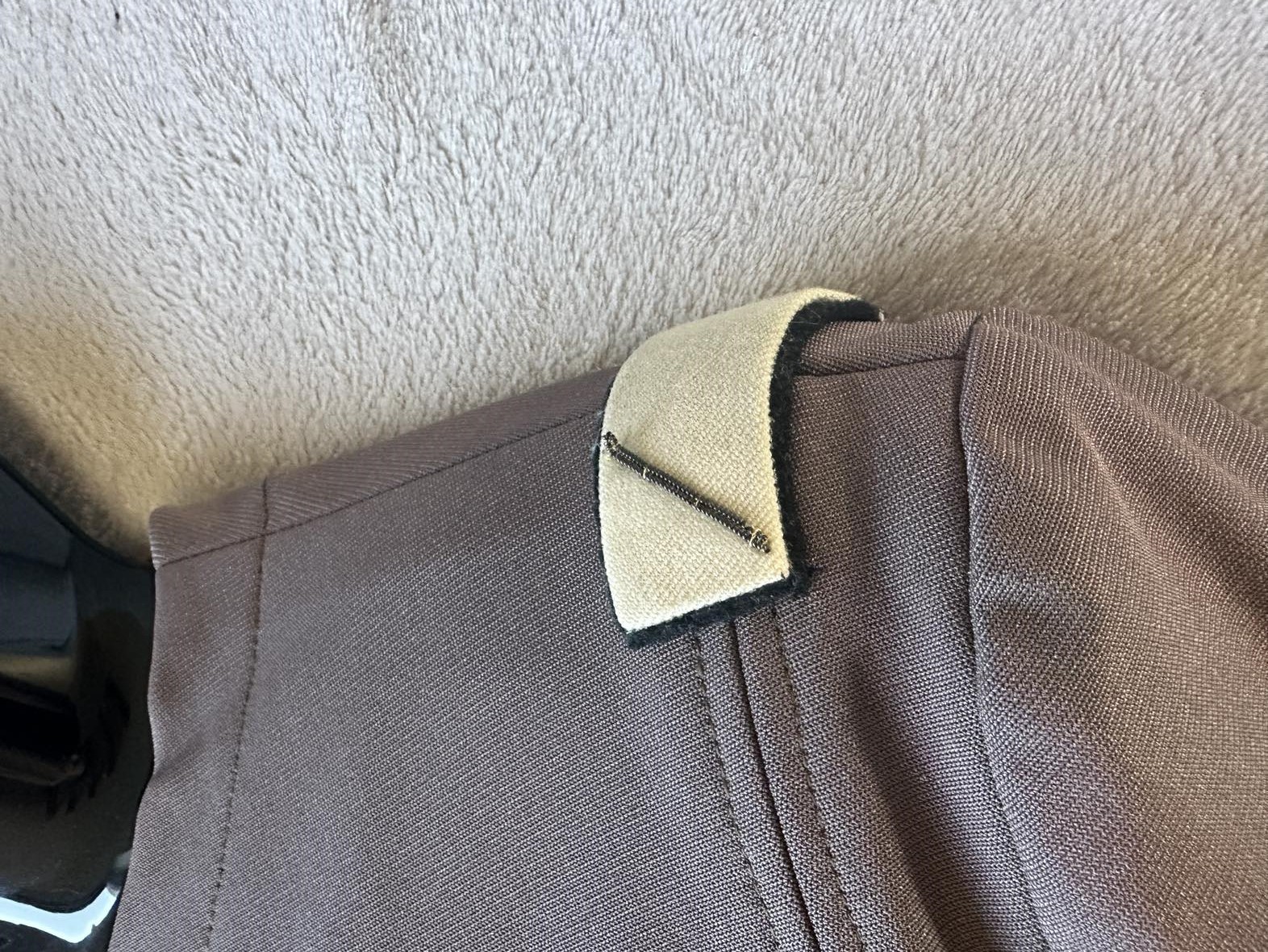
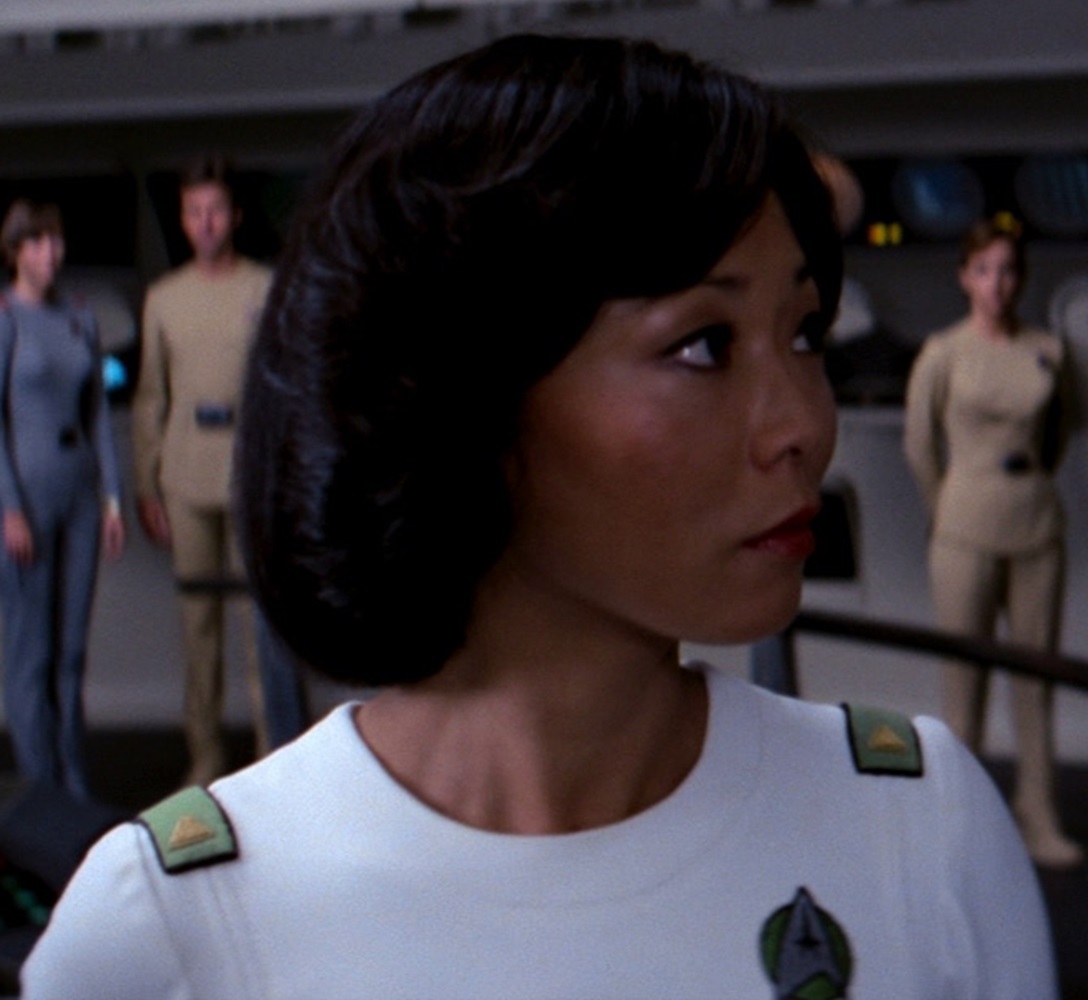
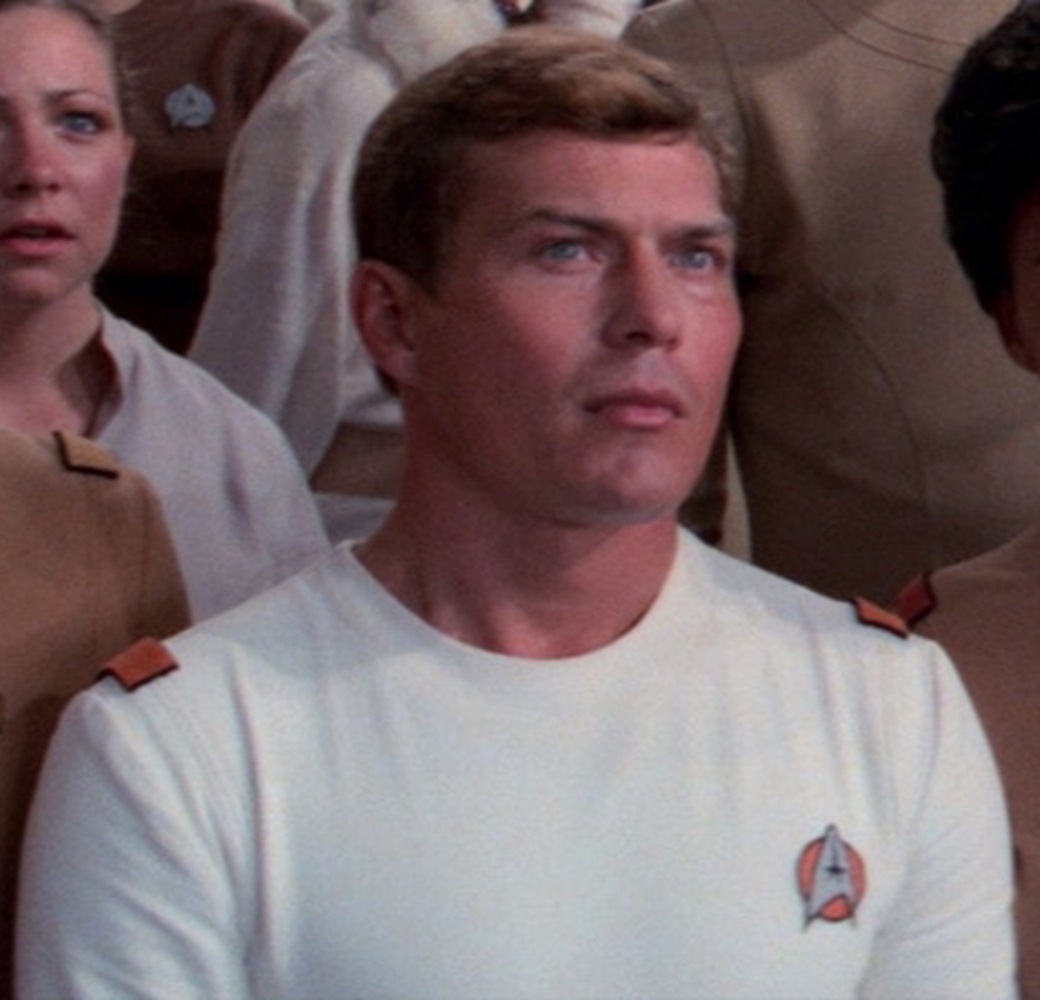
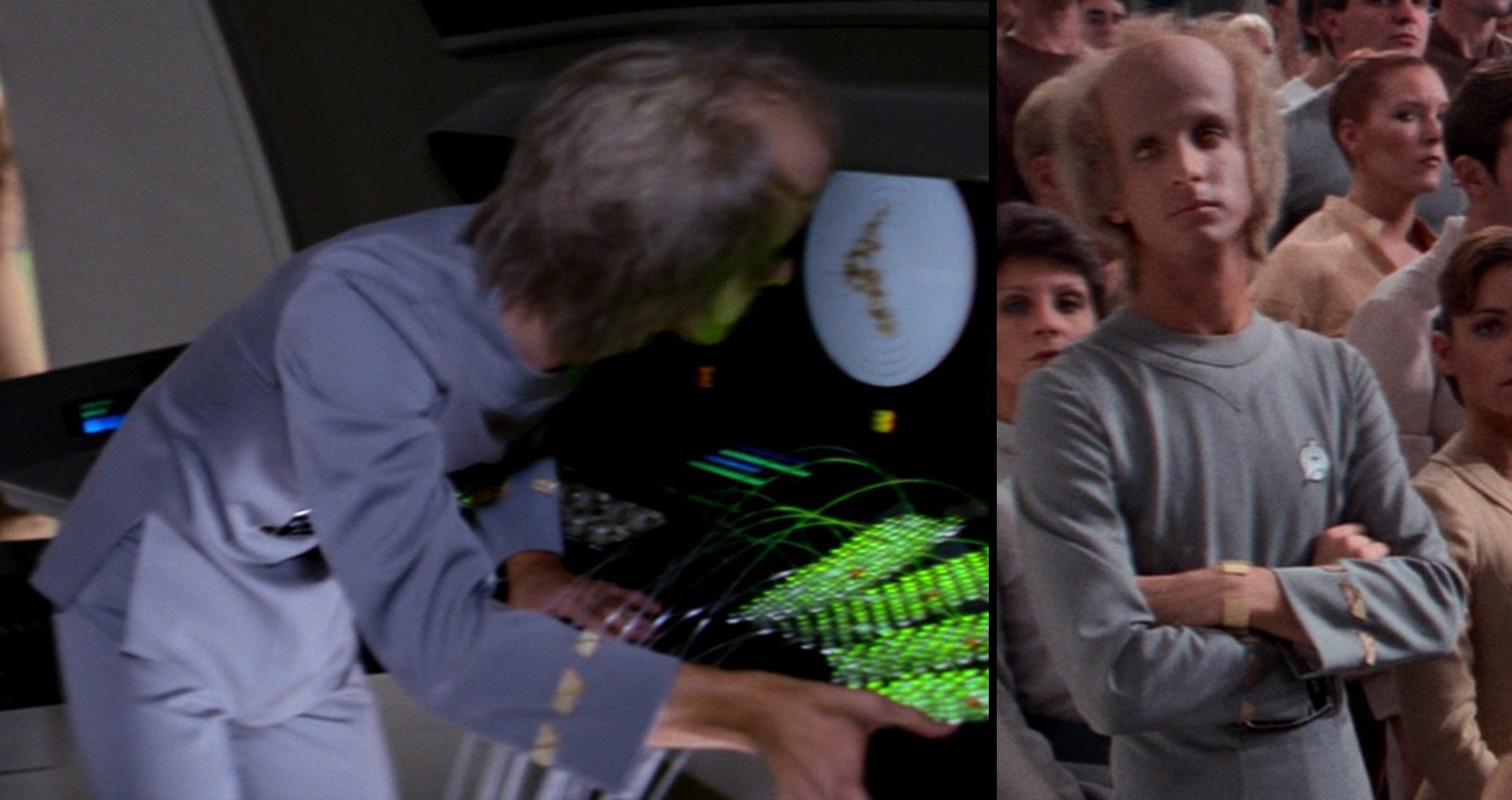
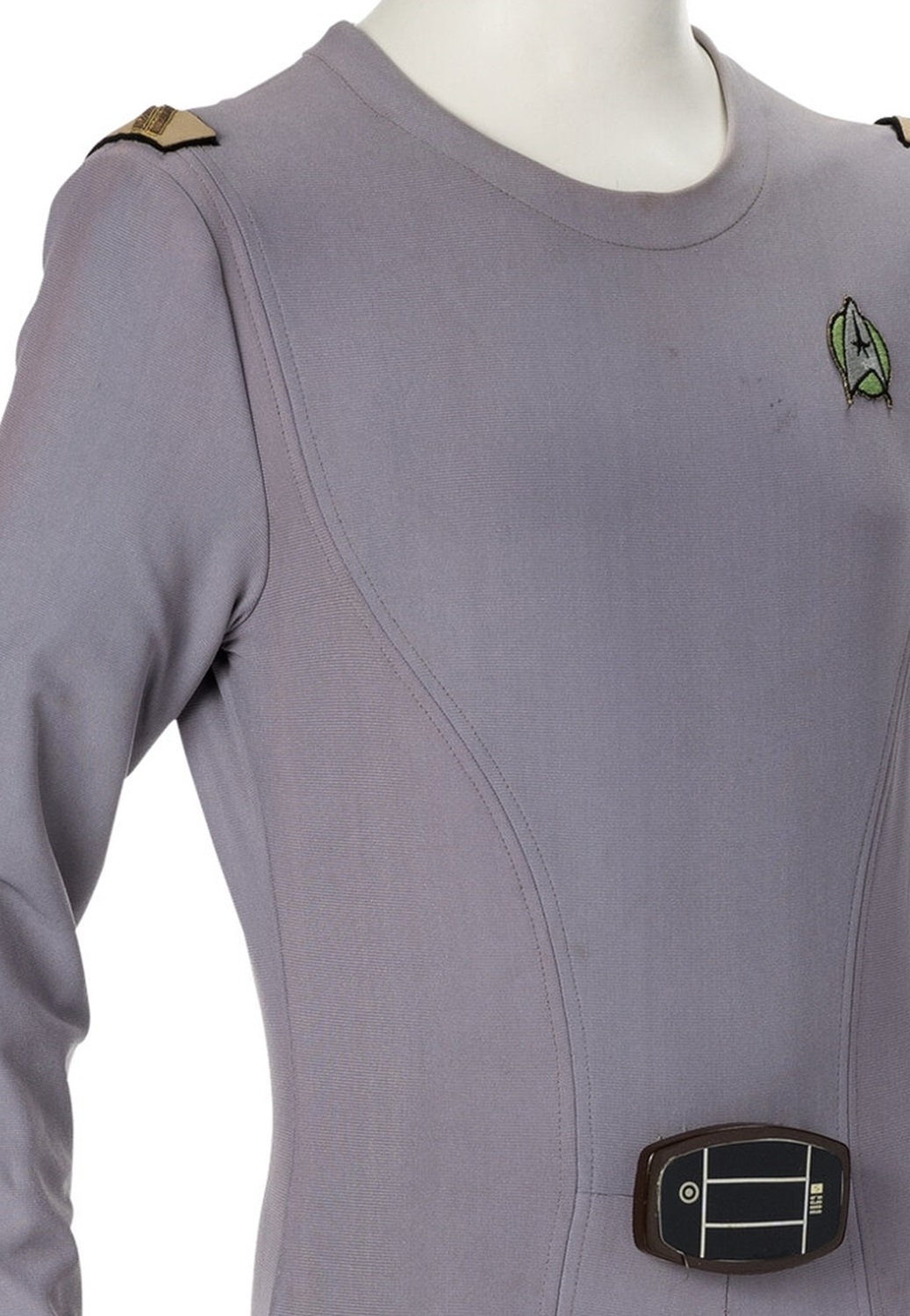
Like several of the other TMP uniforms, the “Class D” jumpsuits had small shoulder tabs that indicated the wearer’s division and rank.
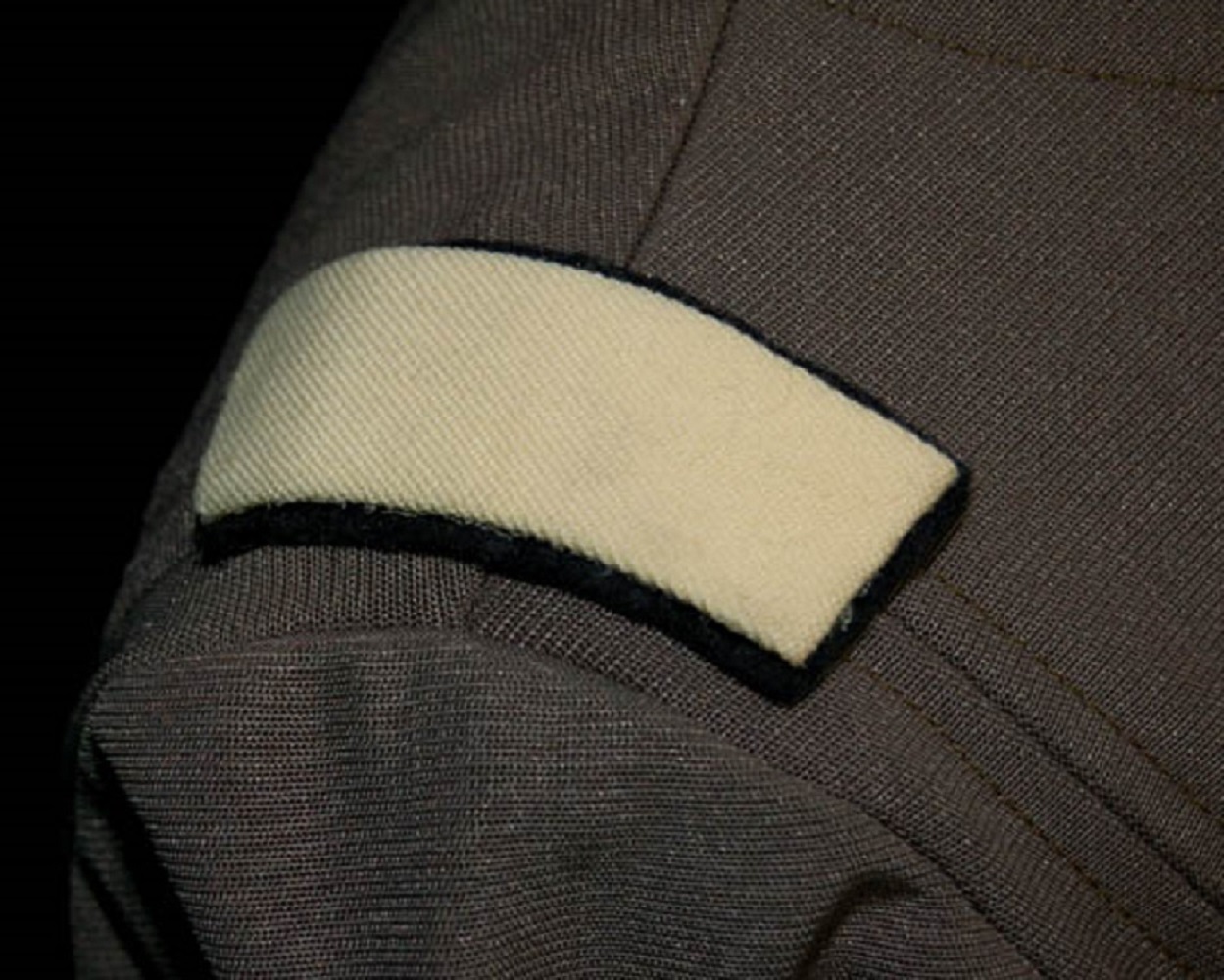
White was for command:
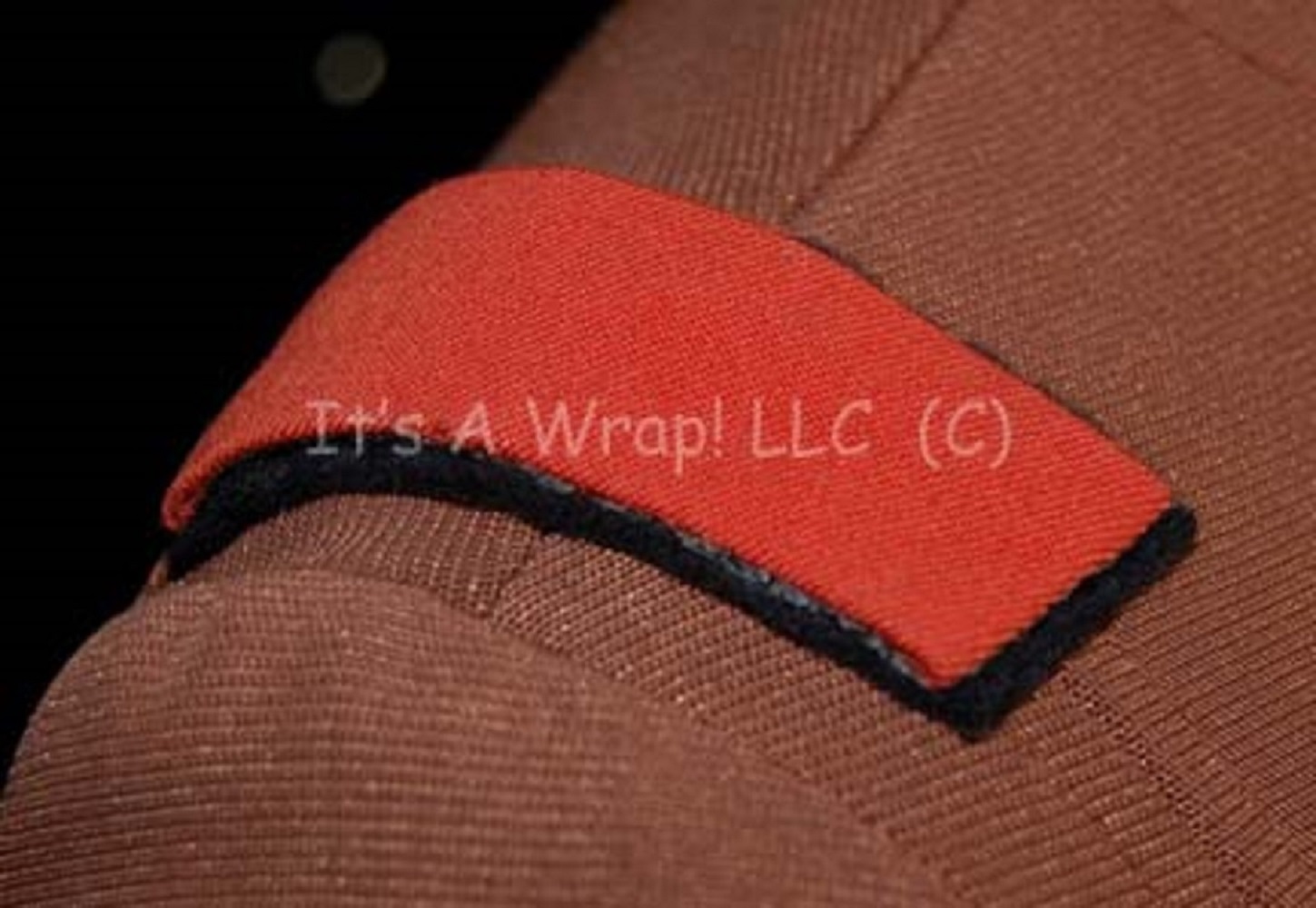
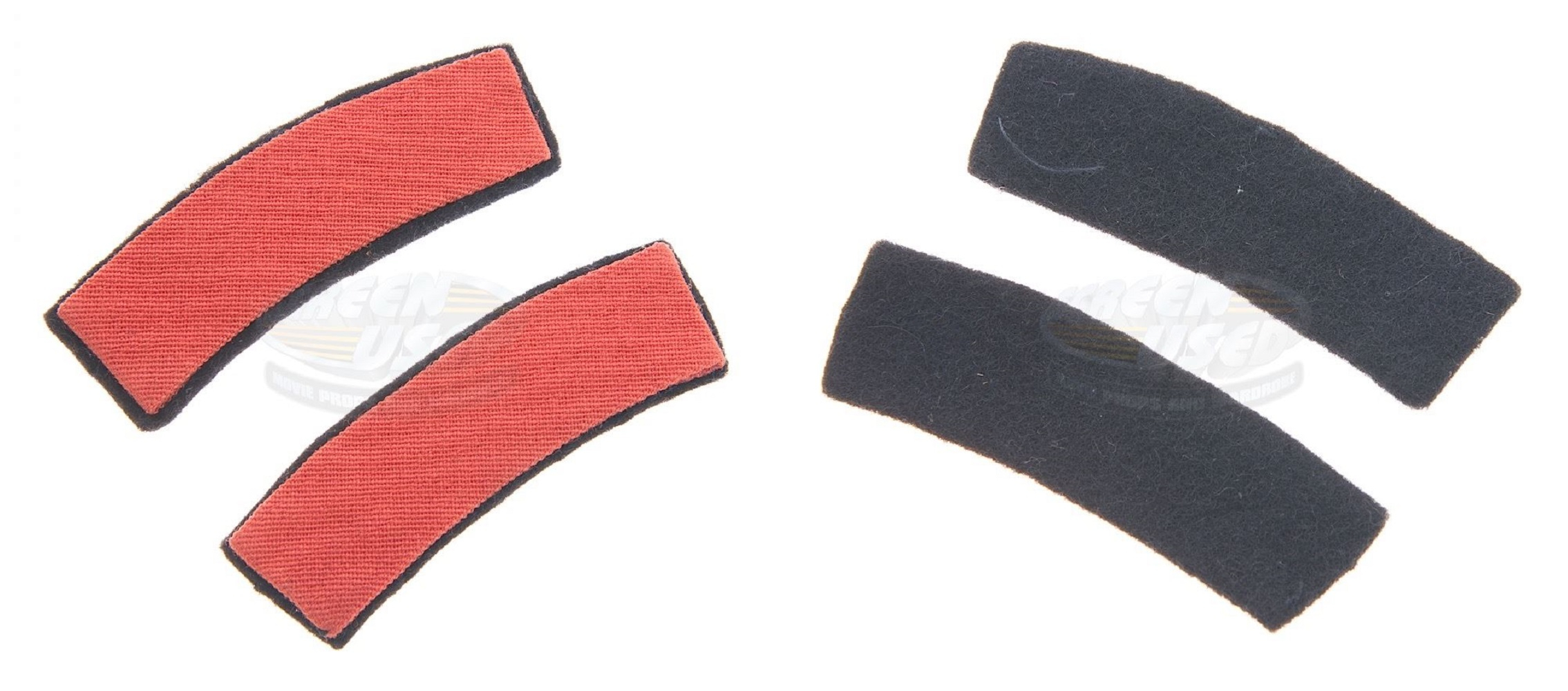
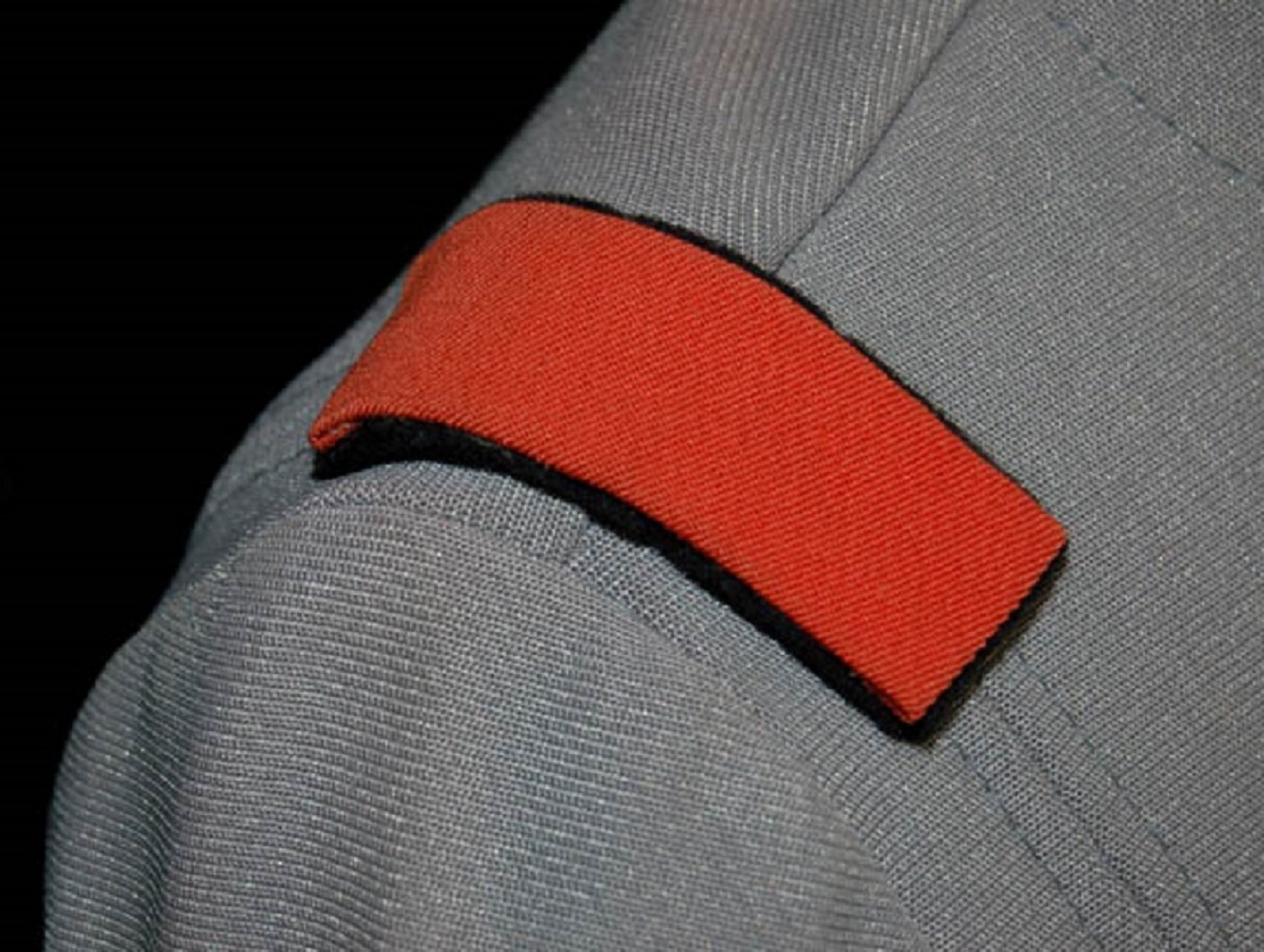
Red was for engineering:
Gold was for operations.
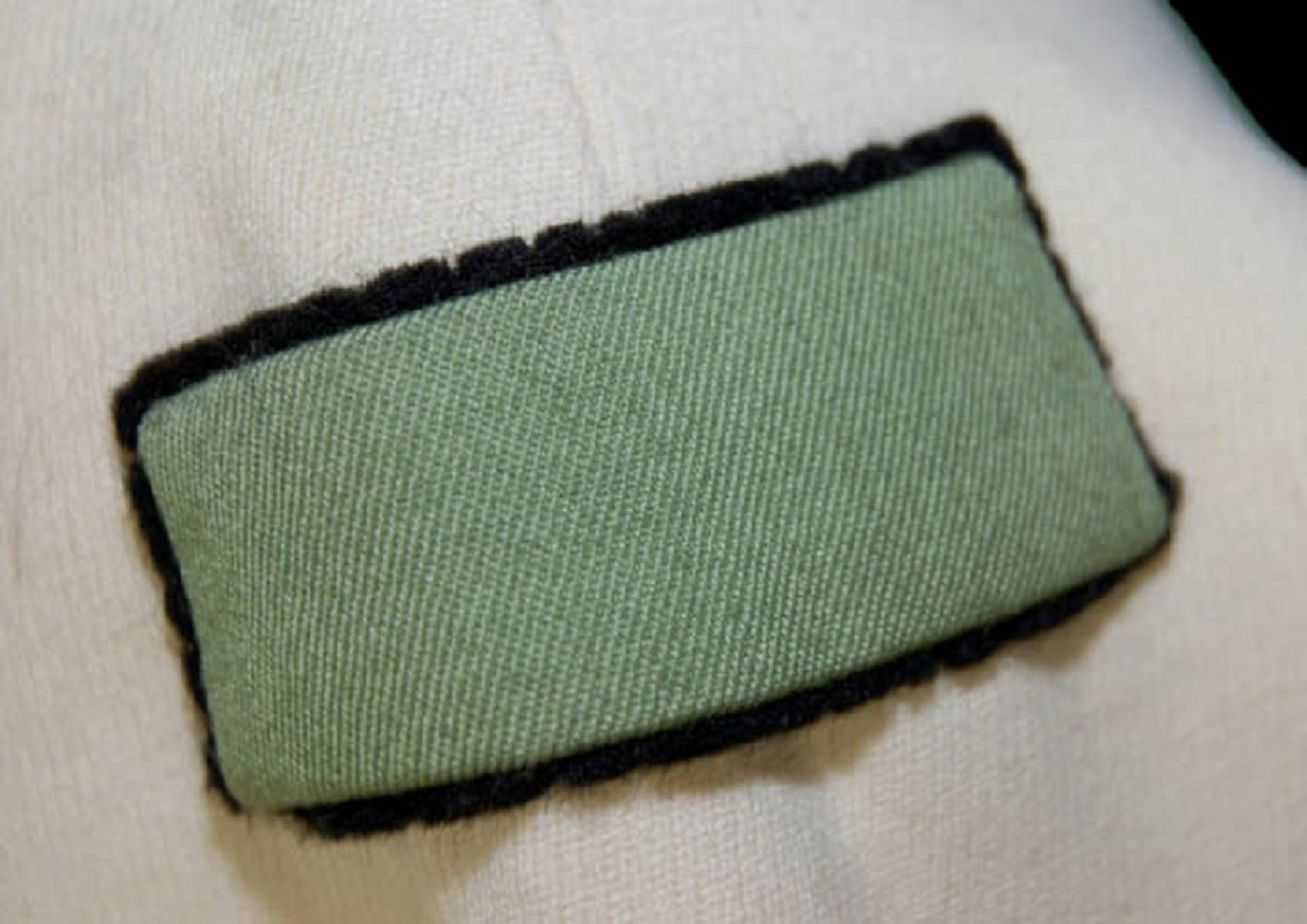
Green was for medical.
Orange was for sciences.
And gray was for security.
Another subtle continuation of the TOS ranking system was that these shoulder tabs also showed the wearer’s rank, mostly using the same schema as seen in the series.
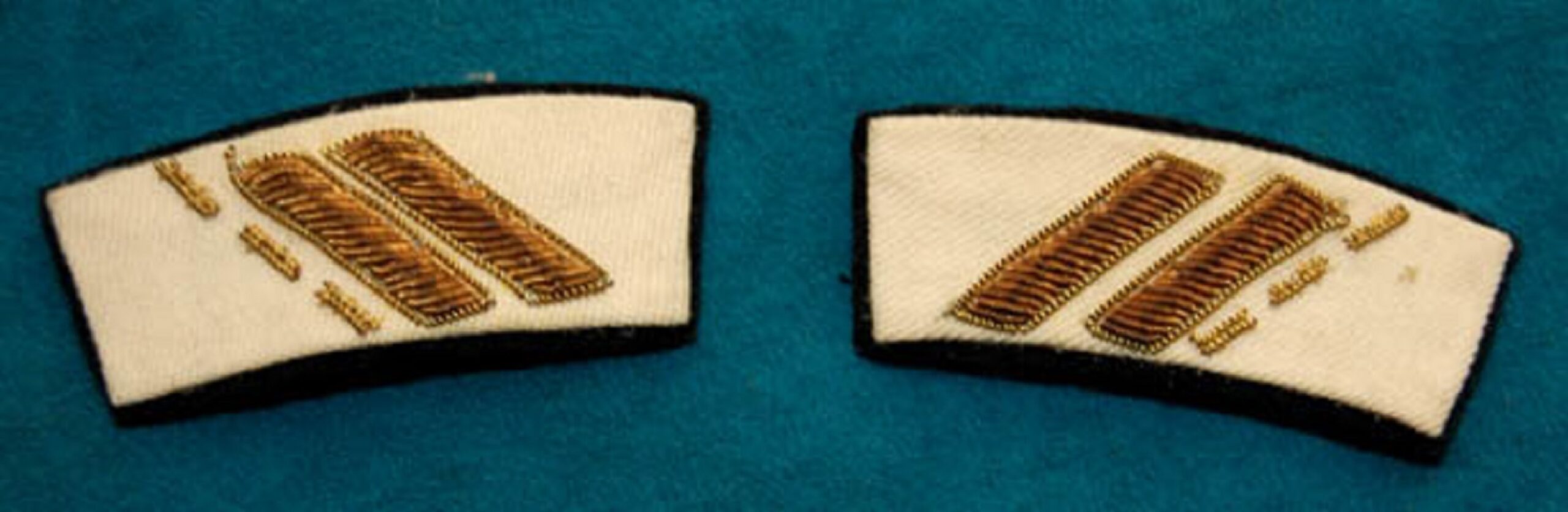
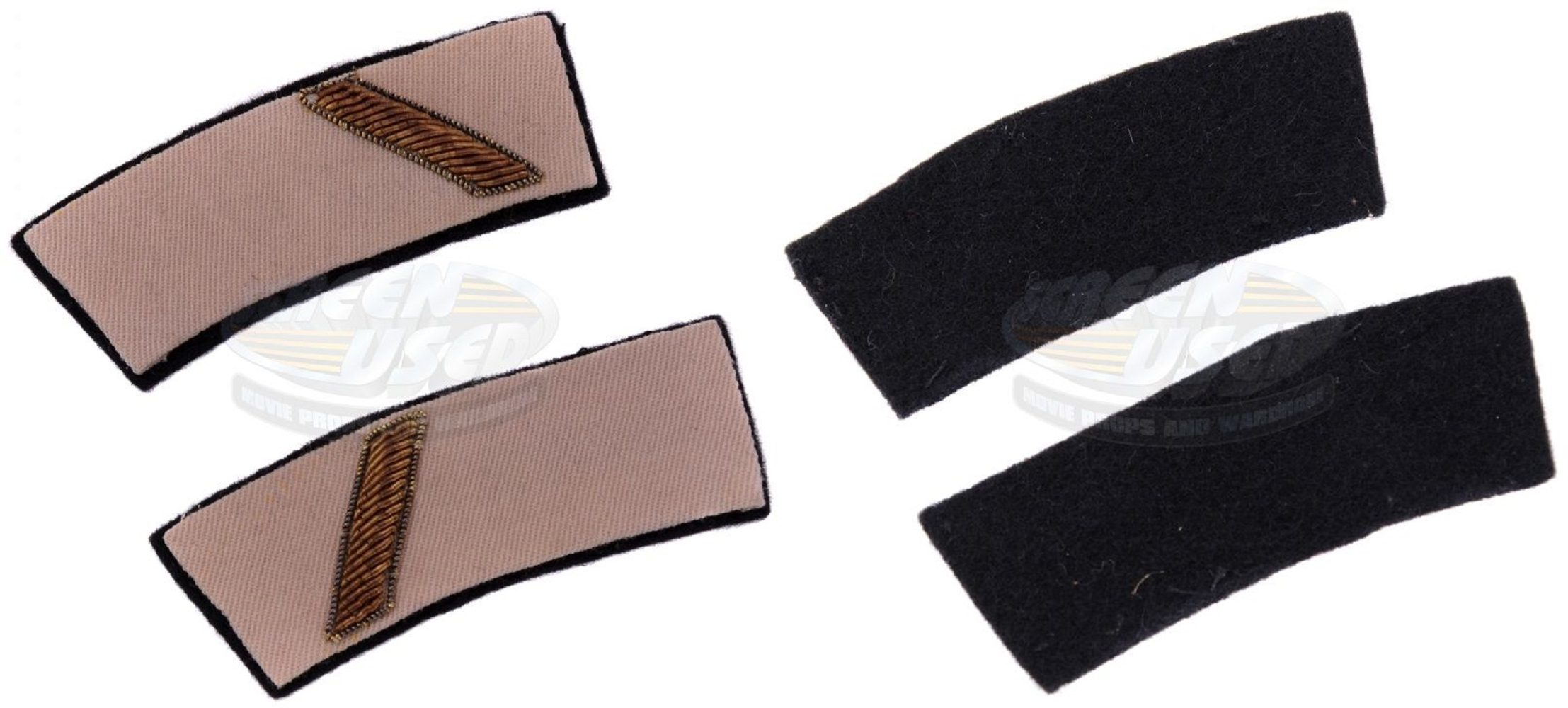
Captain was indicated with two thick stripes and a row of dashes.
Commander was shown with two thick stripes.
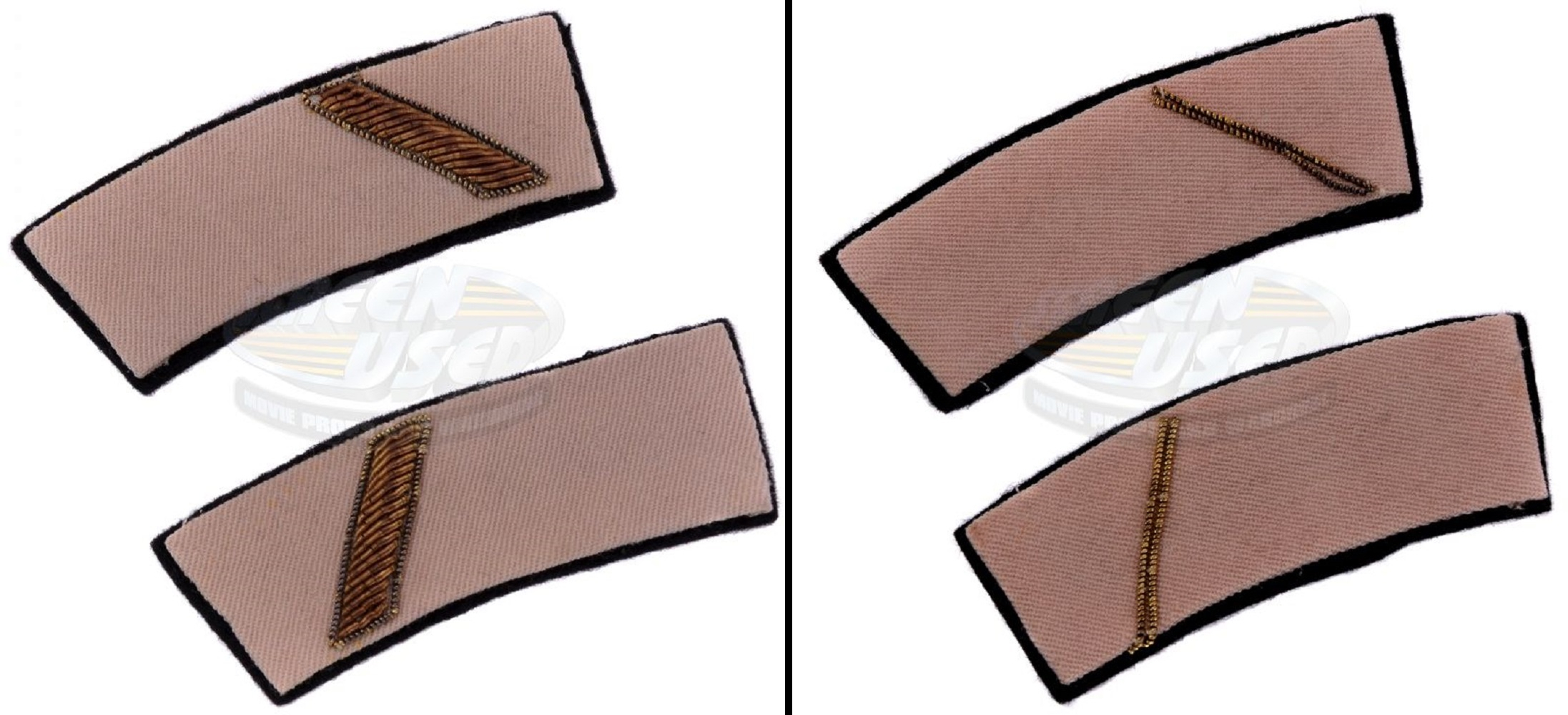
As I mentioned in my TMP uniform paradigm post, I believe Fletcher diverged from the TOS ranking system a bit, making lieutenant commander was one thick stripe and lieutenant one thinner stripe.
I’m unaware of a “confirmed” rank for ensign, but I believe it was one row of dashes, as evidenced by these “Class A” uniforms (although I don’t believe I’ve ever seen a corresponding rank on any shoulder tabs).
There were at least a couple new ranks added to the lineup for The Motion Picture.
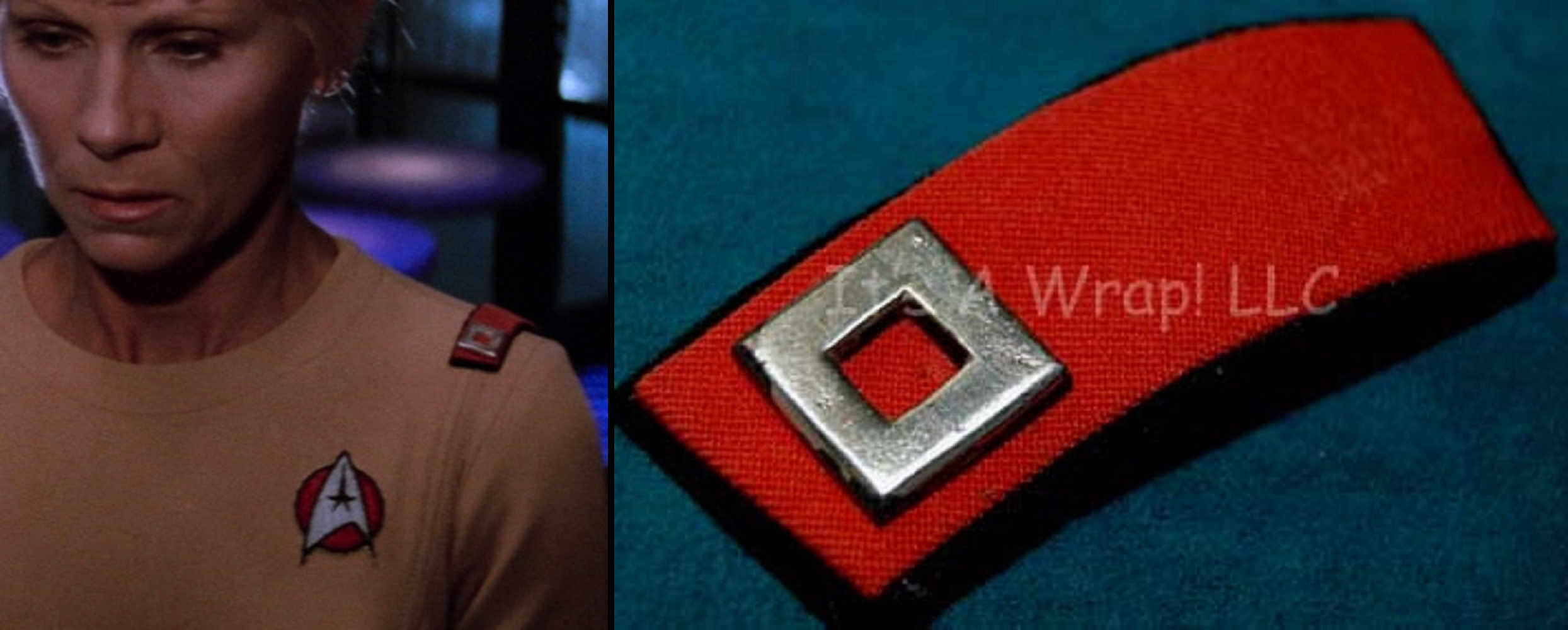
The most prominent example was for Rand, who wore a metallic, square-shaped rank insignia on her shoulder tabs:
Her rank was never stated in the movie, but again for what it’s worth, in the TMP novelization, she was the Transporter Chief.
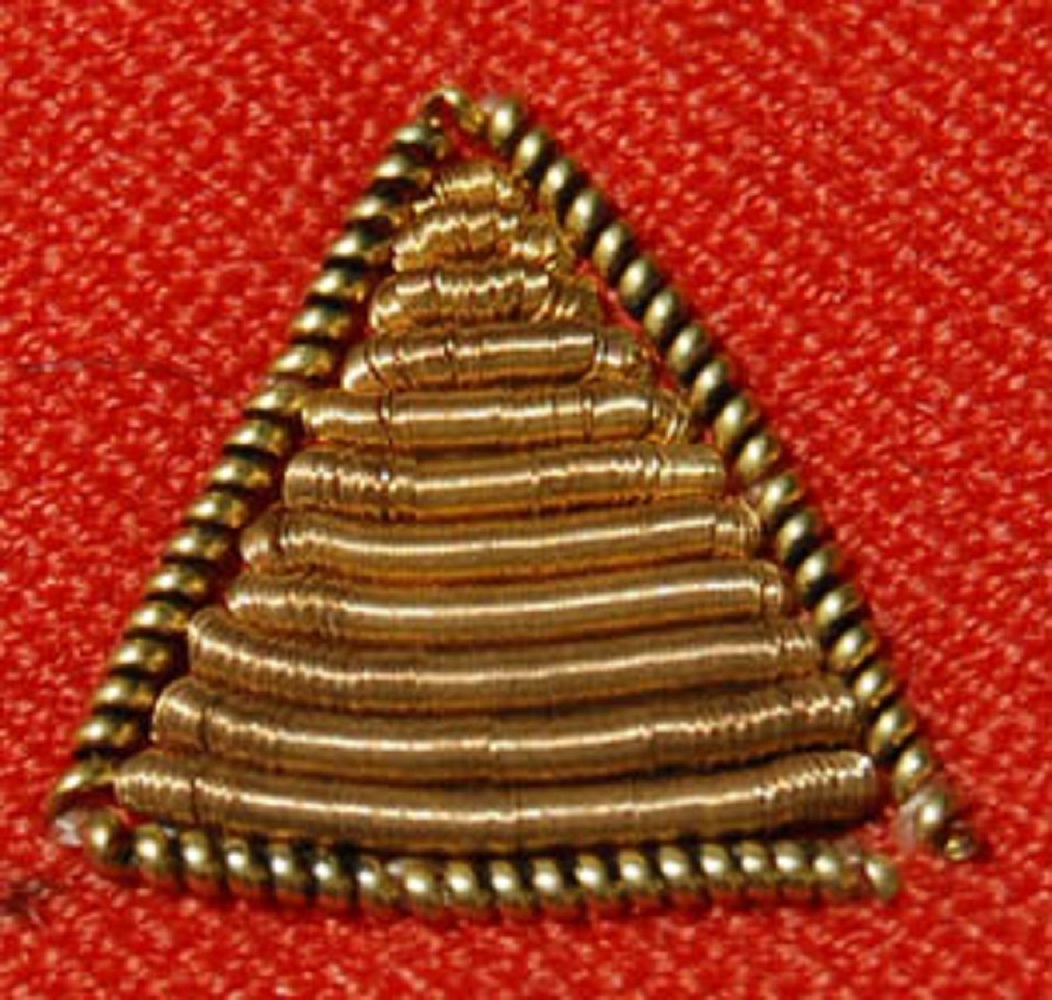
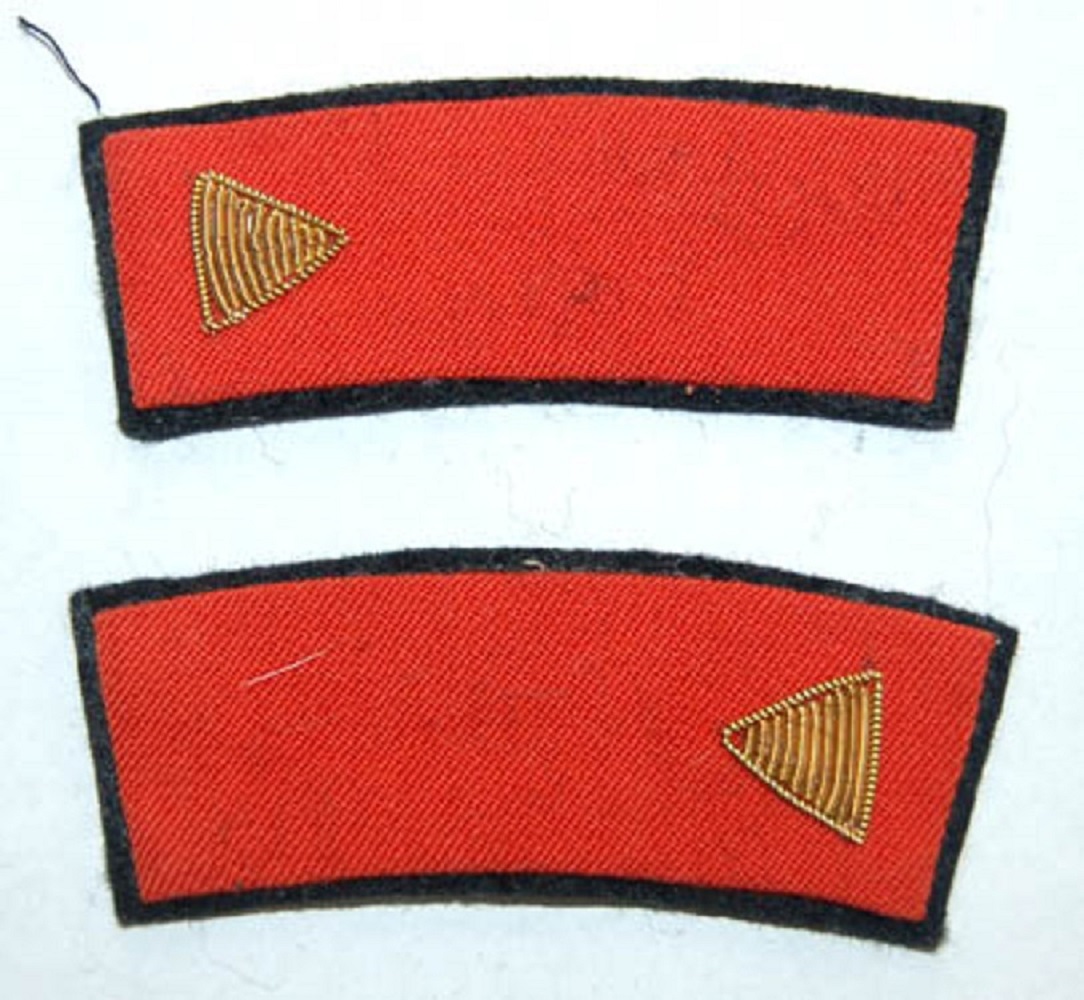
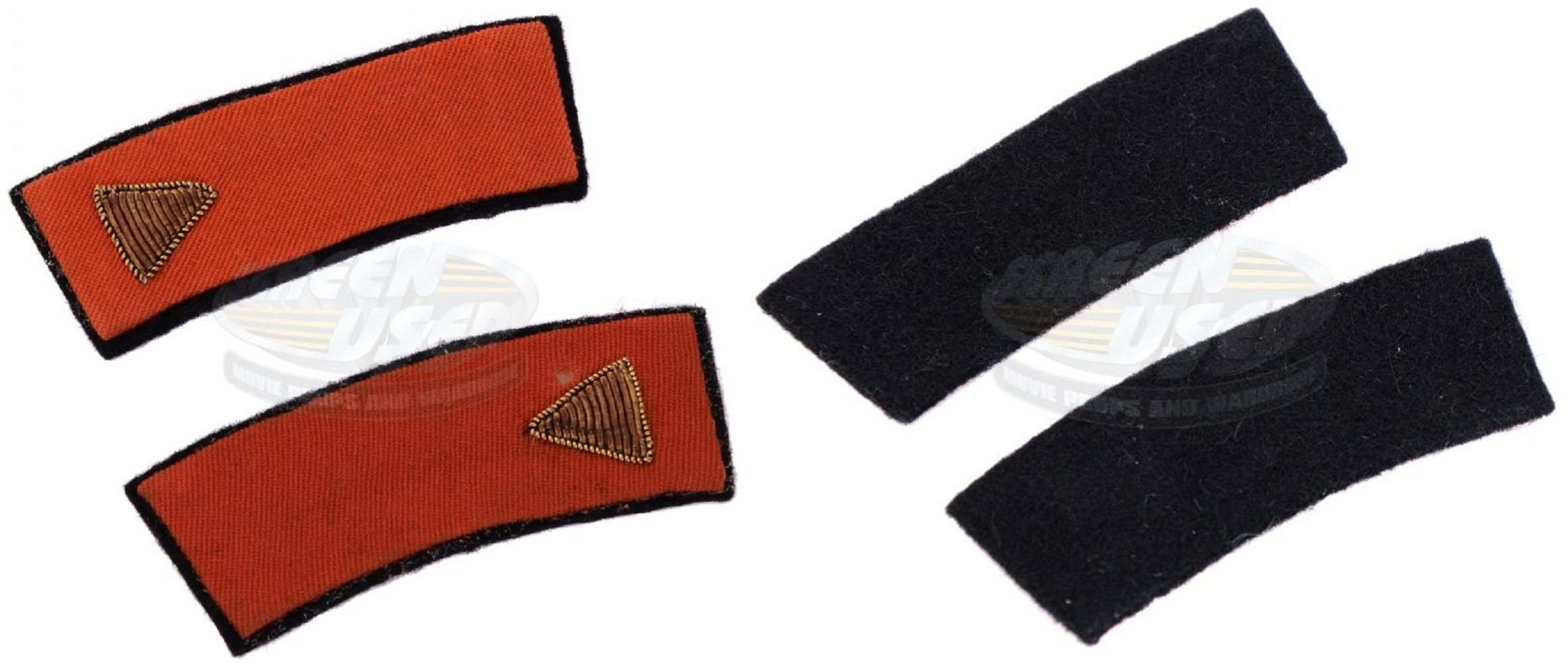
The other new rank insignia was a triangle, which is described as “petty officer” in many auction listings, although I’ve yet to find any factual basis for this association.
There were a few of these floating around in the huge briefing scene.
The tabs were (nearly always) made of division-colored wool gabardine over a slightly larger black felt base.
The division-colored wool appears to have been glued to the felt; on most of the tabs this was well-hidden, but observe the minor glue excess on this particular shoulder tab:
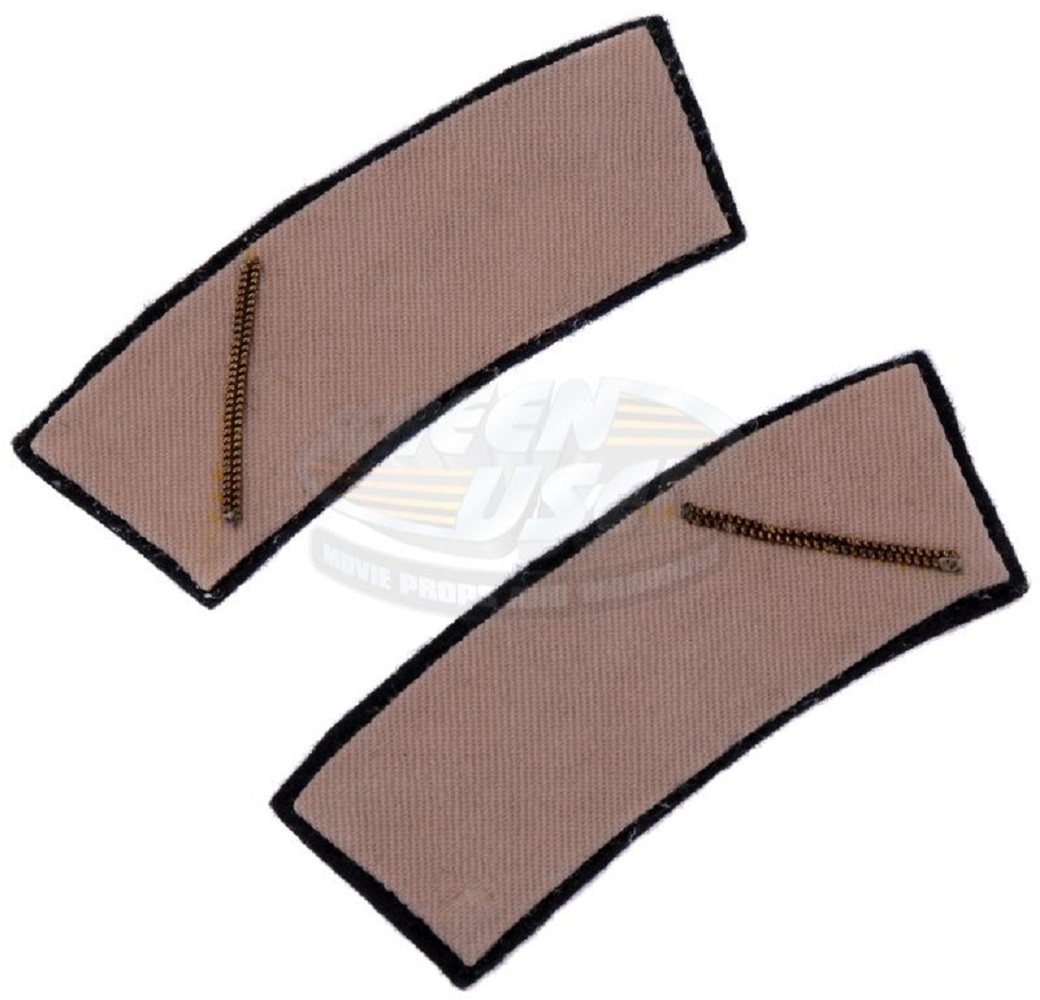
Also observe the lack of hand-sewing thread visible on the underside:
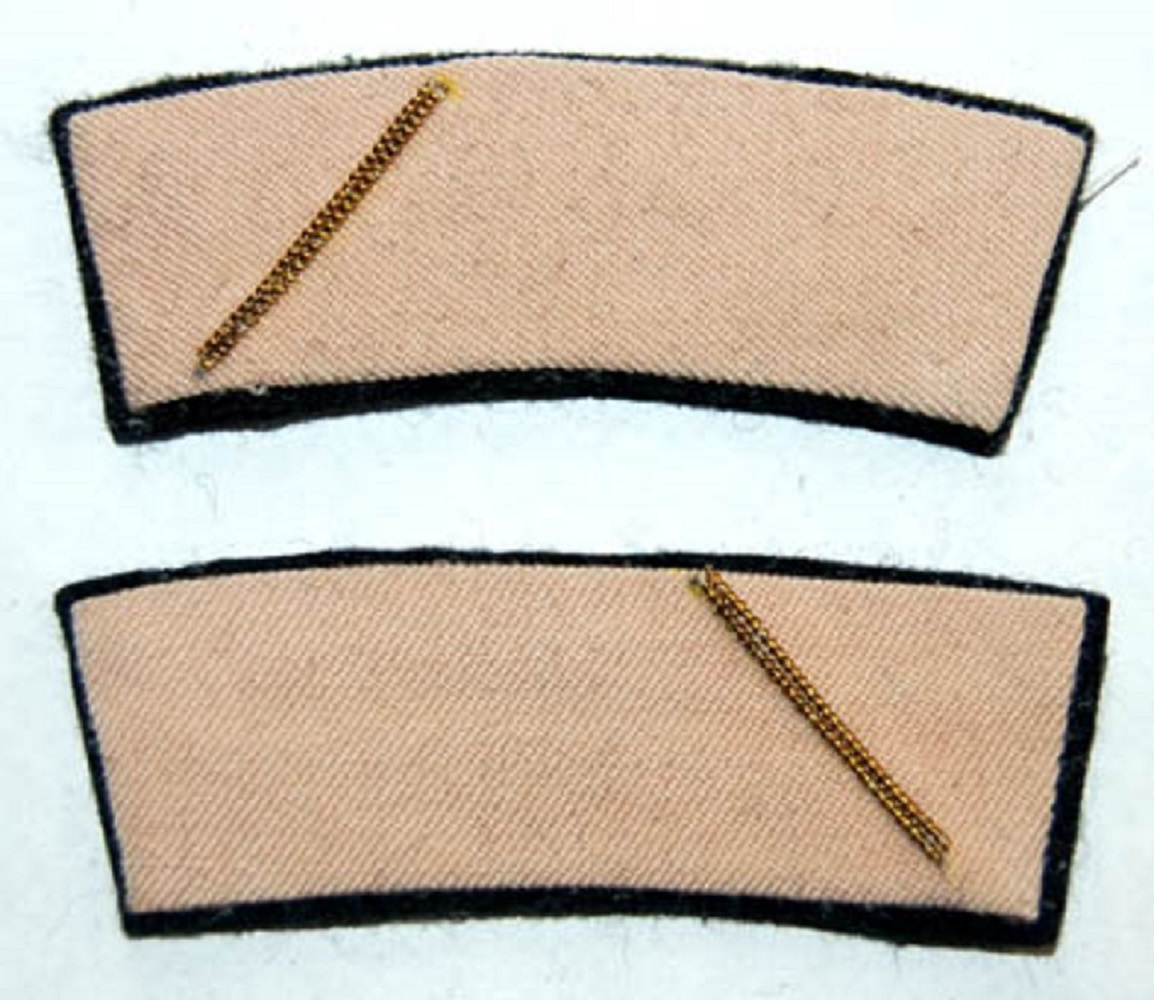
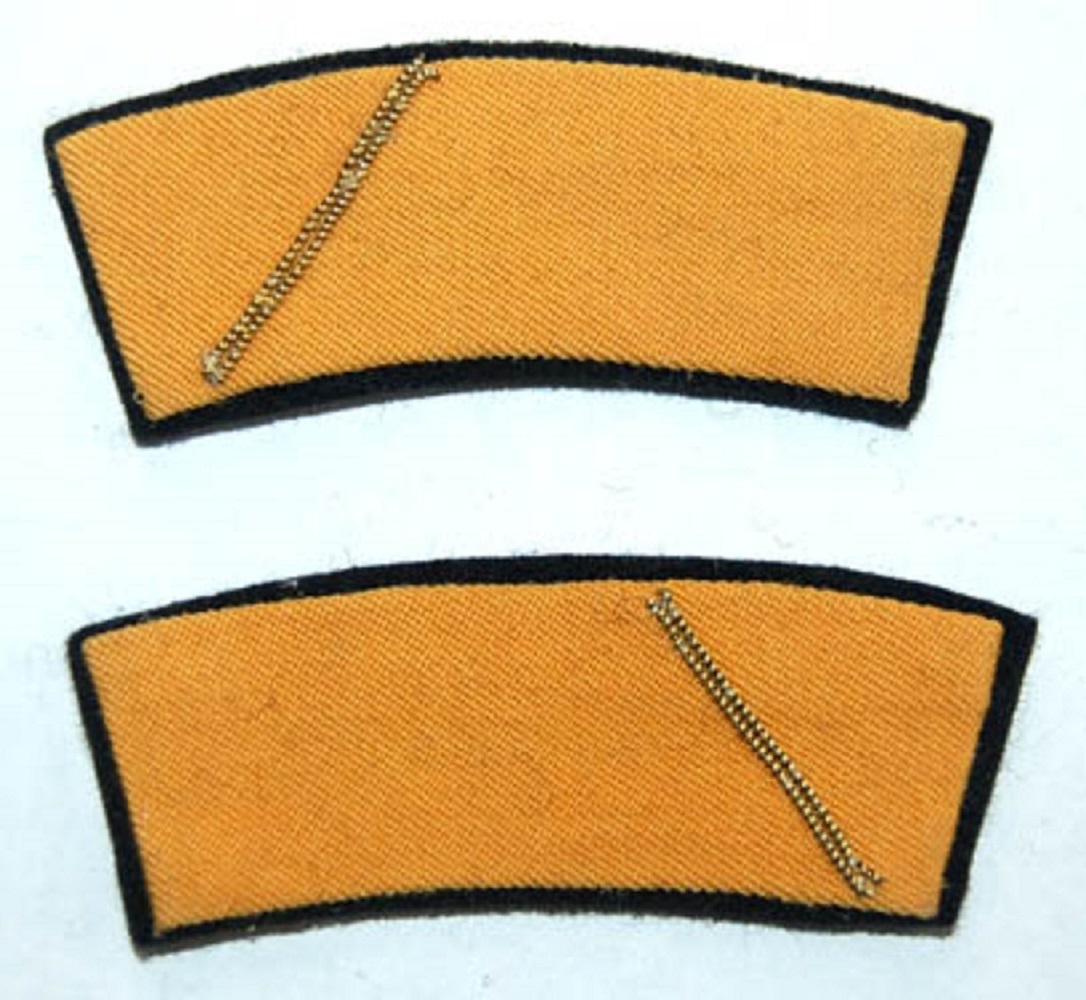
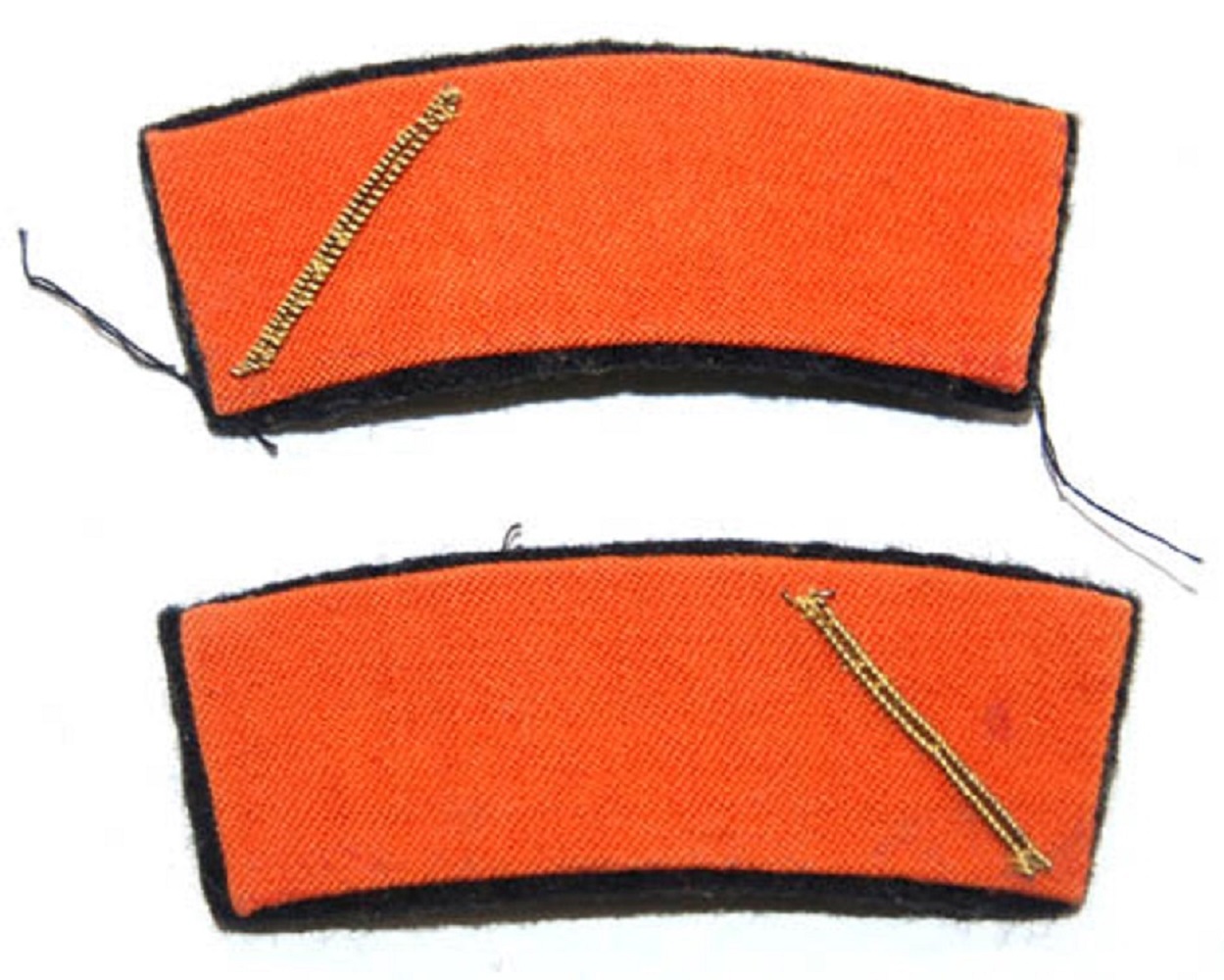
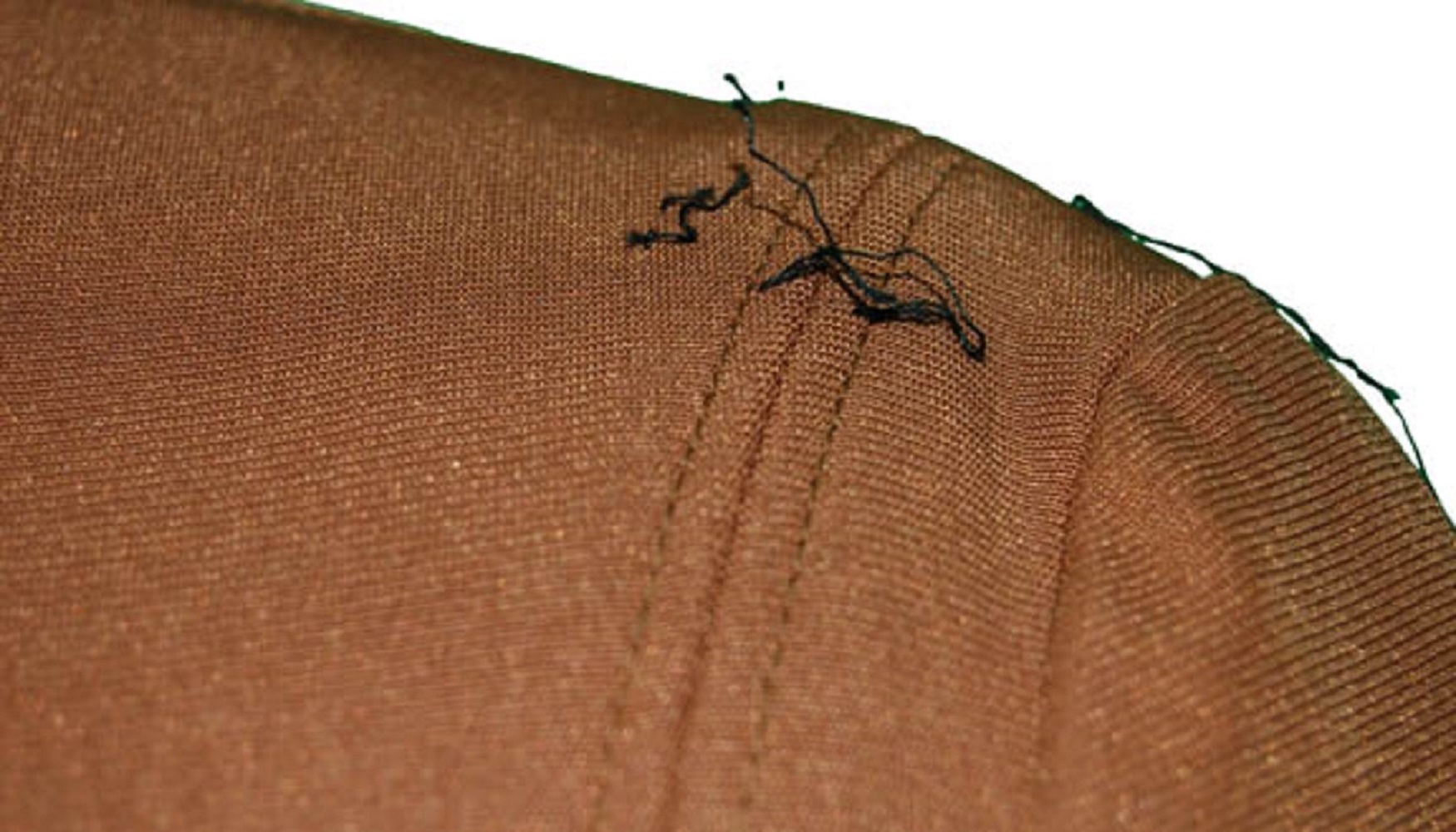
However, the assembled tabs were hand-sewn to the actual uniforms along the edges of the black felt, as evidenced by these jumpsuits’ removed tabs:
As you can see, these were centered over the side front/side back seams at the shoulder seams.
Chest Patches
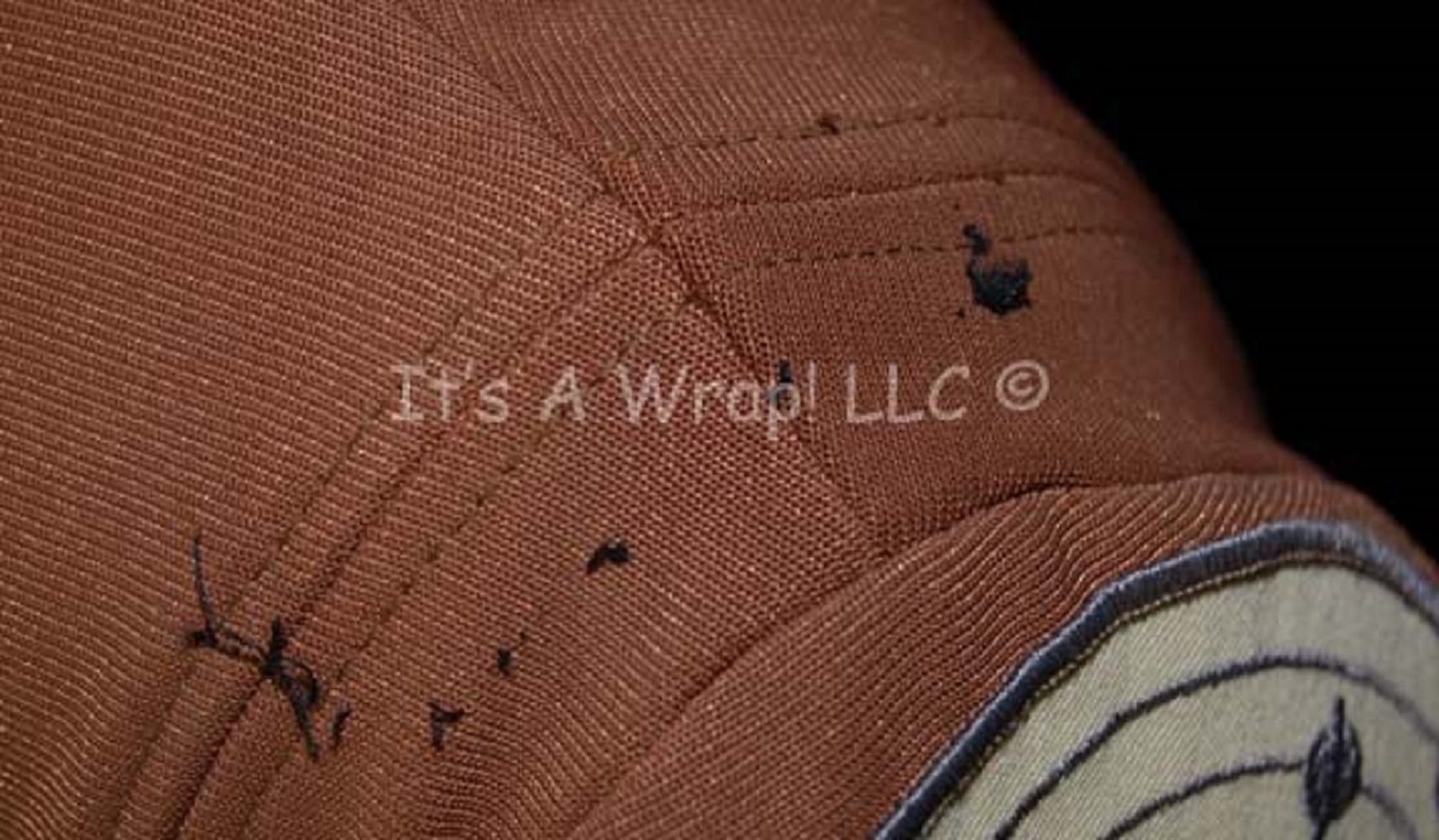
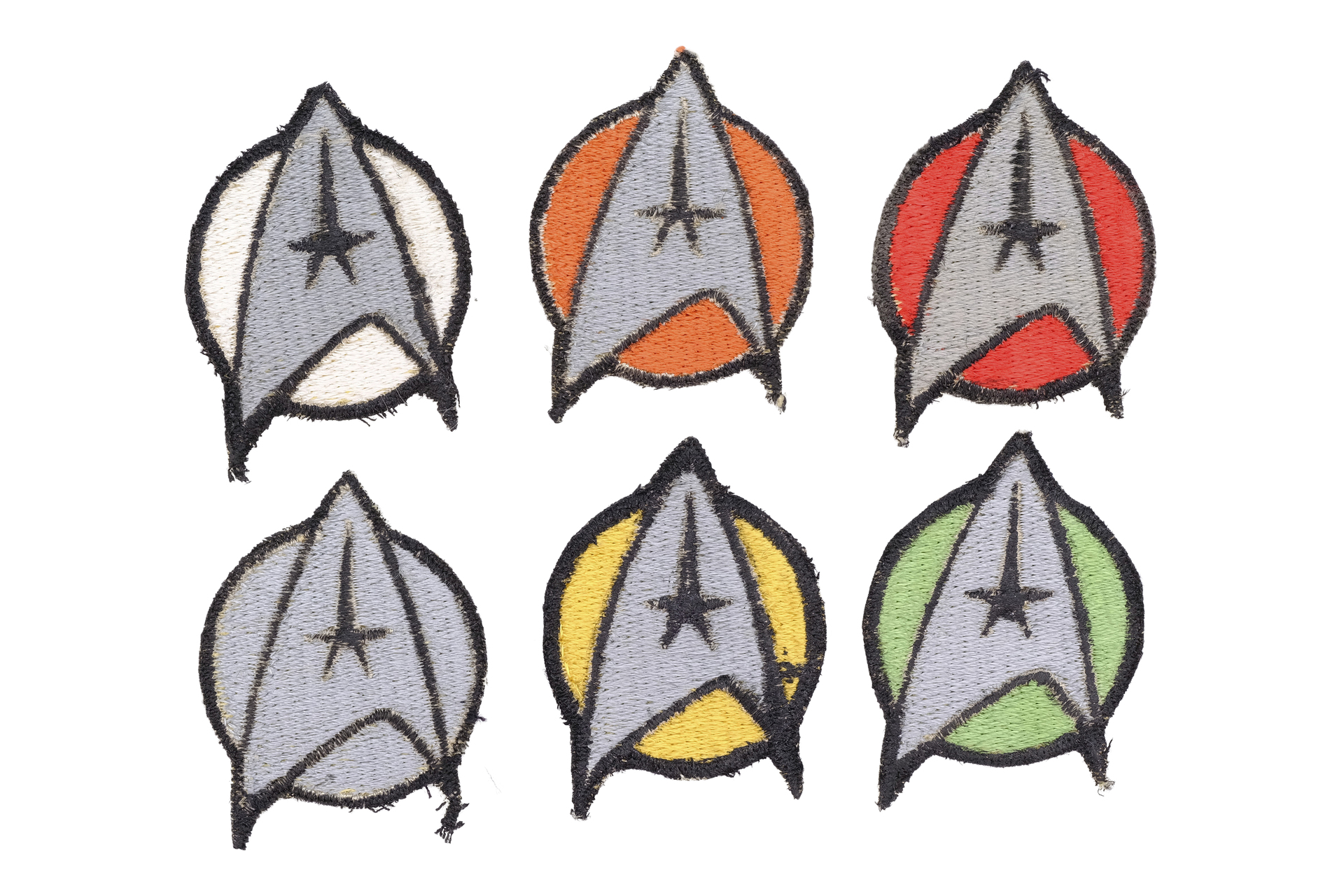
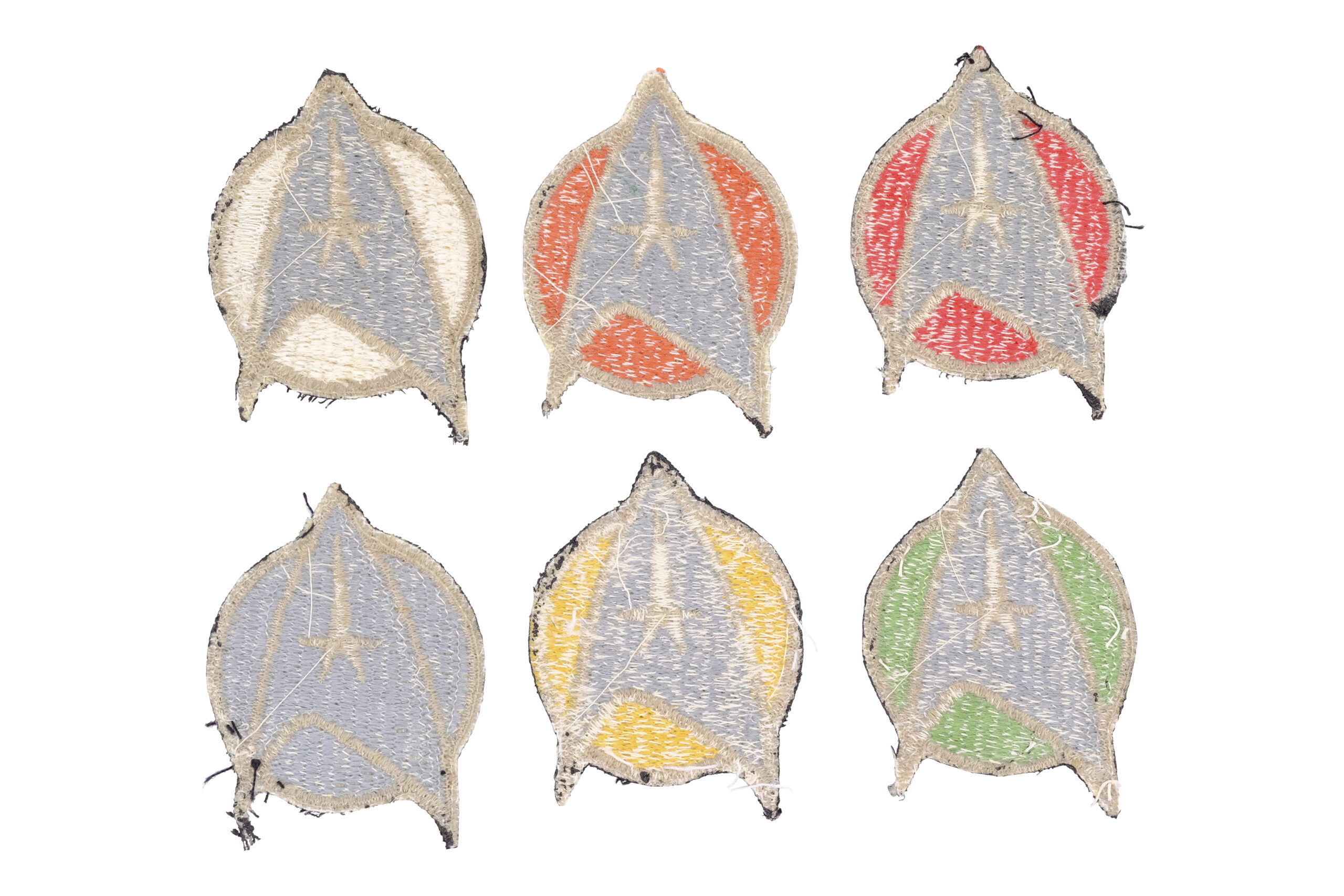
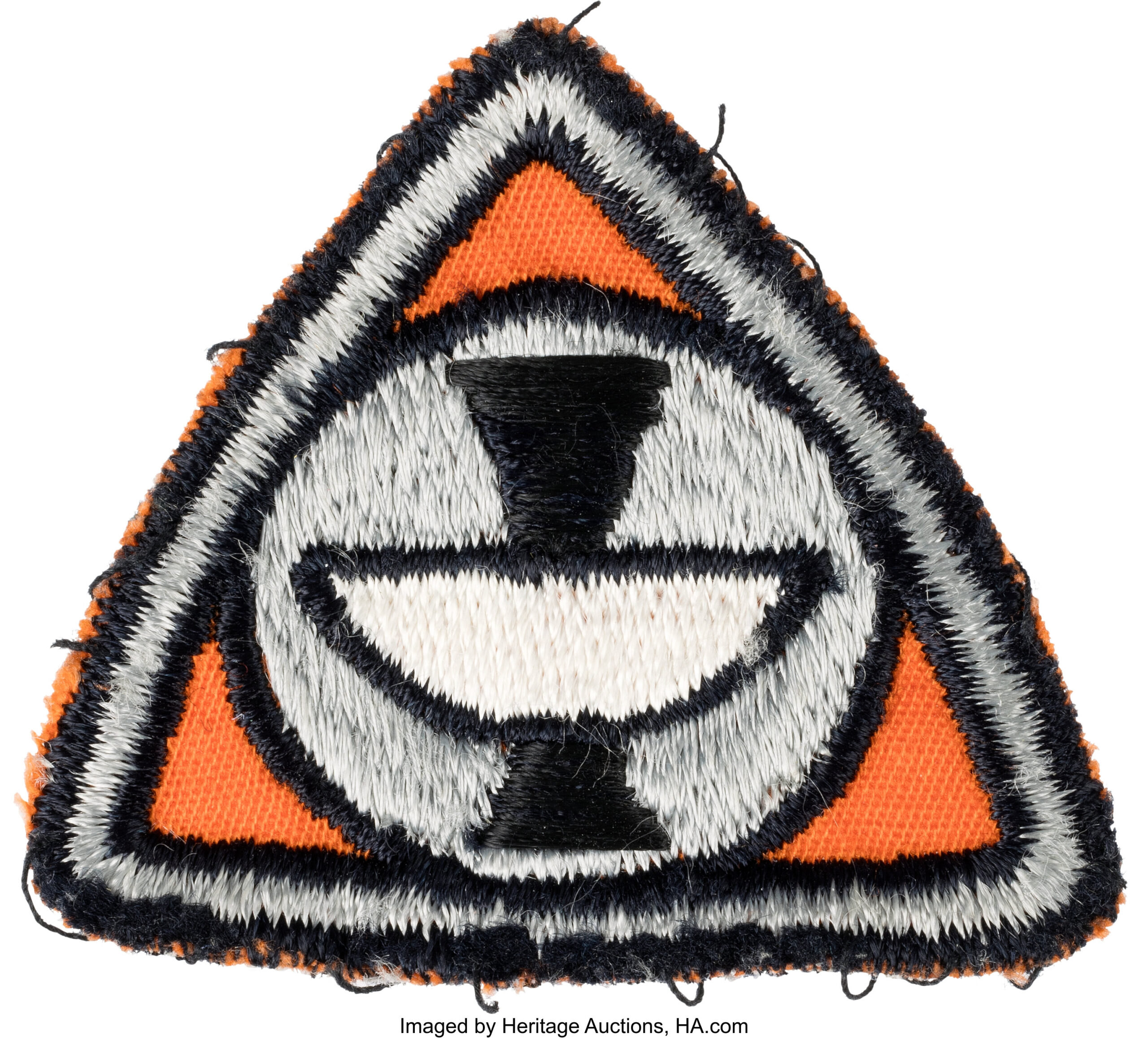
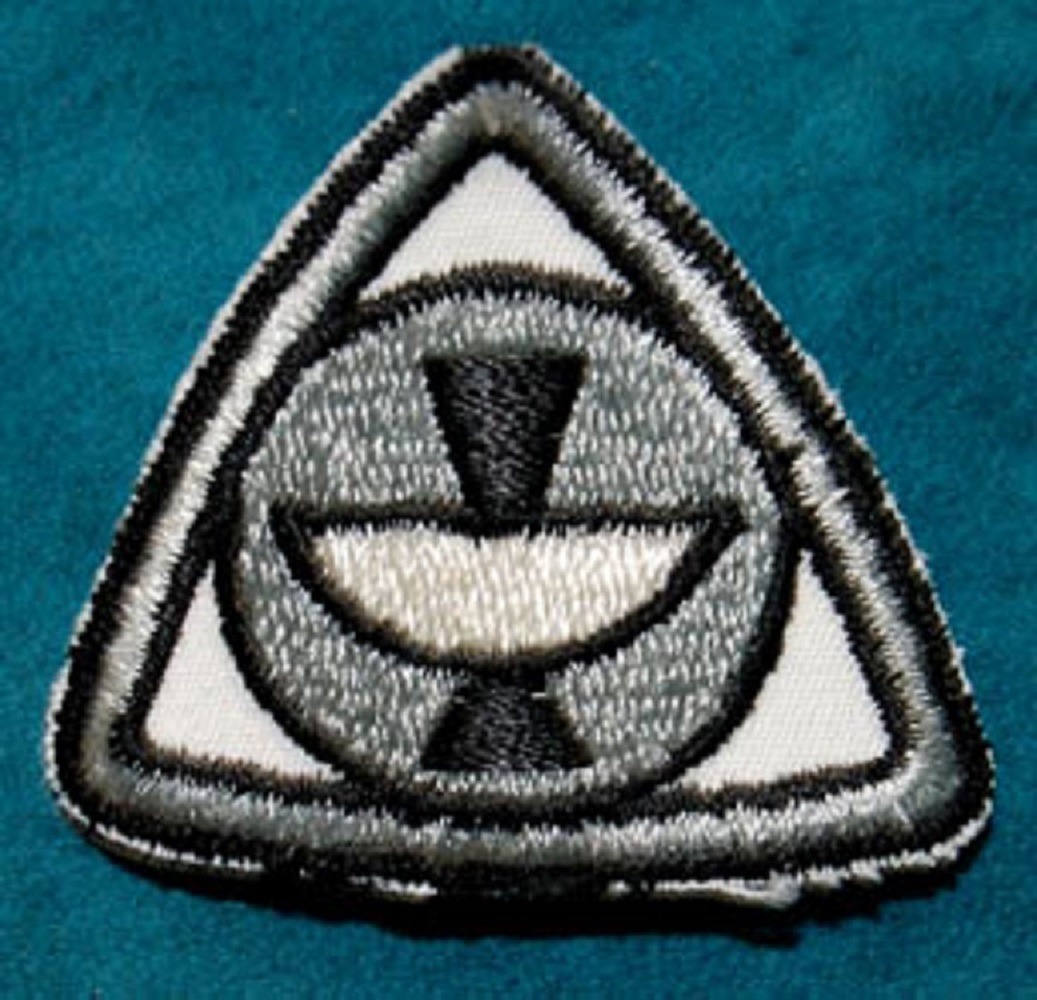
Another element of The Original Series uniforms to show up in The Motion Picture was a Starfleet “delta” patch on the upper left chest of several uniform styles, including the “Class D” jumpsuits.
In TOS there was some confusion as to what degree (if any) these patches were unique to each ship, base, and/or assignment; in TMP we saw two different patches.
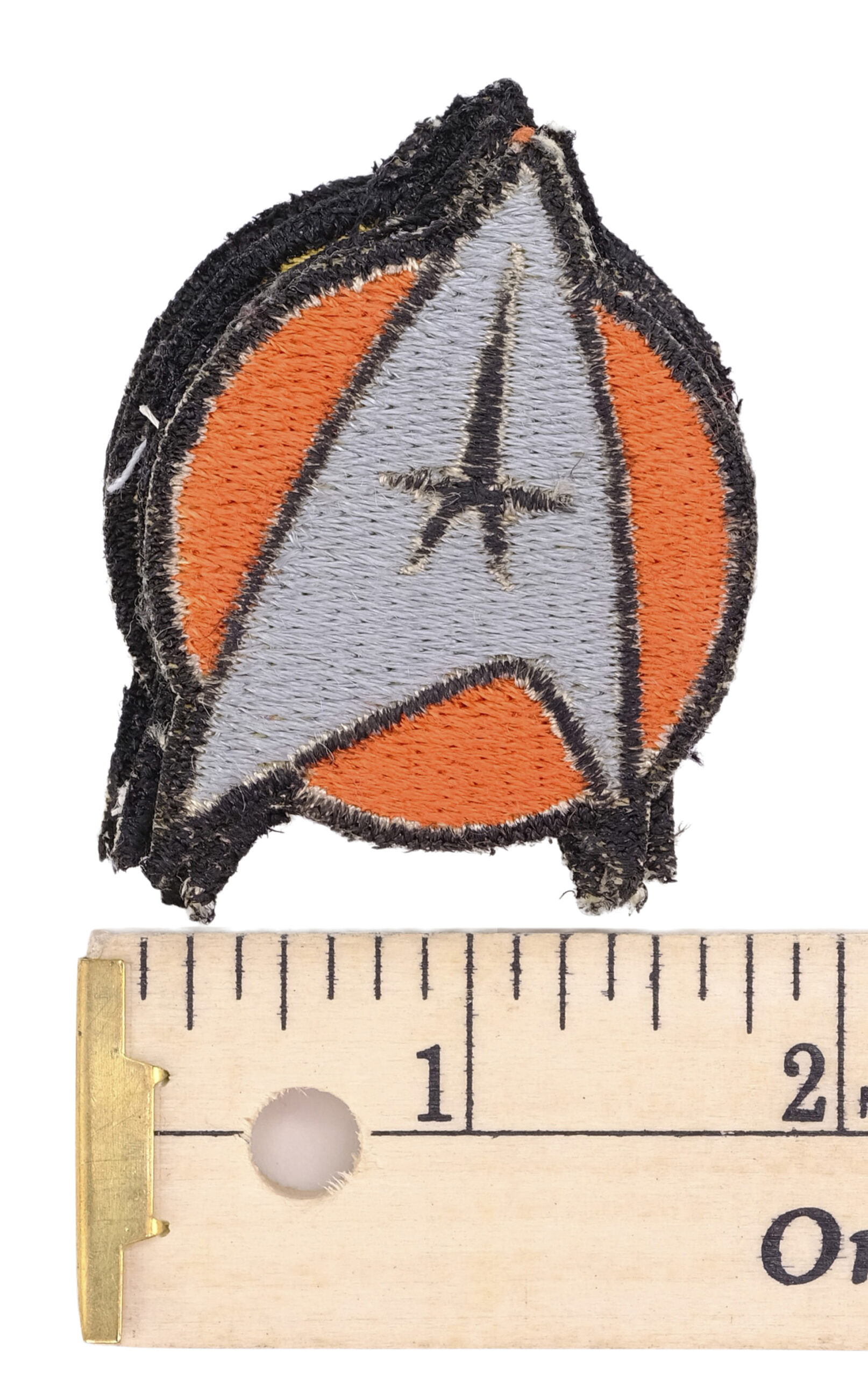
The Enterprise crew wore patches similar to those they wore in TOS, but all with the “shooting star” inside, and with a division-colored circle added underneath.
Here are a couple high-resolution auction photos of these patches:
Here’s a reference photo of one, with a ruler for scale.
The other patch seen in the movie was for the Epsilon Nine crew:
(Even though there was a range of standard uniforms made for them – including “Class D” jumpsuits – in the finished movie, the Epsilon Nine crew appear to have all worn unique uniforms that were exclusive to them.)
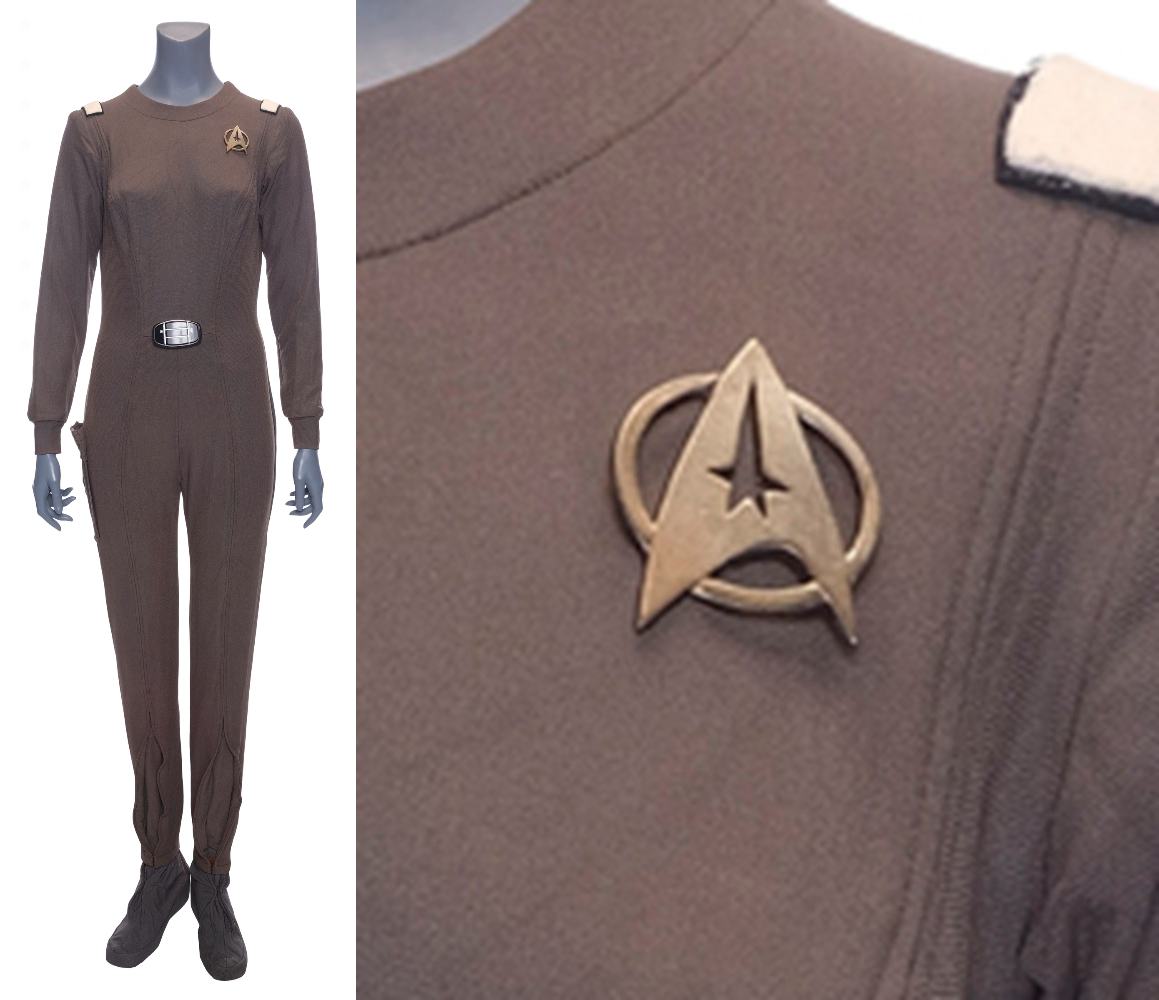
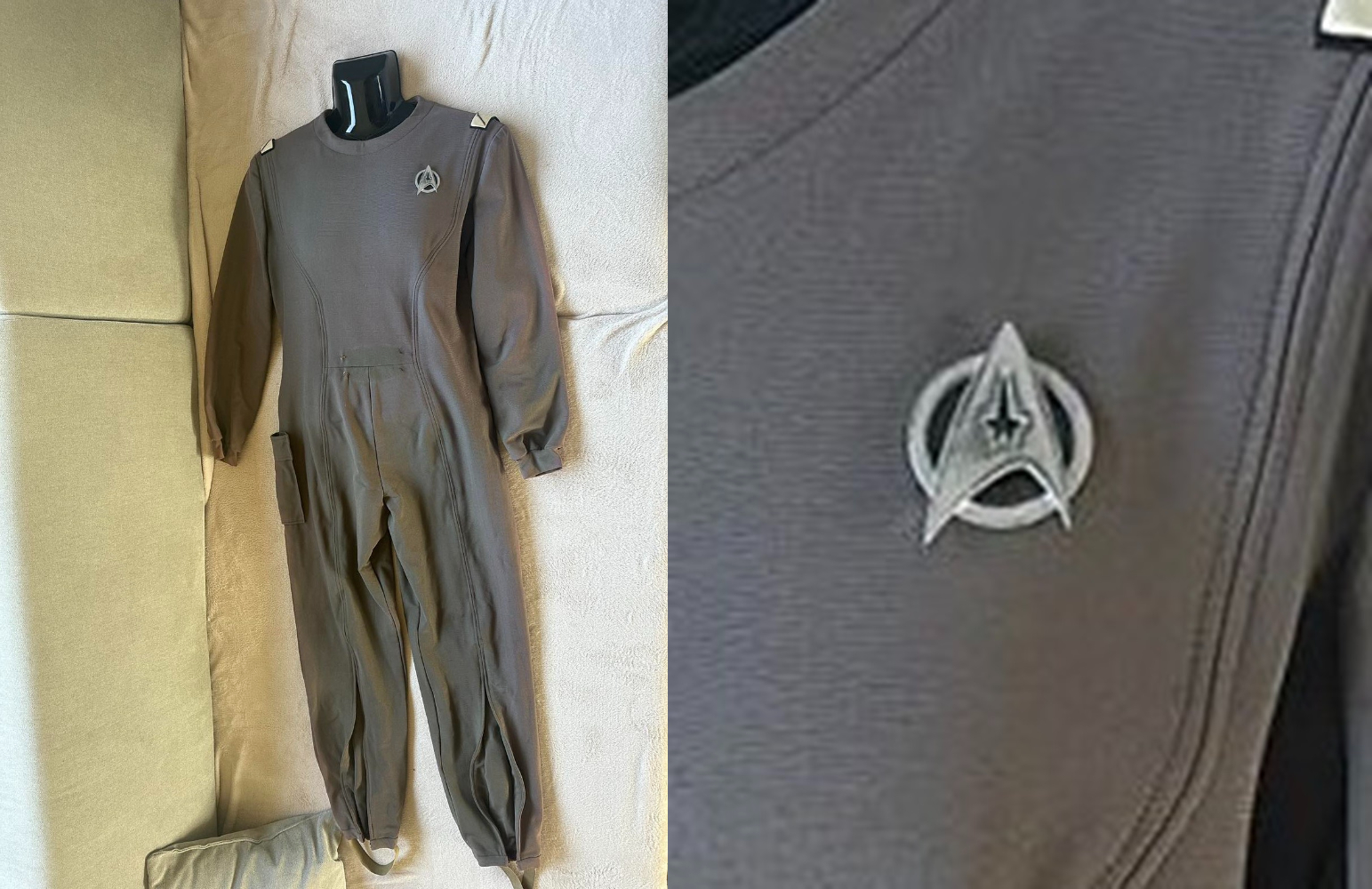
Curiously, the dark gray “Class D” jumpsuits appear to have metal chest badges (presumably the same ones seen on the “flag officer Class A” and “Class C” uniforms), instead of the division-colored patches.
Body Panels
The “Class D” jumpsuits had nine body panels, not including the sleeves:
Upper center front
Lower center front pant legs (x2)
Side front (x2)
Side back (x2)
Center back (x2)
The upper front panel and lower front pant legs were sewn together at the front waist, although the seam was partially obscured by the “perscan” device.
The side front seams extended all the way from the shoulders to the lower pant leg hem (or opened toward the shoes, if they were attached).
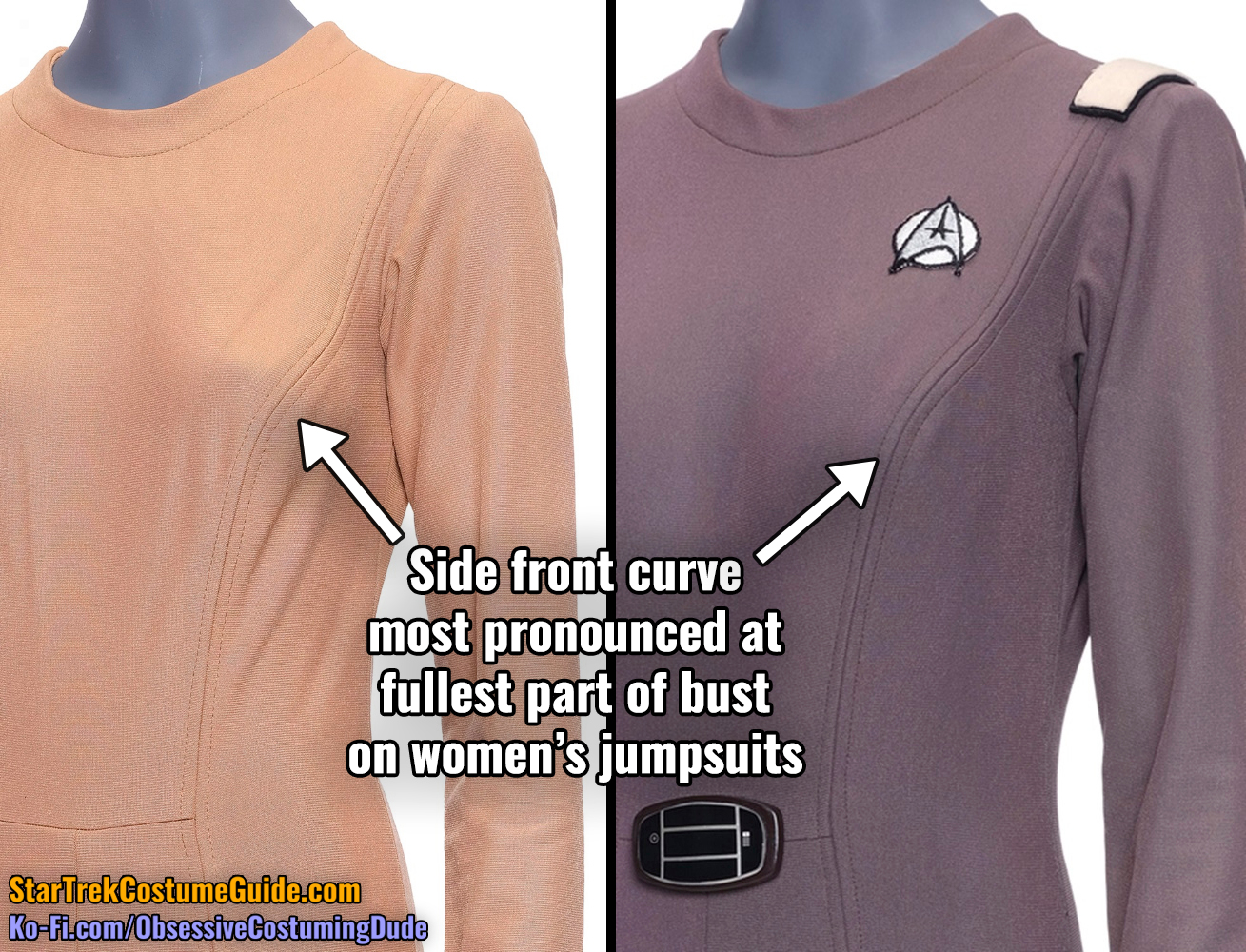
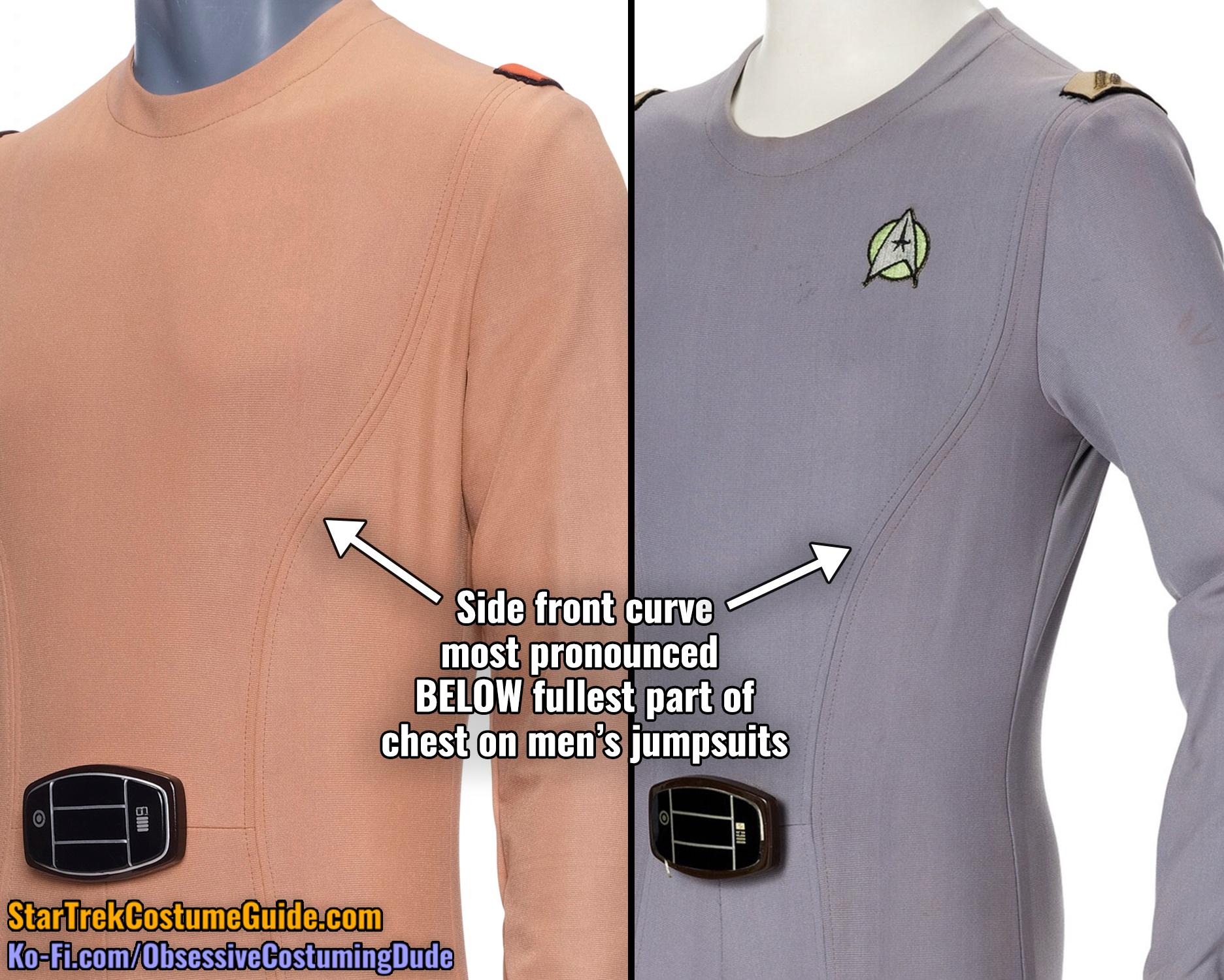
These seams narrowed toward the waist and curved outward toward the fullness of the chest, just like “princess seams” normally do – except instead of curving into the armscye seams like conventional princess seams are typically patterned, they curved back upward again toward the shoulders, running more or less parallel to the armscye seams.
On the women’s jumpsuits, the curve was most pronounced directly over the fullest area of the bust – again, just like princess seams are normally patterned.
However, on the men’s jumpsuits, the curve was most pronounced a bit below the fullest area of the chest, partway between the chest and waist (along the lower ribcage).
The seam allowances were pressed open, and they were topstitched into place approximately 3/16” to ¼” from the seam lines with matching thread.
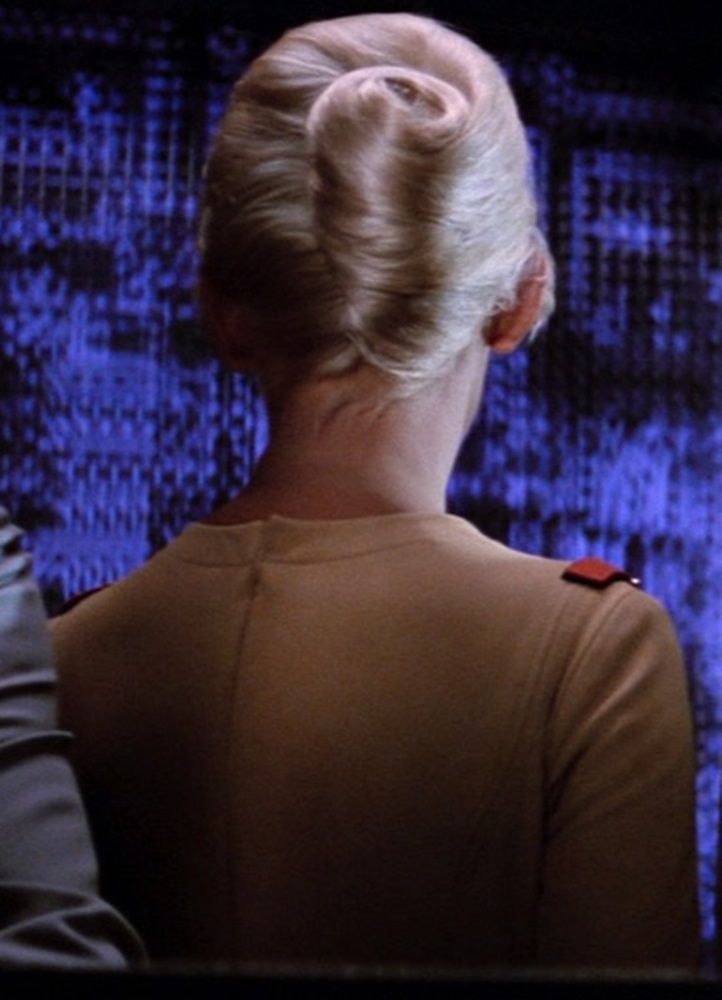
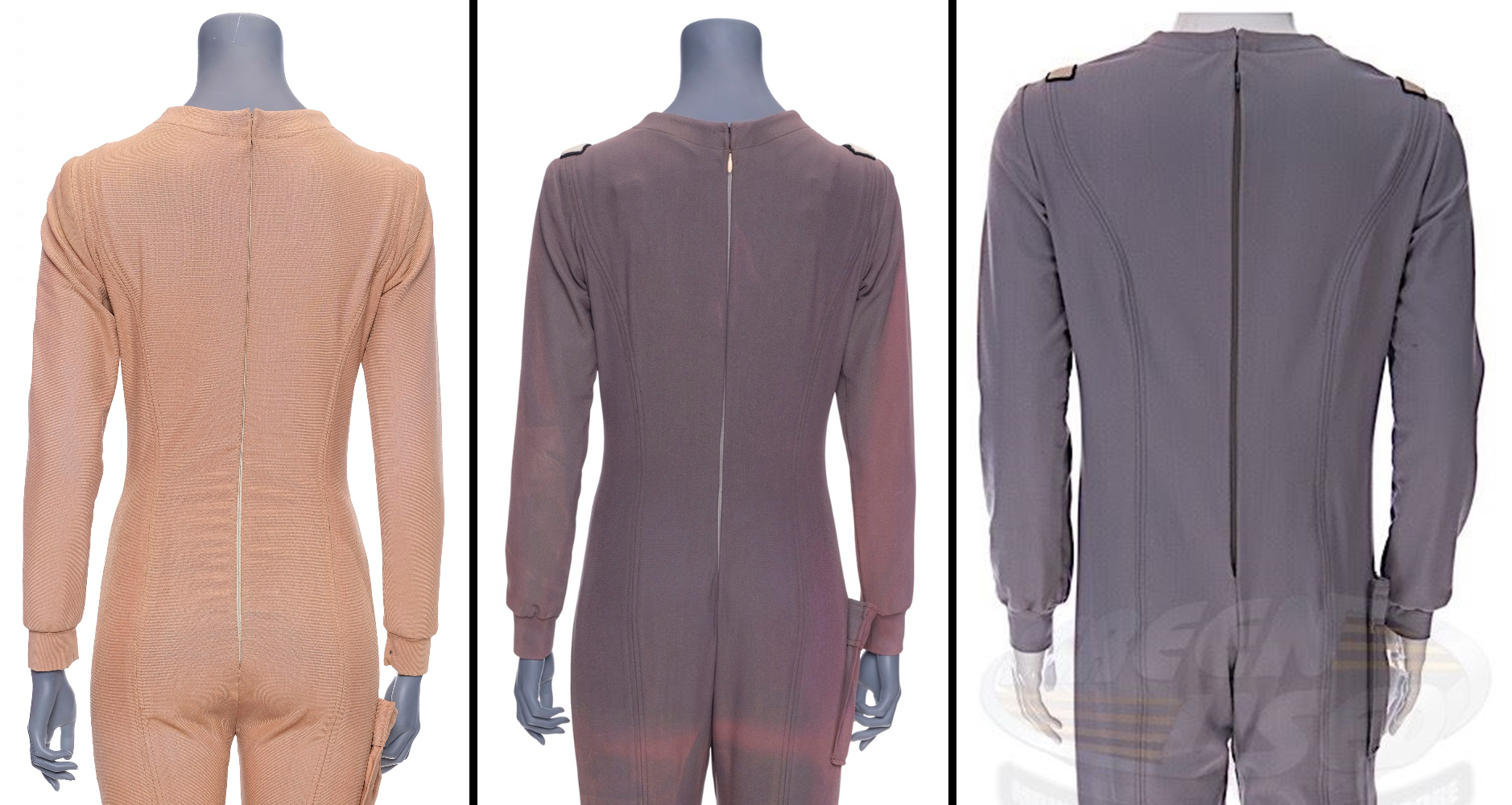
The back of the jumpsuit was similarly paneled and topstitched, albeit with the side back curves fitted over the shoulder blades and the center back seam continuing up the entire back.
The jumpsuit’s side seam allowances were pressed open, but they weren’t topstitched like the side front and side back seams were.
Upper center front
Lower center front pant legs (x2)
Side front (x2)
Side back (x2)
Center back (x2)
Right Hip Pocket
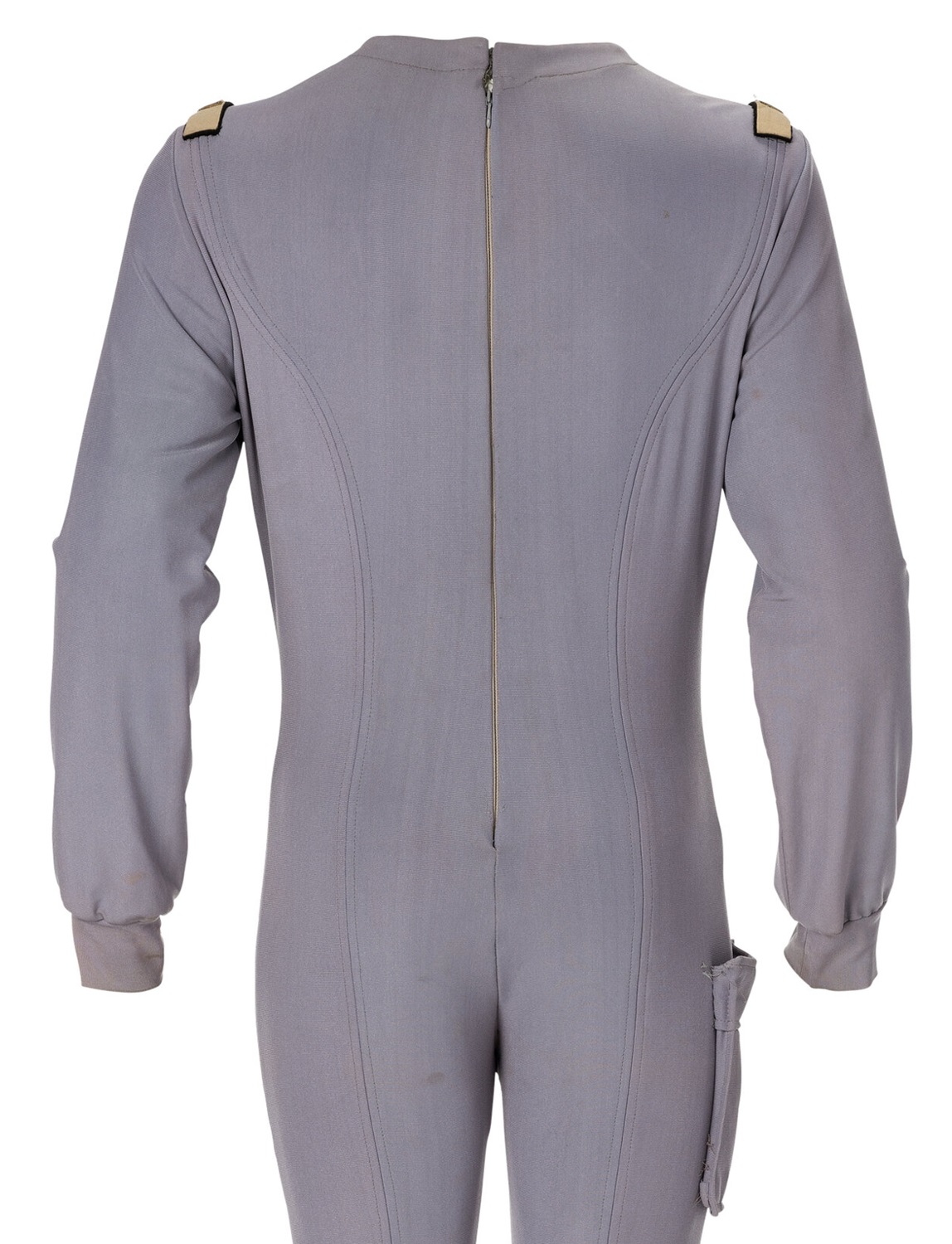
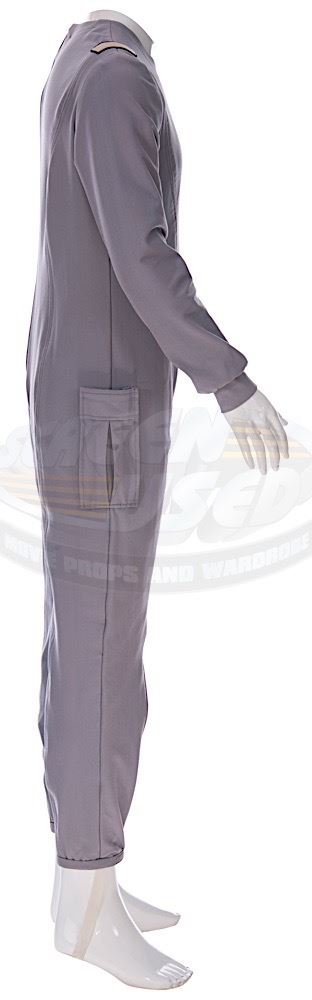
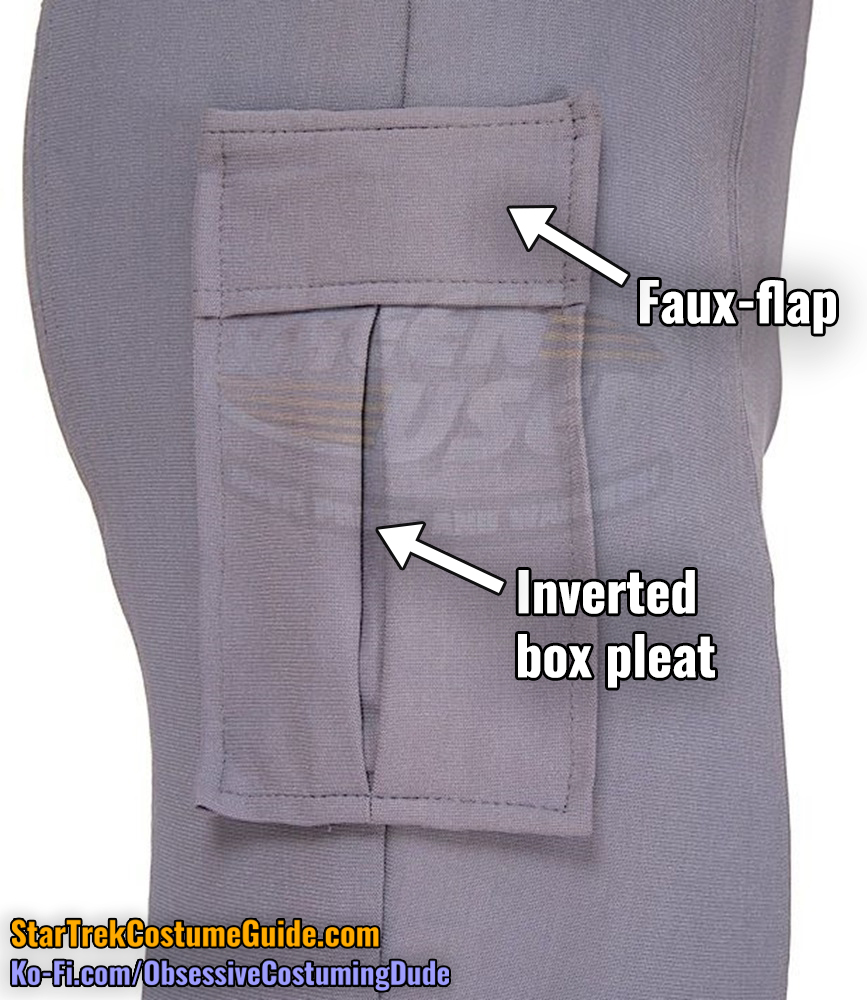
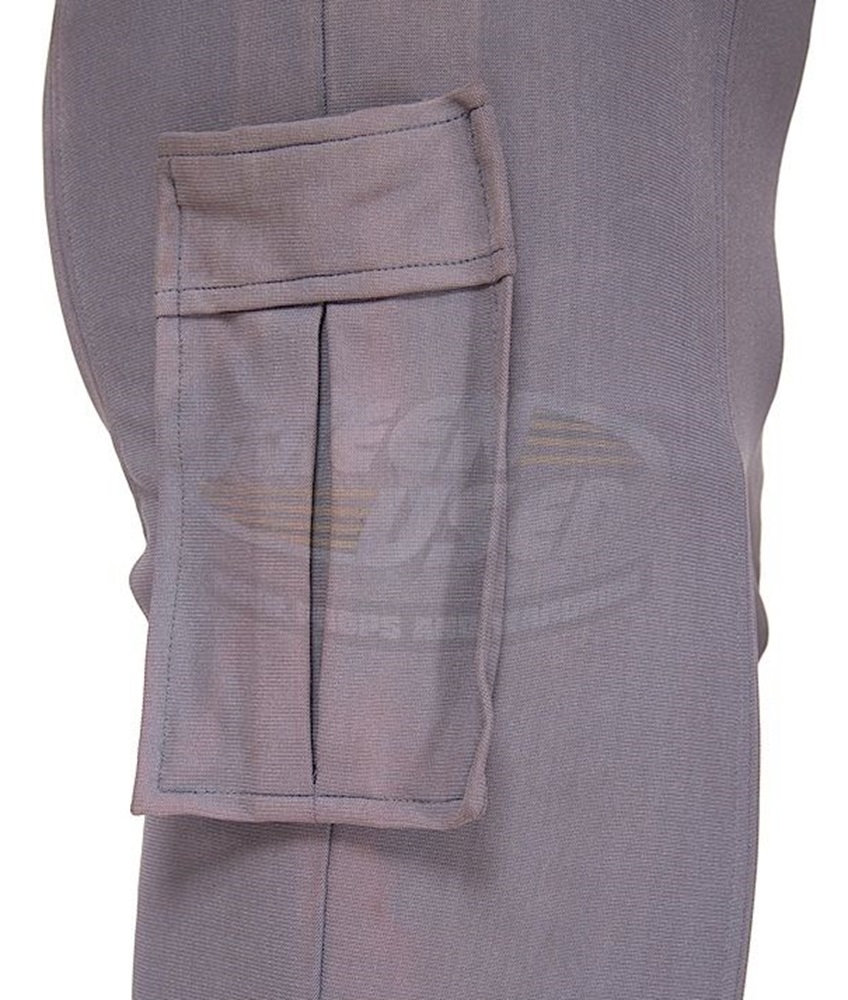
The “Class D” jumpsuit was unique in that it had a patch pocket attached to the right hip – a rarity for Star Trek uniforms!
These pockets were functional and even got used a bit, too.
These pockets were made of the same jumbo spandex as the rest of the jumpsuit.
They had an attached faux-flap across the top, an inverted box pleat centered below, and were accented with topstitching ¼” from the edges.
However, the outer topstitching was decorative and didn’t actually fasten the pocket to the jumpsuit.
Instead, it was sewn to the jumpsuit a bit inside the topstitching, presenting the illusion of a pocket mysteriously “floating” along the pant leg.
In this auction photo, one can also see how the “faux-flap” wrapped over the upper edge of the pocket.
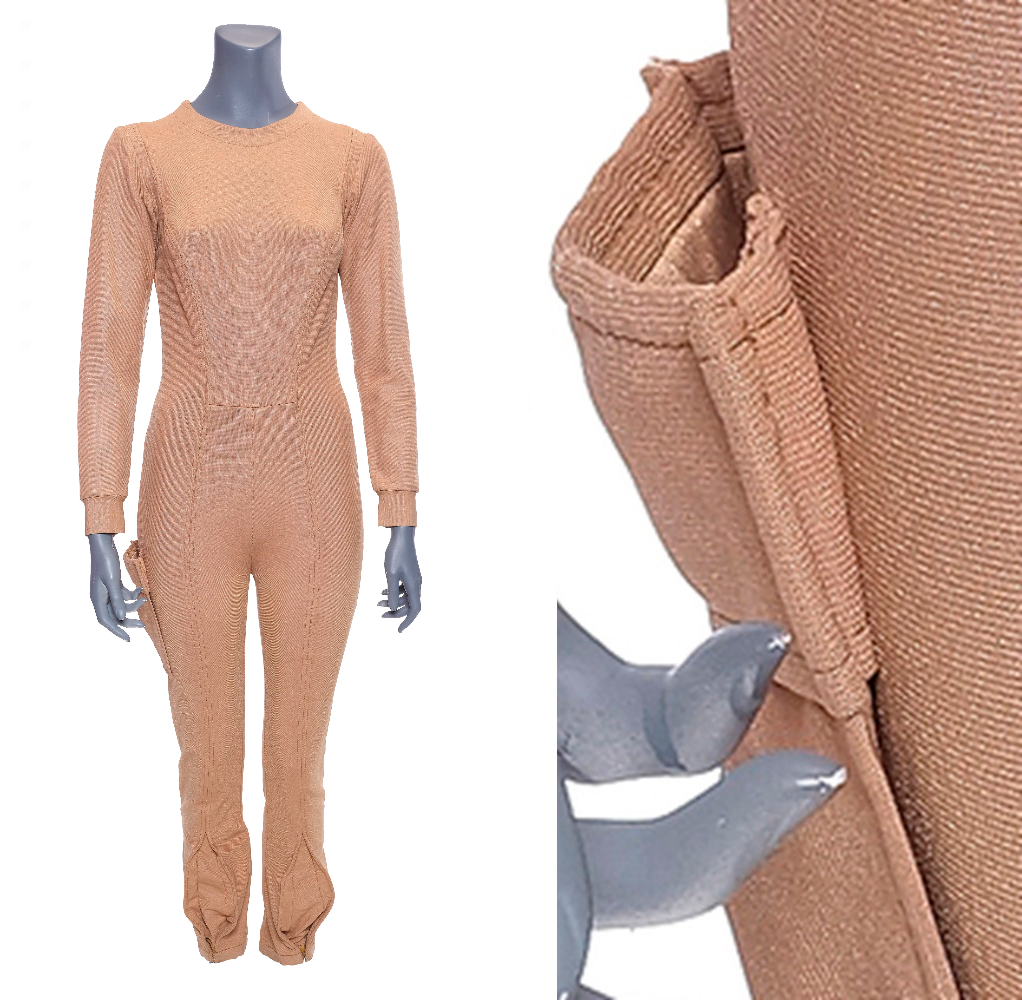
At least some of the pockets were machine-sewn to the jumpsuit inside the allowances, but I don’t know how the original wardrobe team managed that – unless the sides of the pocket were sewn to the pant legs before the side seams were sewn closed?
Regardless, it looks like this particular pocket was hand-sewn to the jumpsuit:
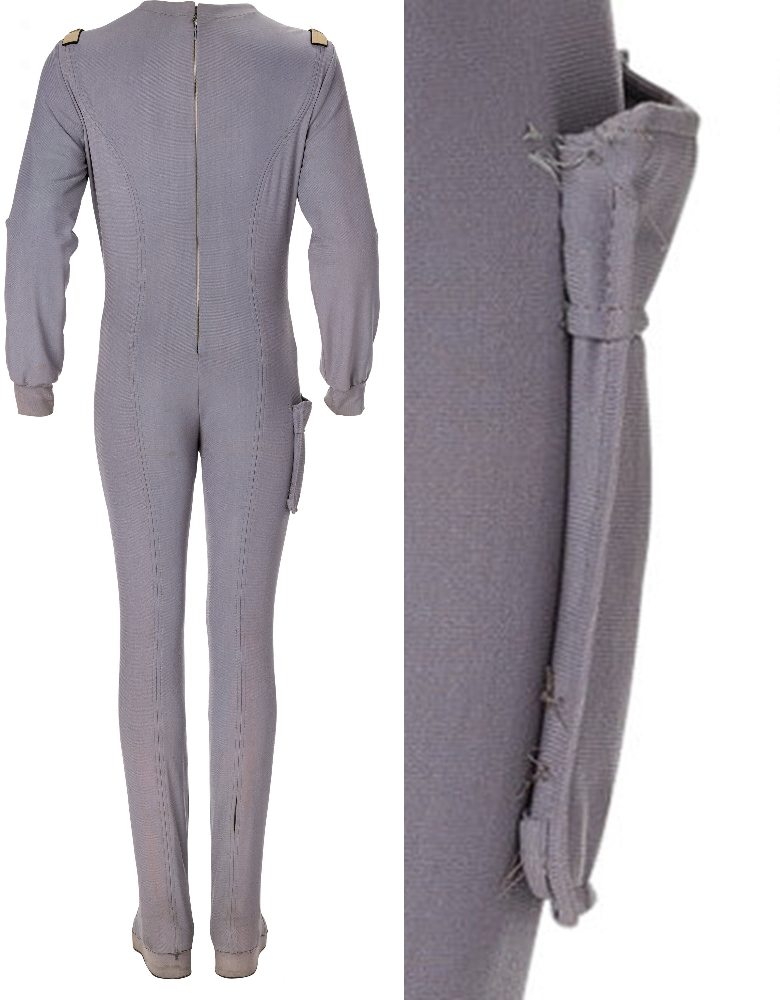
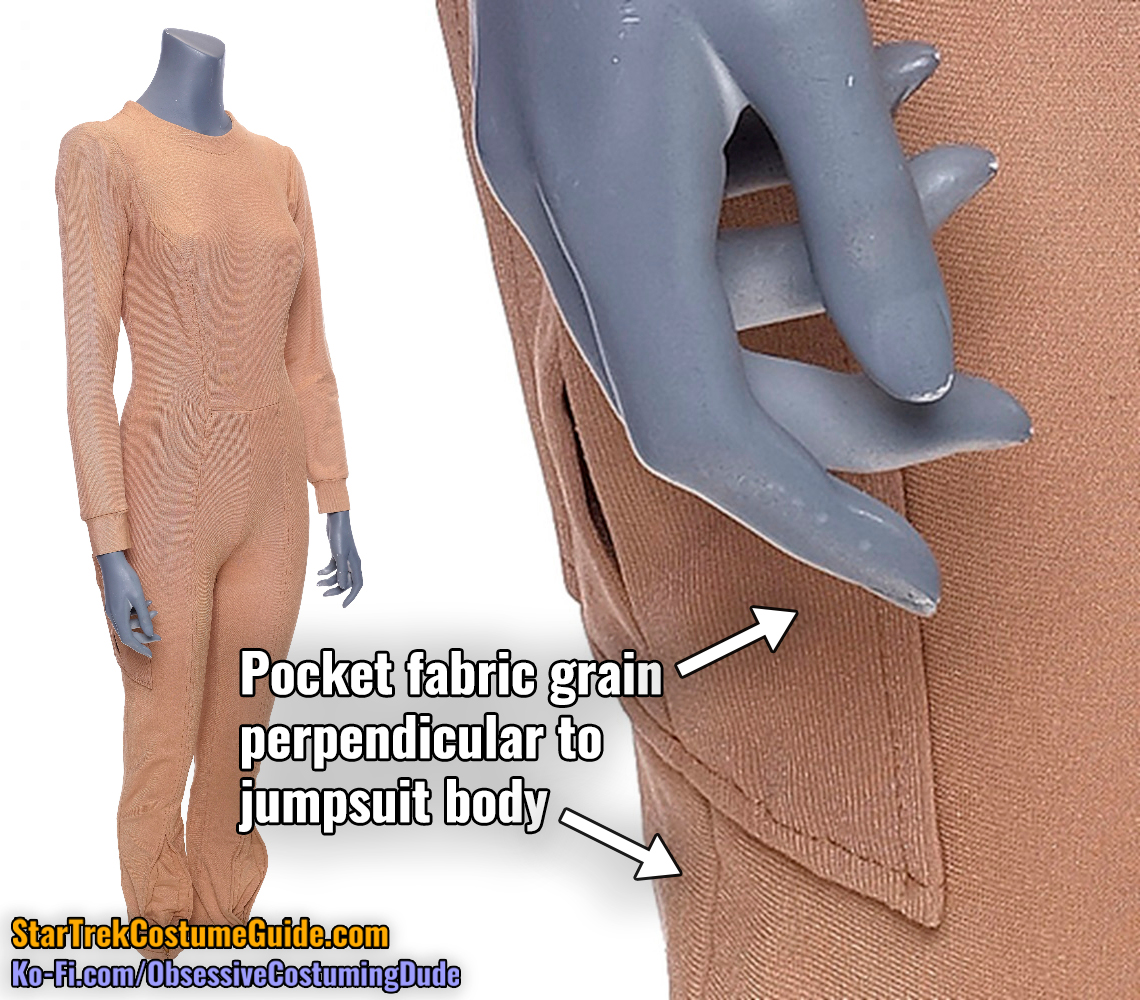
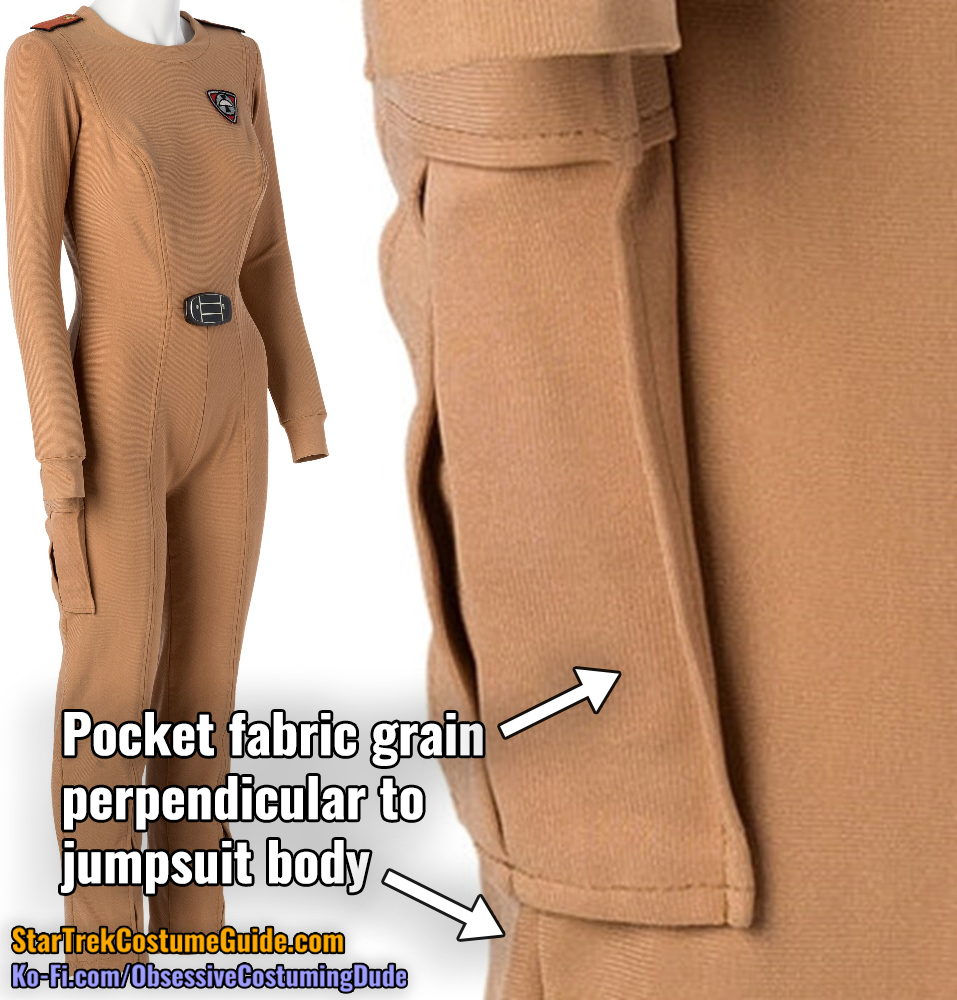
Although the pockets were typically cut on the same grain as the jumpsuit body (with the “weave” of the jumbo spandex horizontal), these two pockets were cut perpendicular to the rest of the jumpsuit:
Lower Front Pant Legs
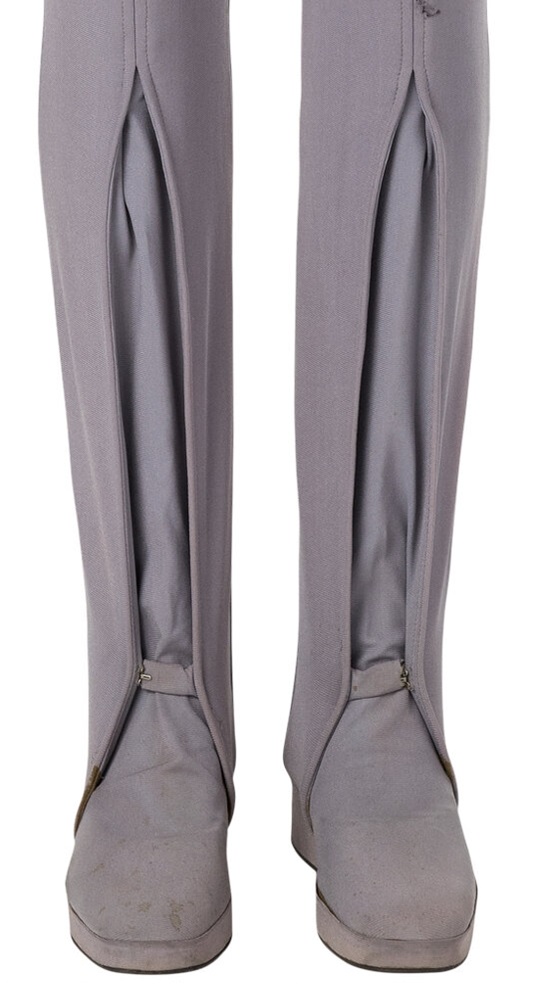
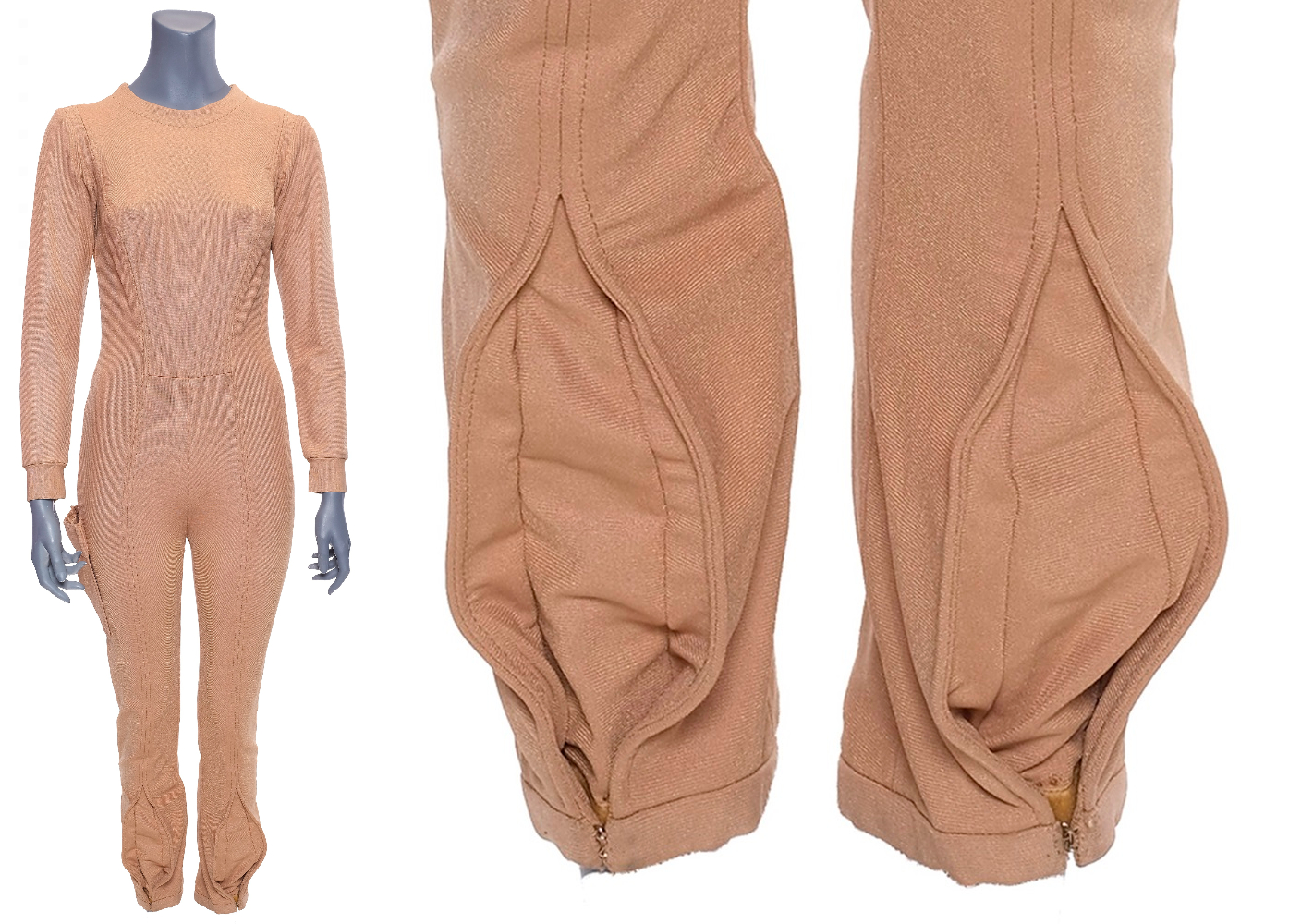
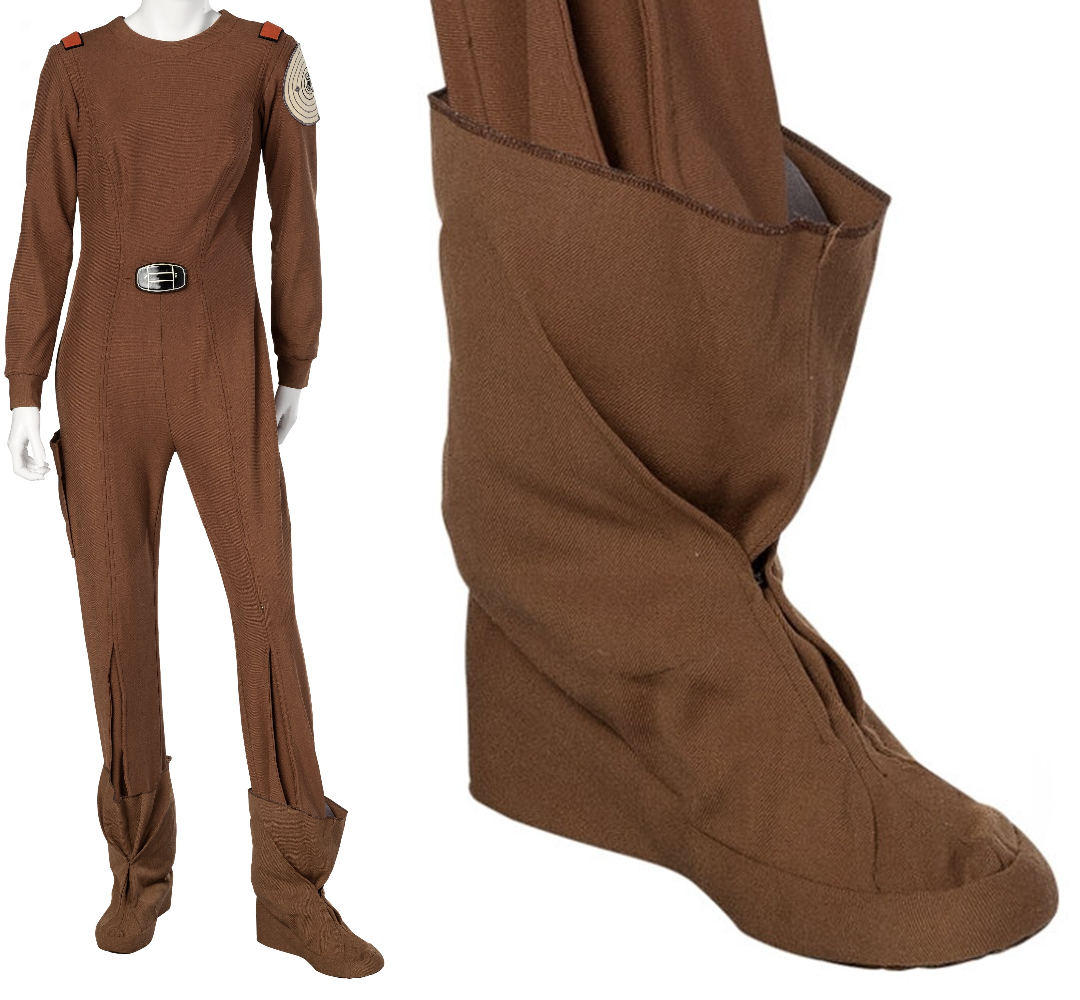
On the lower front of the pant legs, the side front seams opened into what I reluctantly refer to as an inverted box pleat, even though that term isn’t entirely accurate.
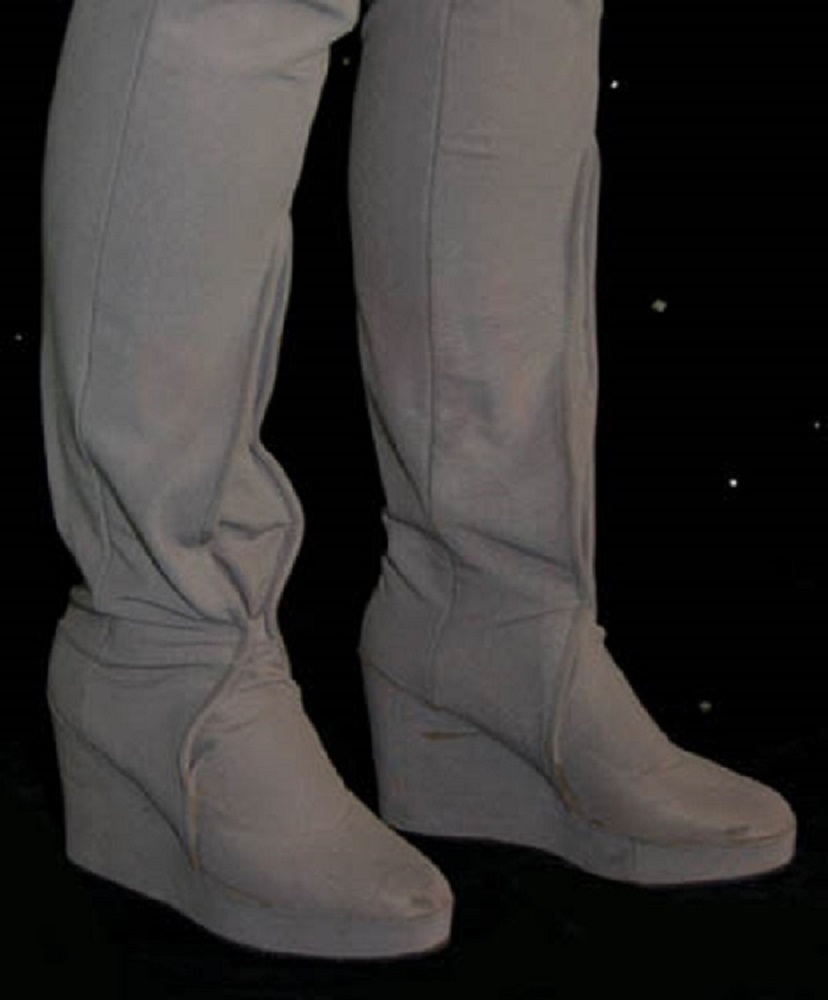
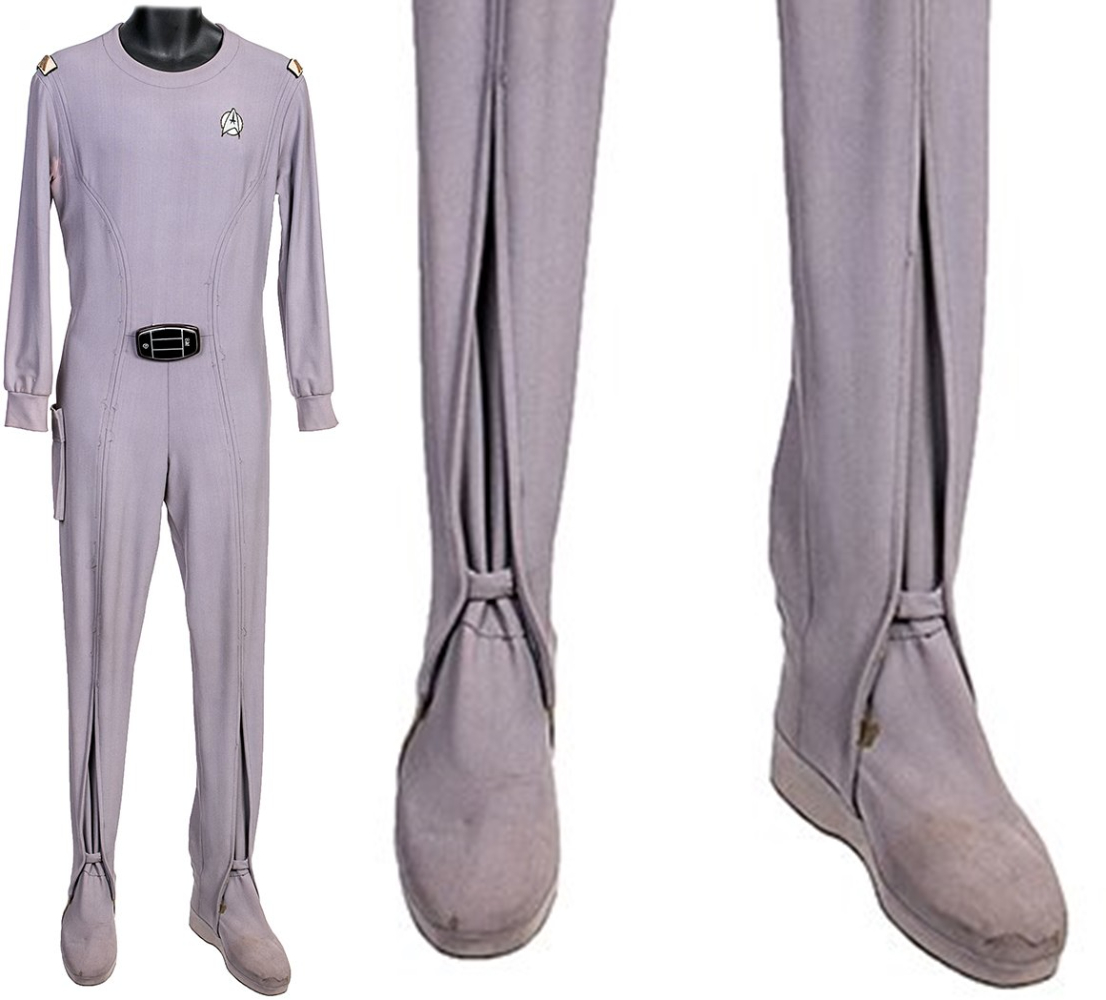
Technically, a “gusset” was inserted into the bottom of the seam, which allowed it to expand – either over the shoes if they were attached (right), or before being closed again at the lower hem (below).
The height of this lower front opening varied considerably.
On some uniforms it began around knee level; on others (such as the one below) it was significantly shorter.
Shoes
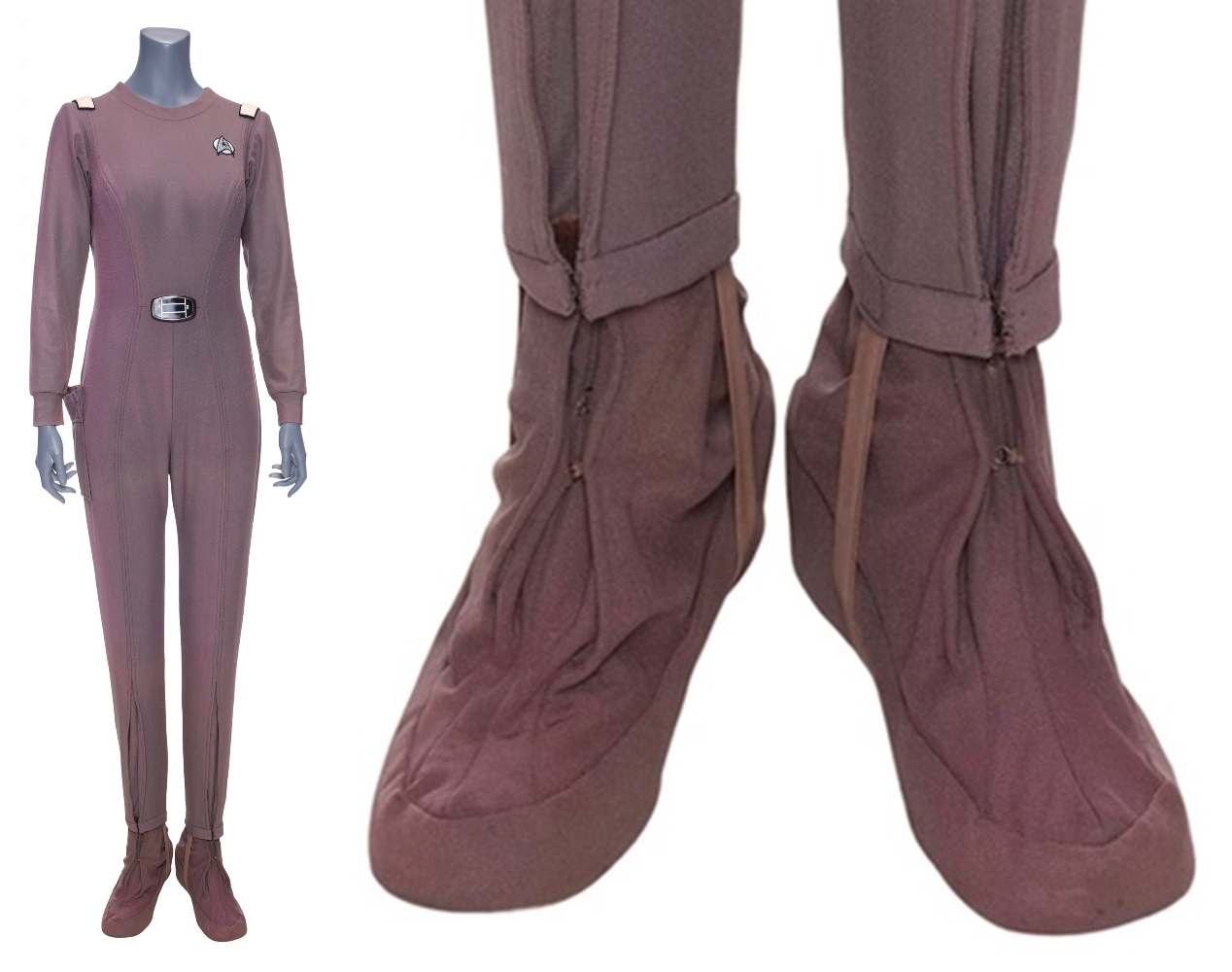
One of the more memorable – or might we say, notorious? – elements of the TMP uniforms was that many of them had shoes physically attached to the lower pant legs.
To their credit, these do produce a look unlike anything you’re likely to find at a modern retail clothing store. They fit right into a futuristic sci-fi vibe.
In Starlog issue #33*, Robert Fletcher was quoted saying, “… [The attached boots] were hell to get. The pants continue into the foot, and were difficult and costly to produce.
“The trousers were fitted at Paramount. The bottoms were left open for the shoes to be attached [off-site by an Italian boot maker] all-in-one.”
* April 1980, “Outfitting the Crew of the Enterprise: Bob Fletcher, Costume Designer” by Karen E. Willson
Considering the time and expense of producing these highly-customized uniforms, it should come as no surprise that they seem to have been primarily reserved for the main cast (and prominent supporting cast members such as Dr. Chapel and Rand).
Kirk TMP "Class D" jumpsuit auction photo
McCoy TMP "Class D" jumpsuit auction photo
Sulu TMP "Class D" jumpsuit auction photo
Chekov TMP "Class D" jumpsuit auction photo
Uhura TMP "Class D" jumpsuit auction photo
Chapel TMP "Class D" jumpsuit auction photo
Rand TMP "Class D" jumpsuit auction photo
Decker TMP "Class D" jumpsuit auction photo
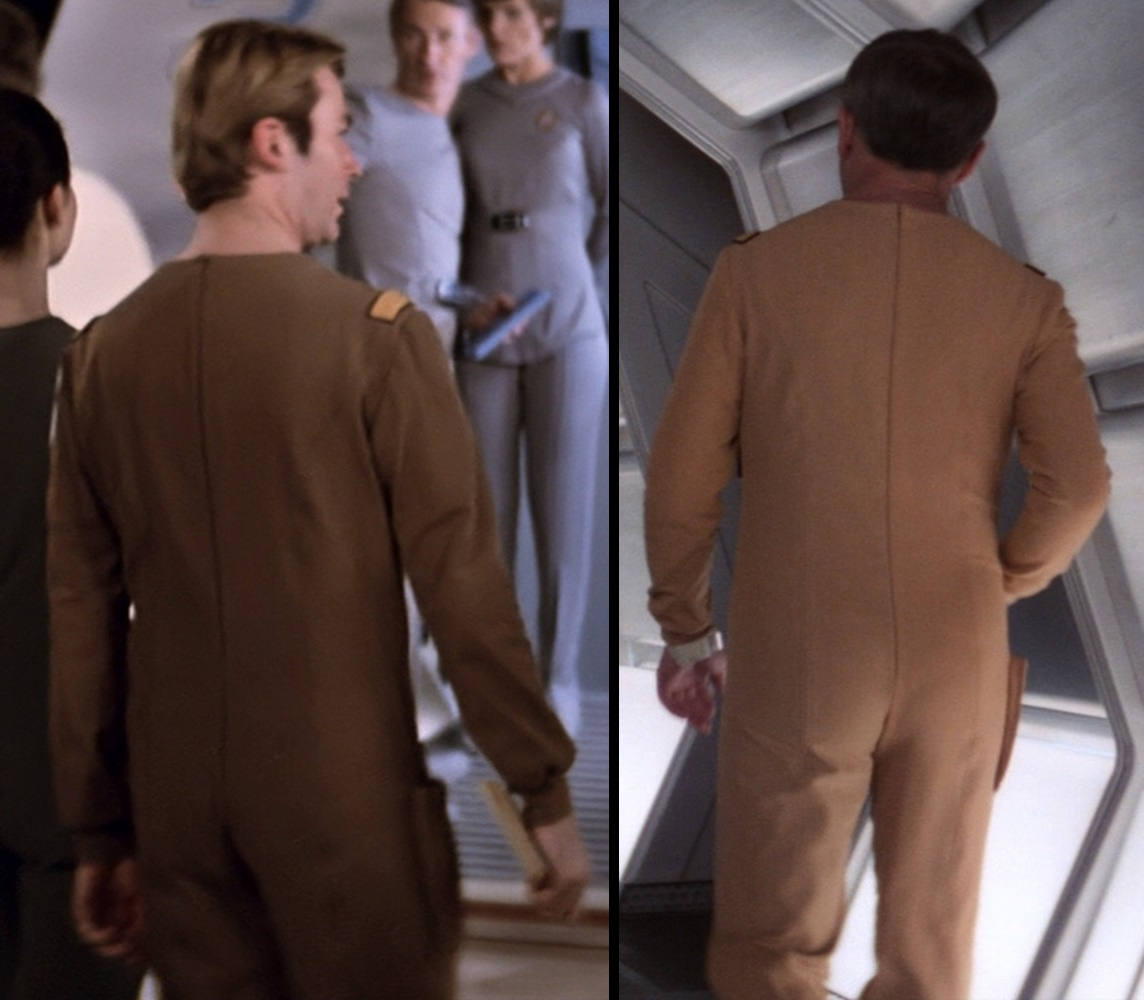
However, there were at least a couple extras’ jumpsuits that also had attached shoes – although they could’ve been repurposed uniforms originally intended for the main cast.
There were also jumpsuits made for several main cast members that didn’t have attached shoes.
It’s possible these were early prototypes, or possibly intended for stand-in/stunt use, but who knows?
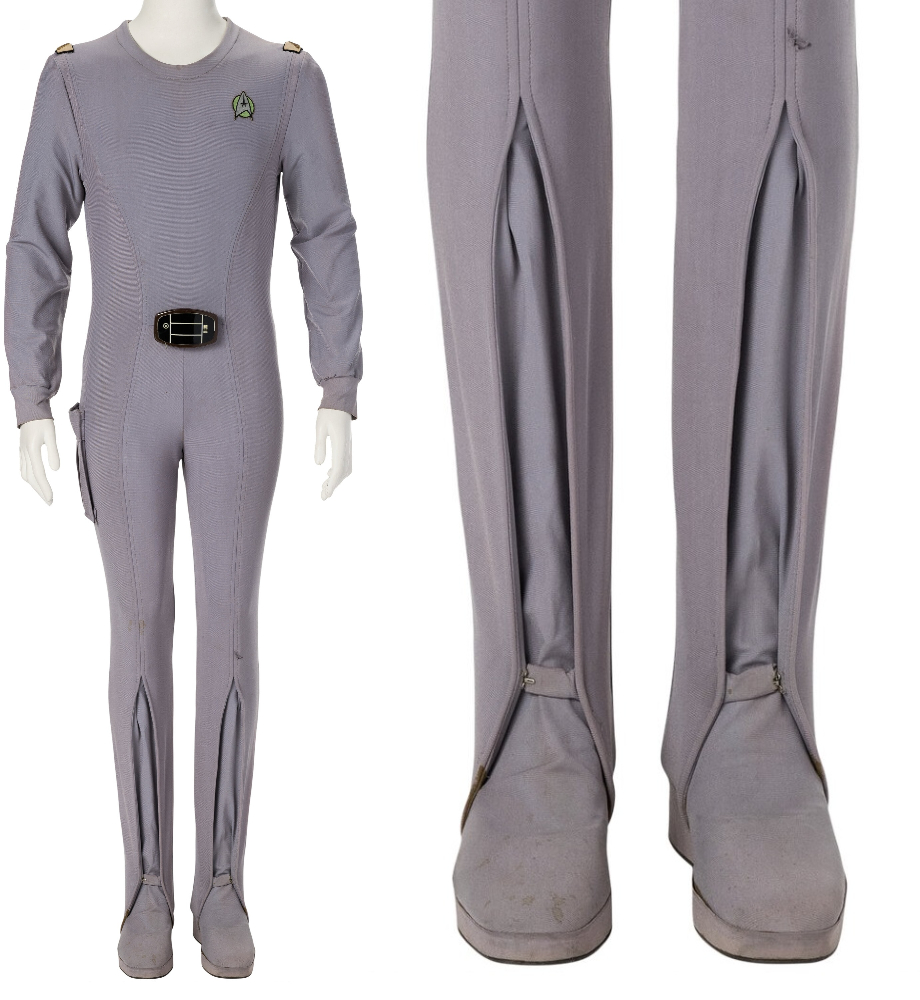
The overwhelming number of “Class D” jumpsuits I’ve seen in auction listings – several dozen, mostly background/extras’ uniforms – had separate shoes.
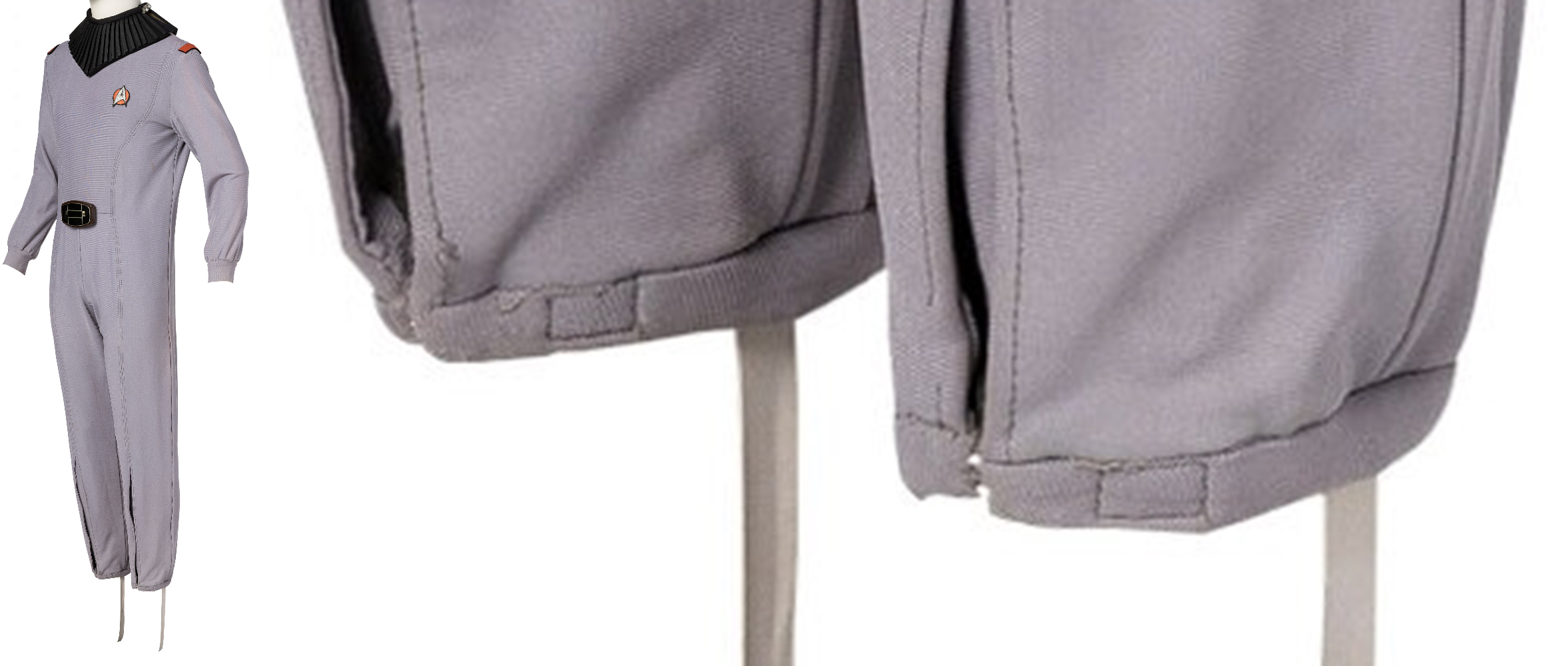
On these, the lower pant legs were handled at least three different ways.
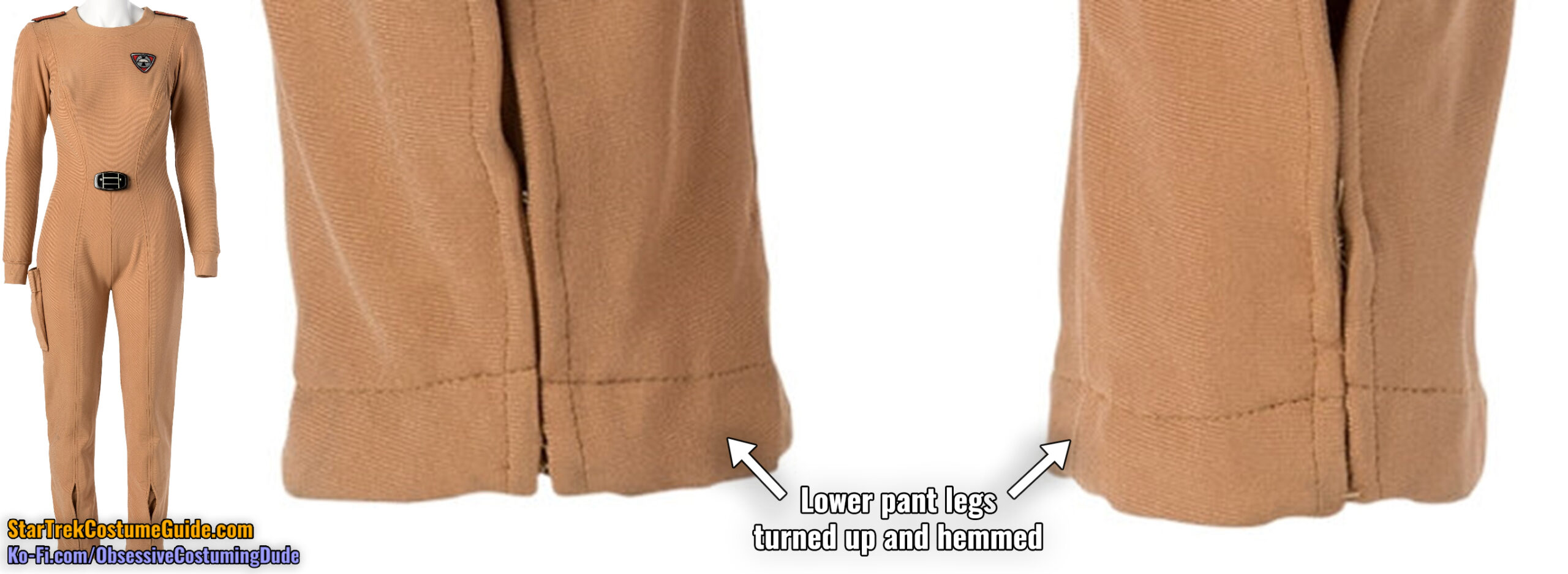
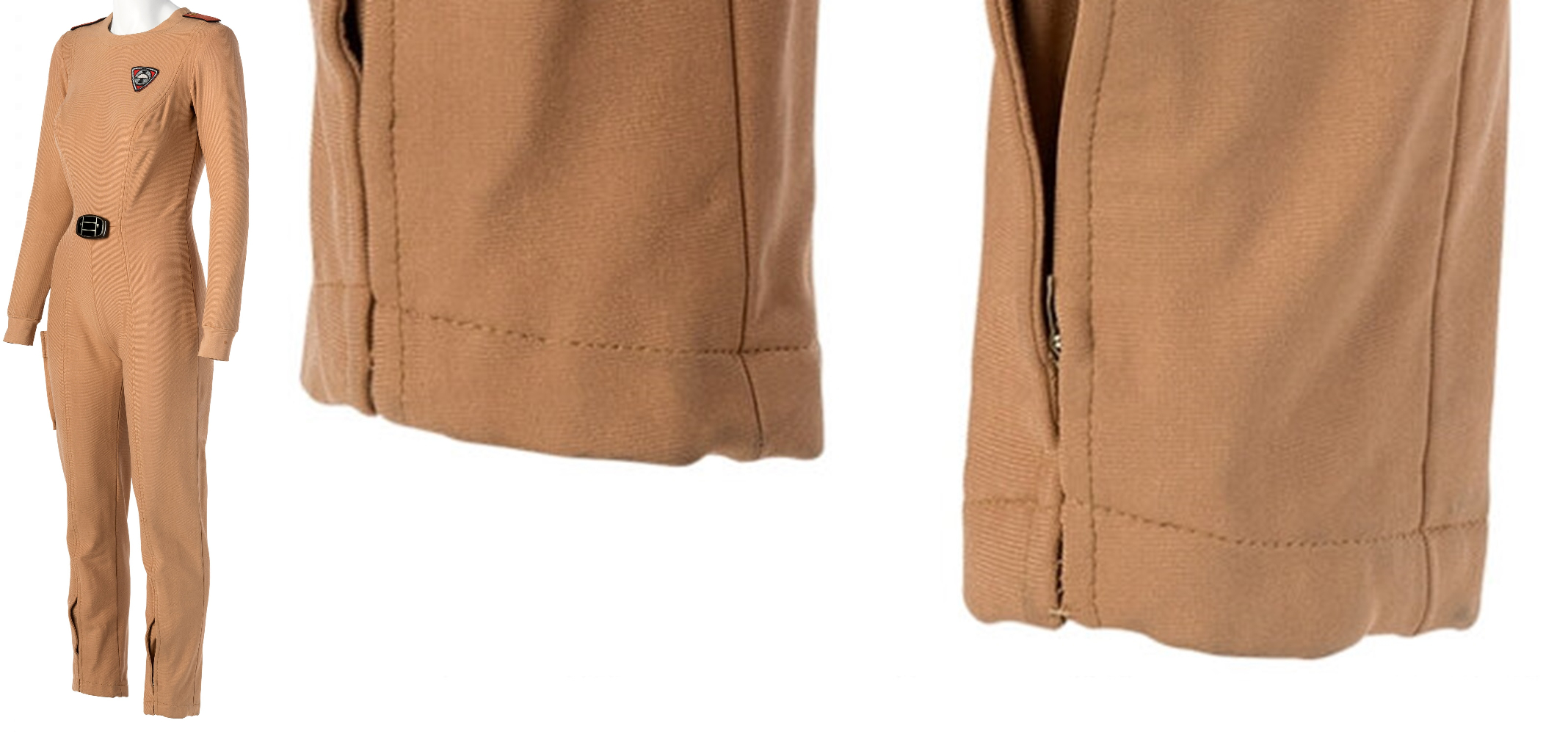
On this jumpsuit, the lower pant legs were hemmed; the lower allowances were simply turned up and topstitched into place.
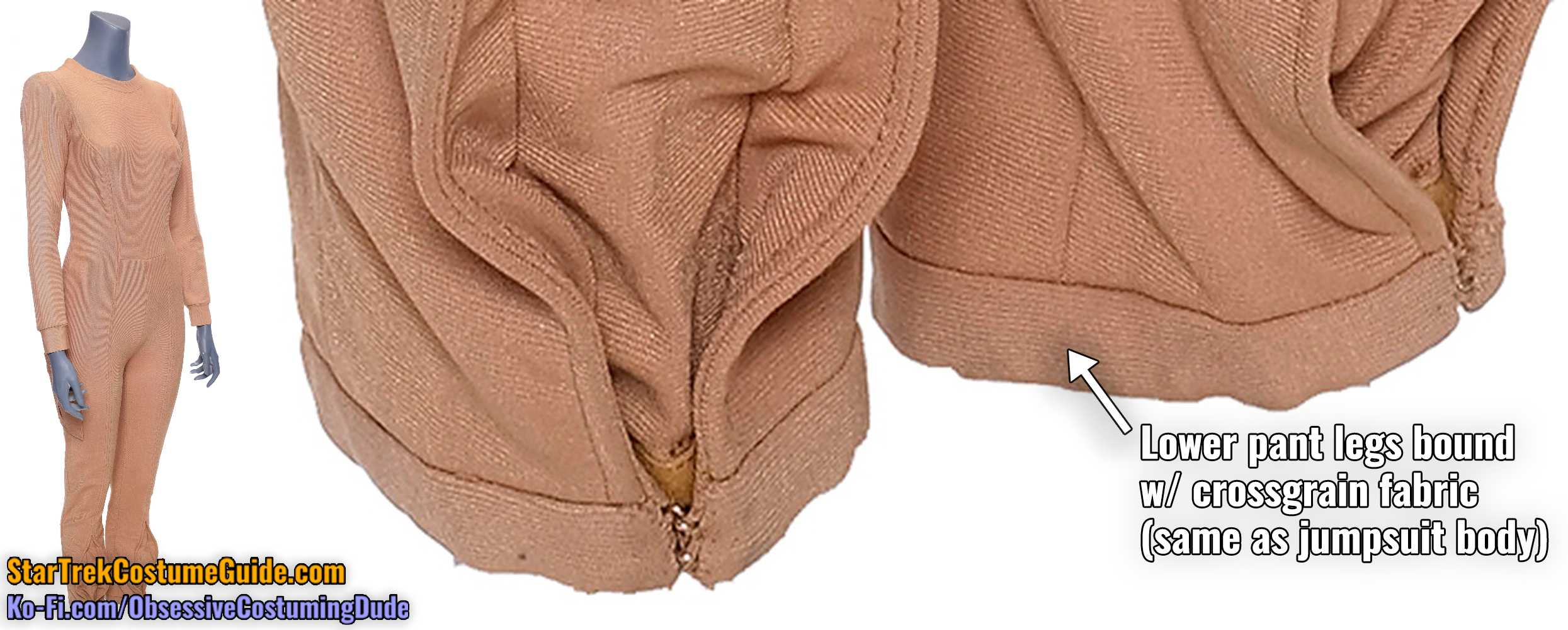
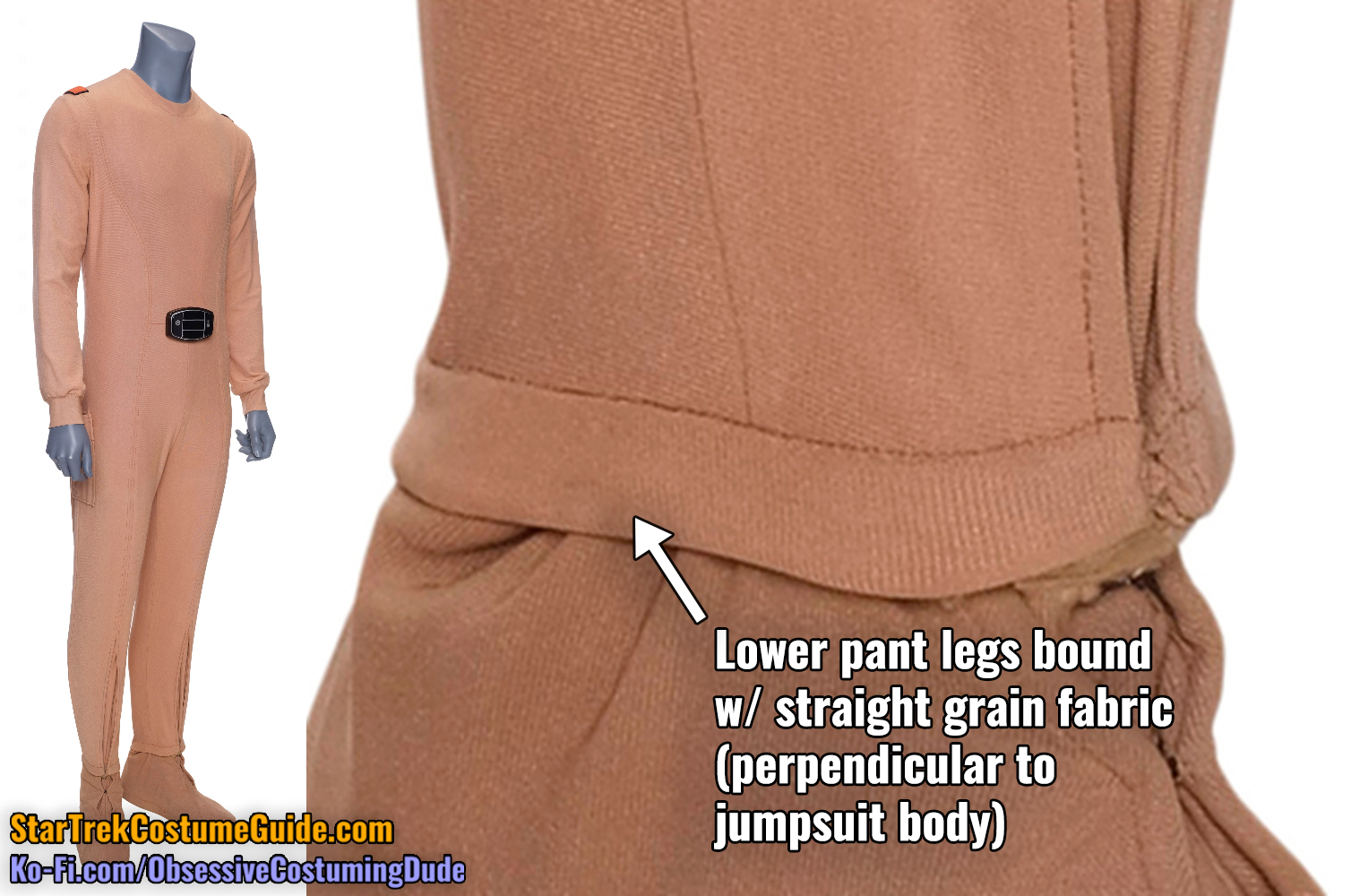
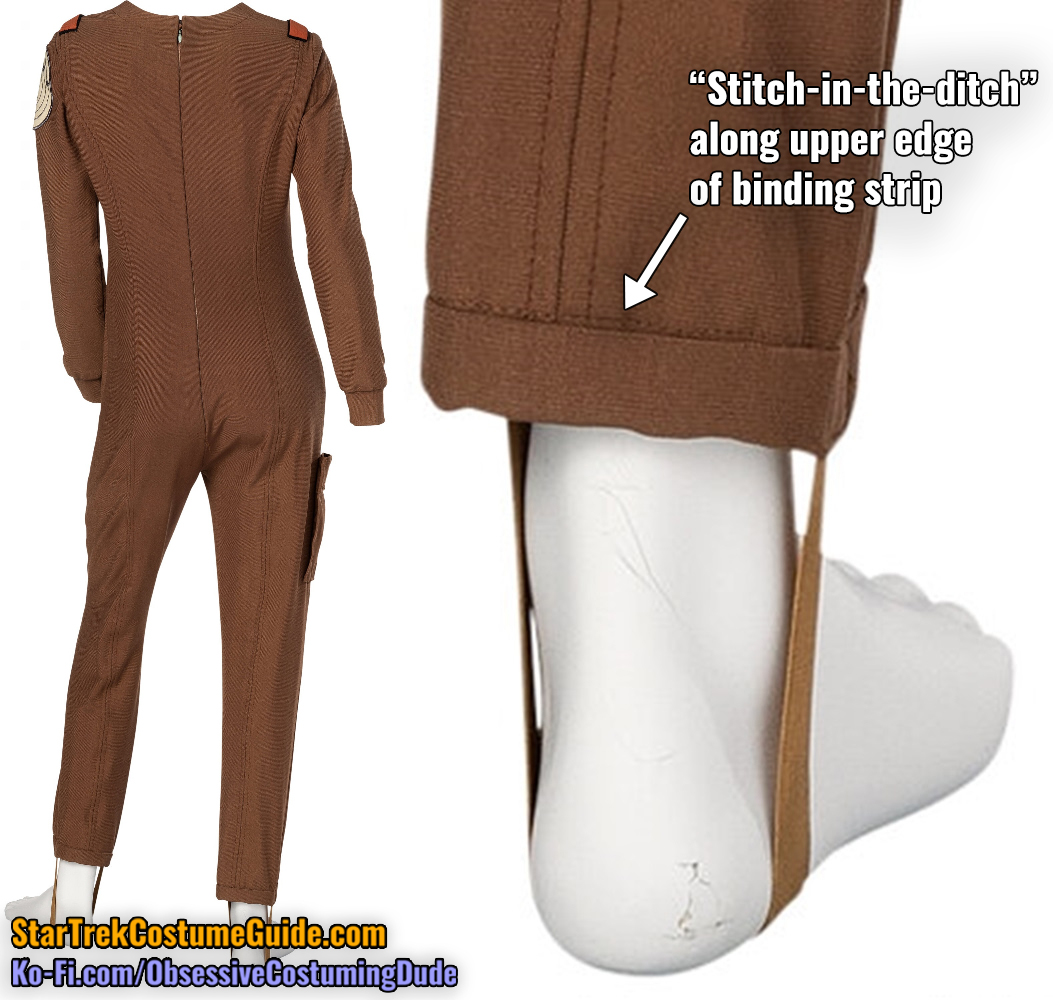
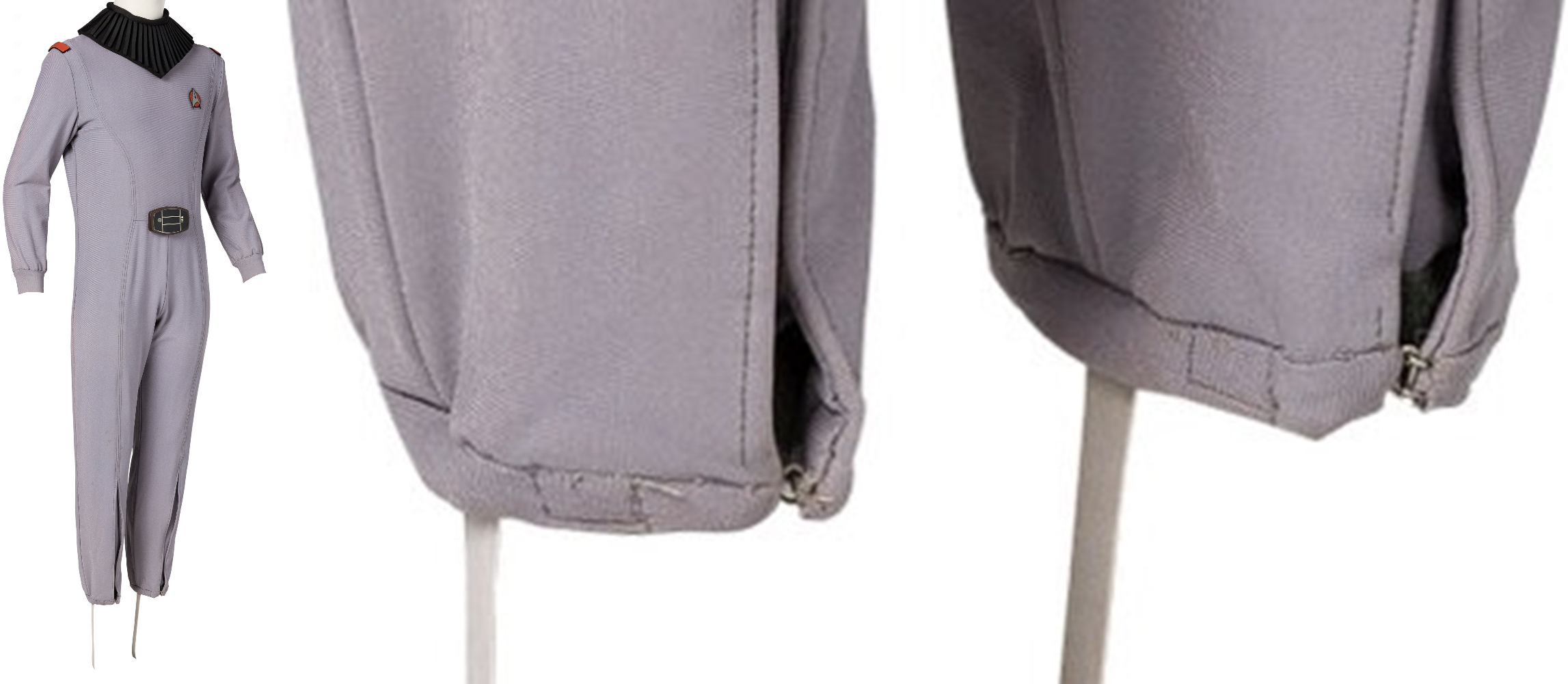
On some jumpsuits, the lower edges of the pant legs were bound with narrow strips of matching jumbo spandex.
Here is a jumpsuit that had pant legs bound with a strip cut on the same grain as the jumpsuit body:
However, here is a jumpsuit that had pant legs bound with a strip cut on the straight grain, perpendicular to the jumpsuit body:
Either way, these binding strips appear to have been attached similarly to double-fold bias tape; on this jumpsuit one can observe the “stitch-in-the-ditch” along the upper edge that secure the underside of the strip:
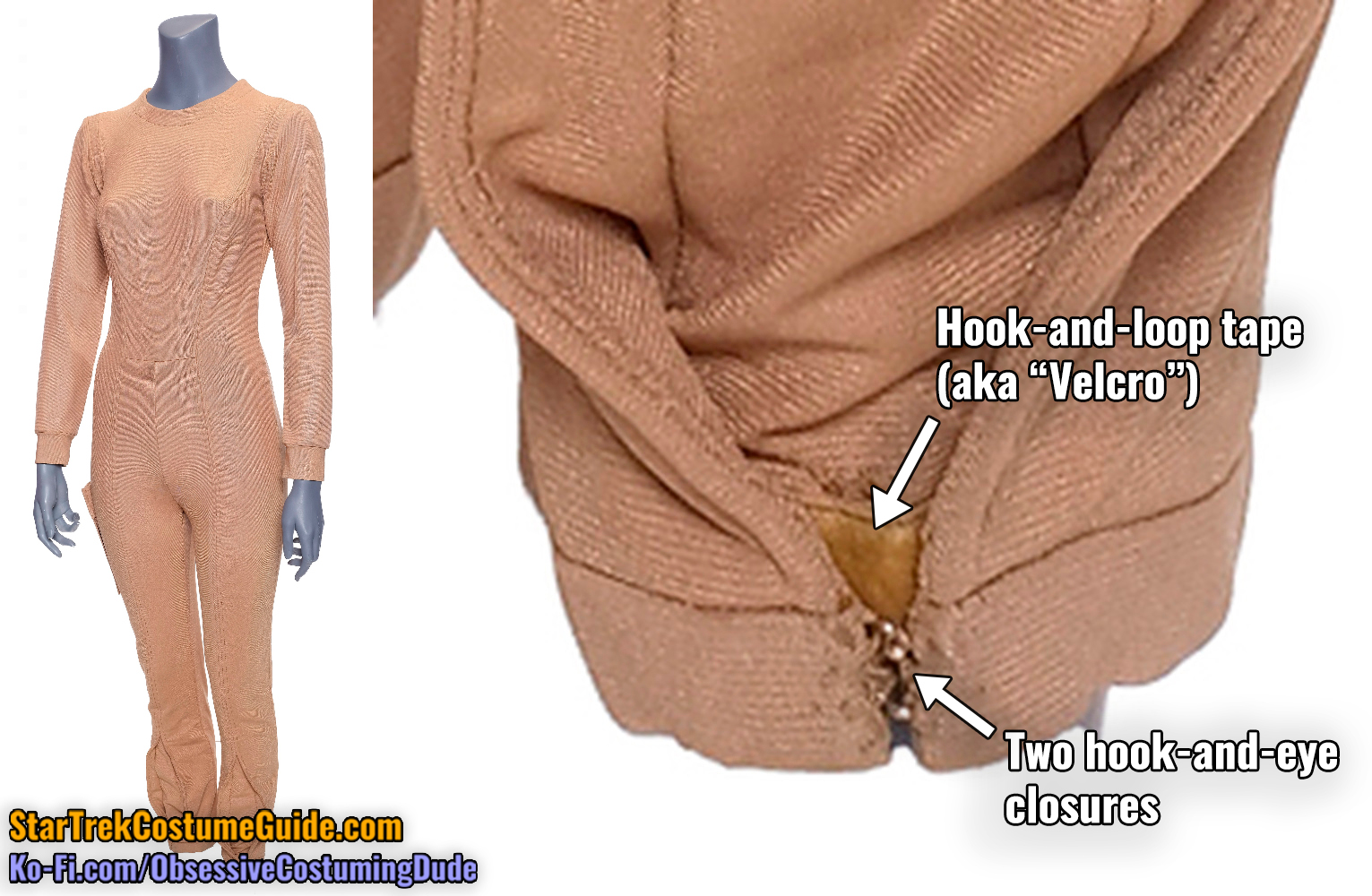
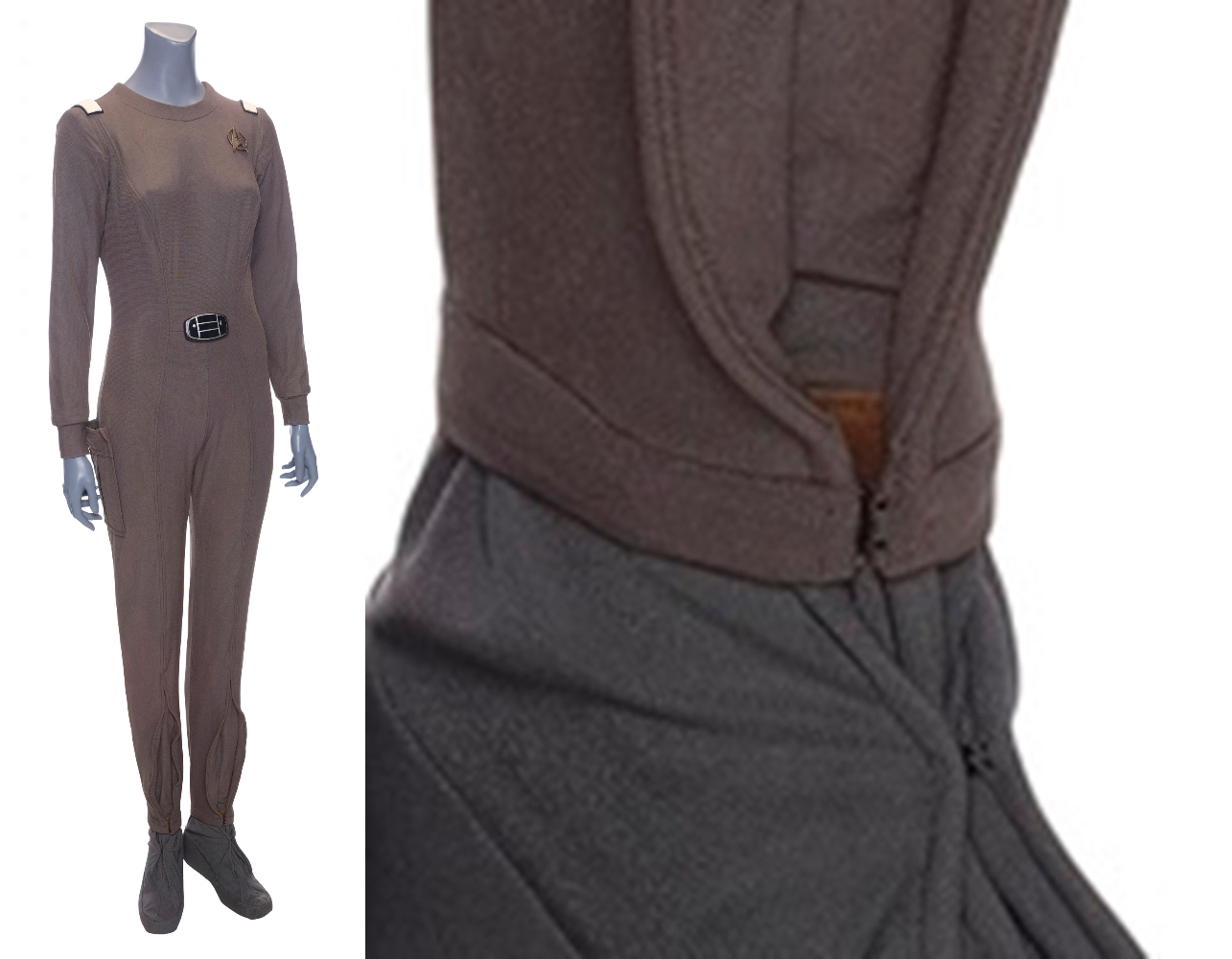
The bottom of the “inverted box pleat gusset insert” ™ was rejoined over the shoes by a pair of small hook-and-eye closures. Sometimes there was also some closely-matching hook-and-loop tape (“Velcro”) at the bottom of the insert.
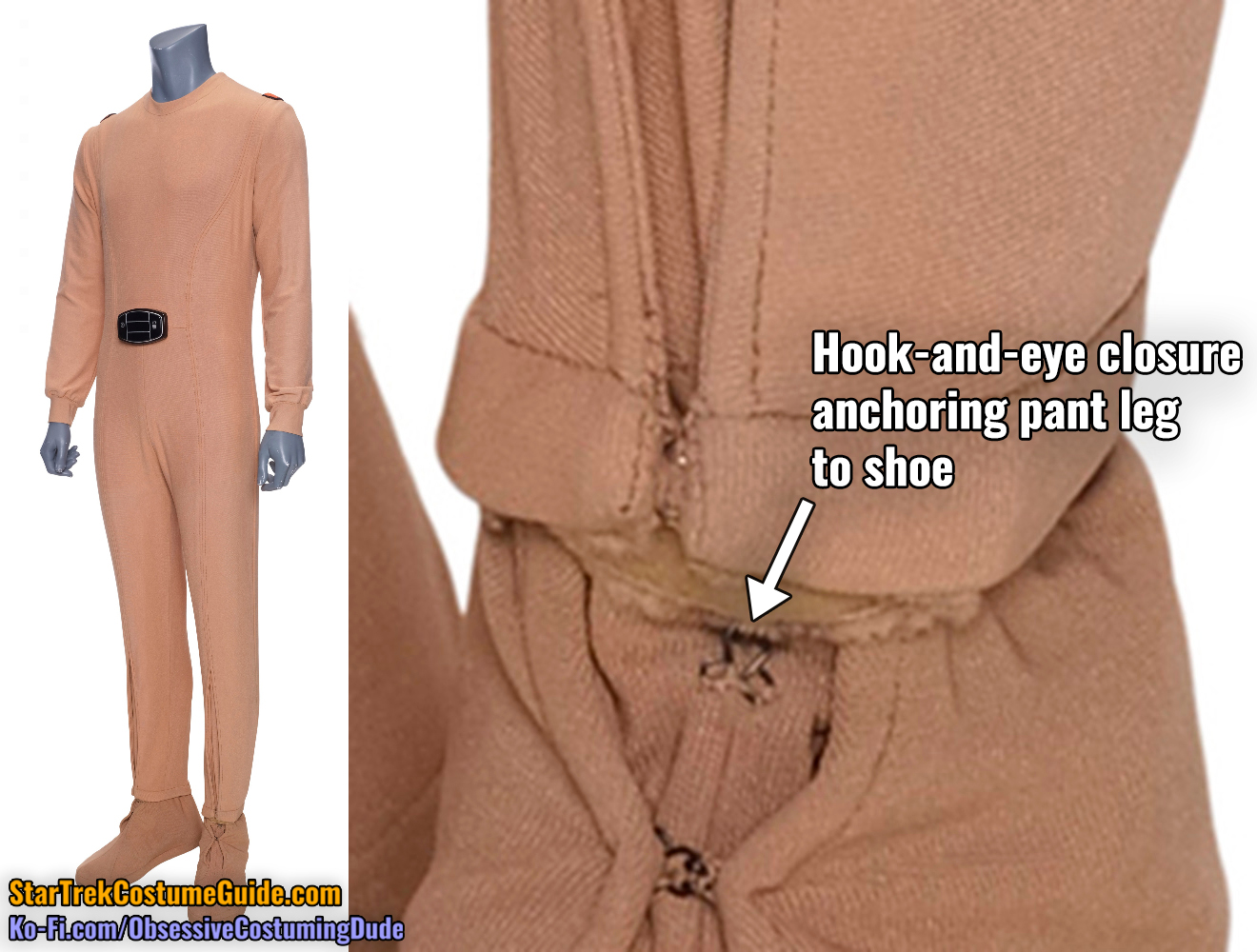
There appears to have been another hook-and-eye closure that helped fasten the pant leg to the shoe.
As a side note, I’m not sure what these rectangles of topstitching are on this jumpsuit’s lower leg binding; they’re clearly not anchoring the elastic stirrups into place …
Many jumpsuits had elastic “stirrups” in a closely-matching color.
These “stirrups” wrapped over the wearer’s ankles and under the shoes.
On the other hand, many jumpsuits appear to have not had elastic stirrups:
Most of the corresponding shoes were made of – or at least covered in – matching jumbo spandex.
However, this jumpsuit was paired with shoes covered in closely-matching wool gabardine.
While the “Class A” and “Class C” uniforms (as well as the “Class B” trousers) were wool gabardine, I’m not sure to what extent (if any) the corresponding shoes were “mixed-and-matched” with the spandex “Class D” jumpsuits in the actual movie.
It’s entirely possible these were just randomly paired together for an auction listing.
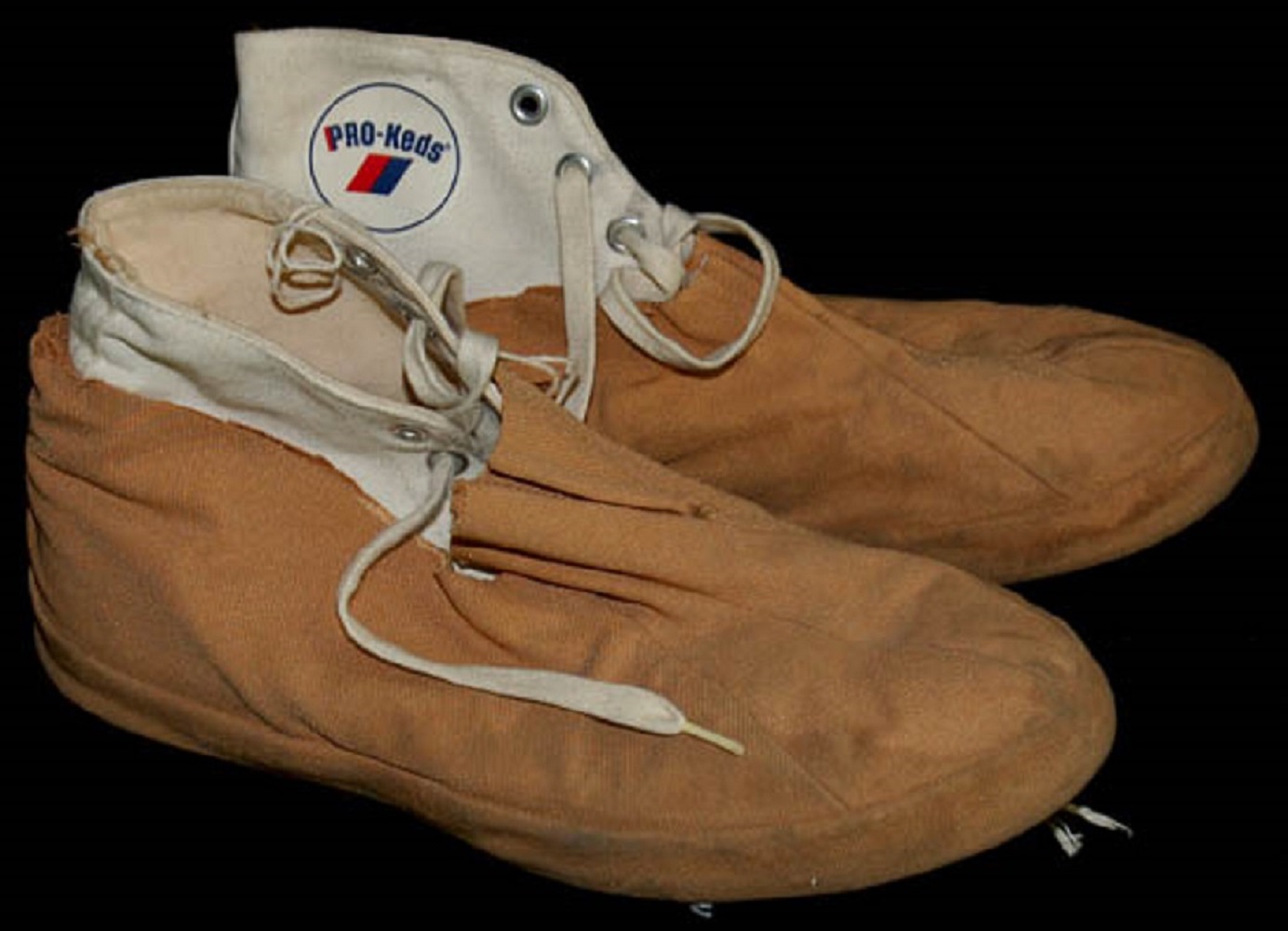
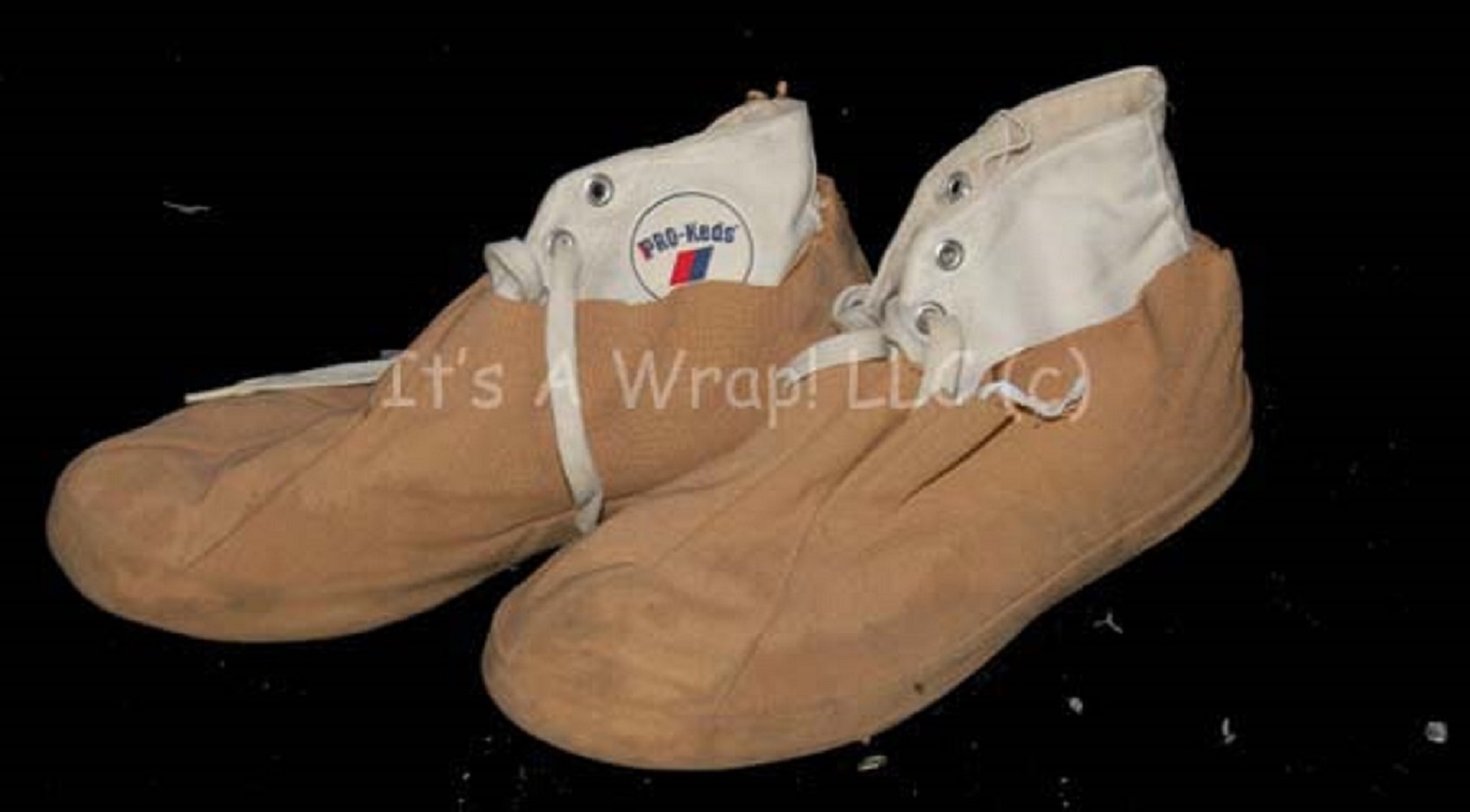
At least some of these 23rd-century shoes appear to have begun their lives as 20th-century Pro-Keds:
I’ve also seen the shoes described as “Enzo Neri brand” in auction listings.
Back Zipper
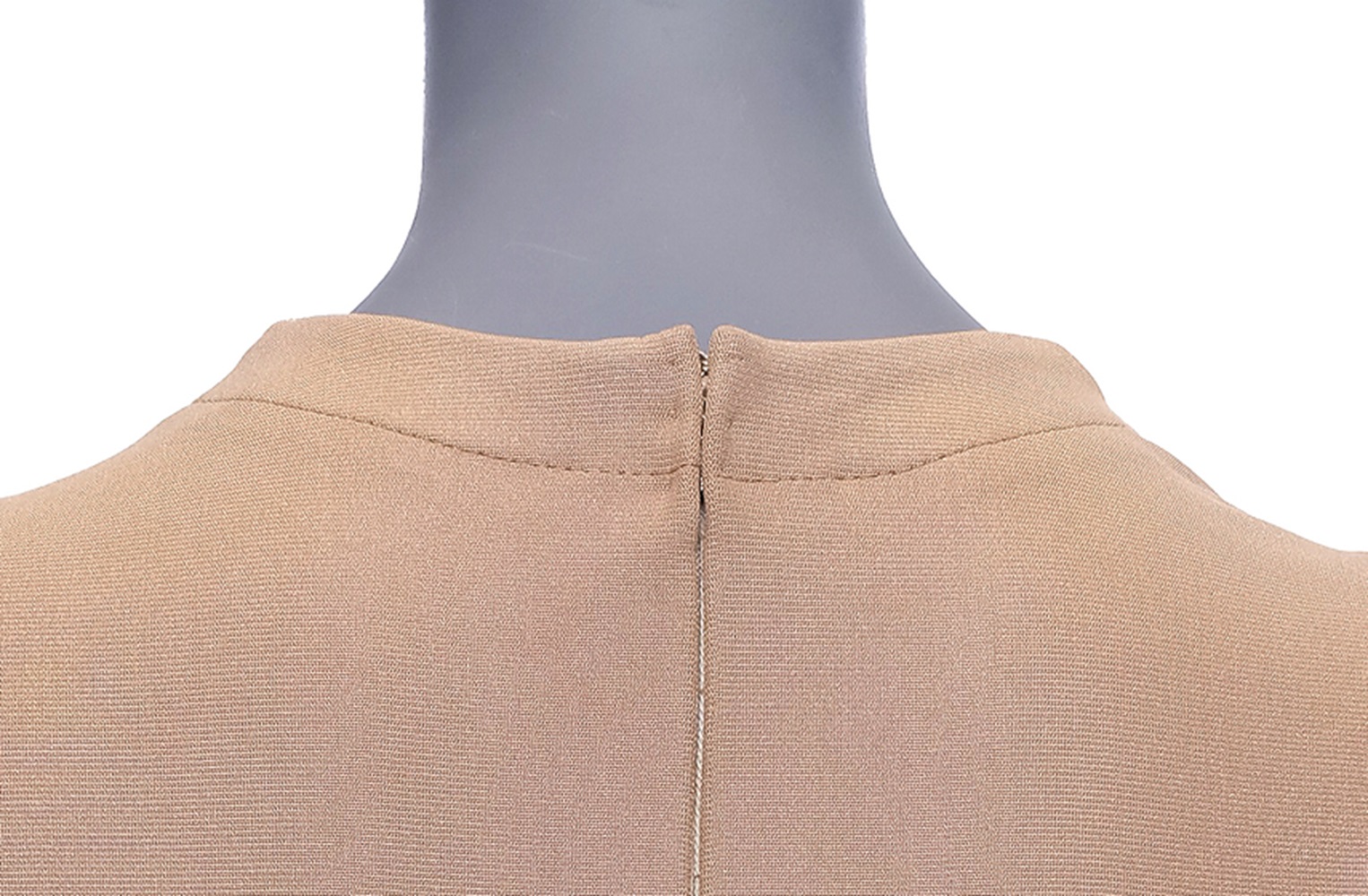
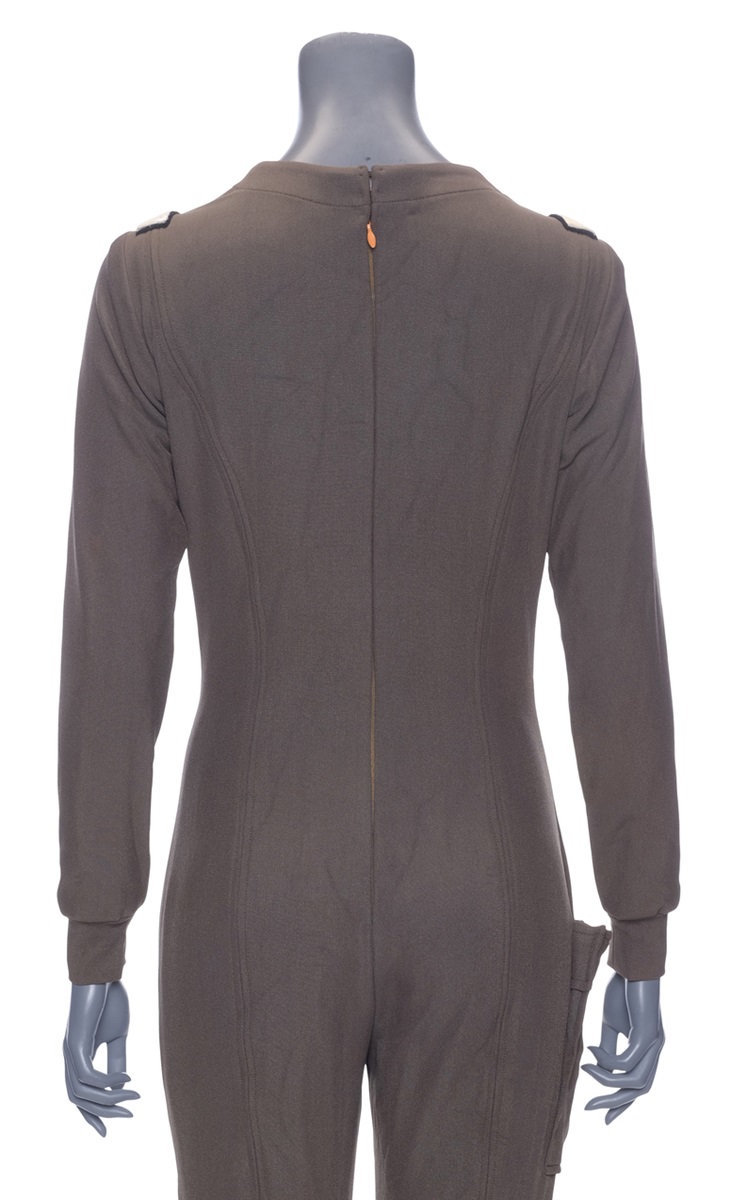
The “Class D” jumpsuit closed up the center back via an invisible zipper.
The center back/zipper allowance appears to have been about an inch, and naturally, the zippers were ideally as close to the jumpsuit fabric color as possible.
Strangely though, this particular dark gray jumpsuit appears to have had an orange zipper:
The top of the zipper was left hanging free, and a trio of hook-and-eyes completed the closure system.
Amidst the mad rush of making the movie, unfortunately some of these zippers were somewhat poorly installed.
Sleeves
The “Class D” jumpsuit sleeves were standard, one-piece, set-in sleeves.
There doesn’t appear to have been any ease in the sleeve cap, which makes sense considering how poorly the synthetic jumbo spandex would shrink and ease into the armscye, how difficult it would be not to stretch the armscye when installing the sleeve, and the lack of sleeve heads to full out the finished cap.
Some minor rippling could occasionally be seen, but that was almost certainly just due to the natural curve of the cap and drape of the sleeve.
The women’s sleeves were very tight-fitting around the arms.
The men’s sleeves were still tight, but slightly looser than the women’s.
Scotty’s jumpsuit sleeves were the loosest ones I observed.
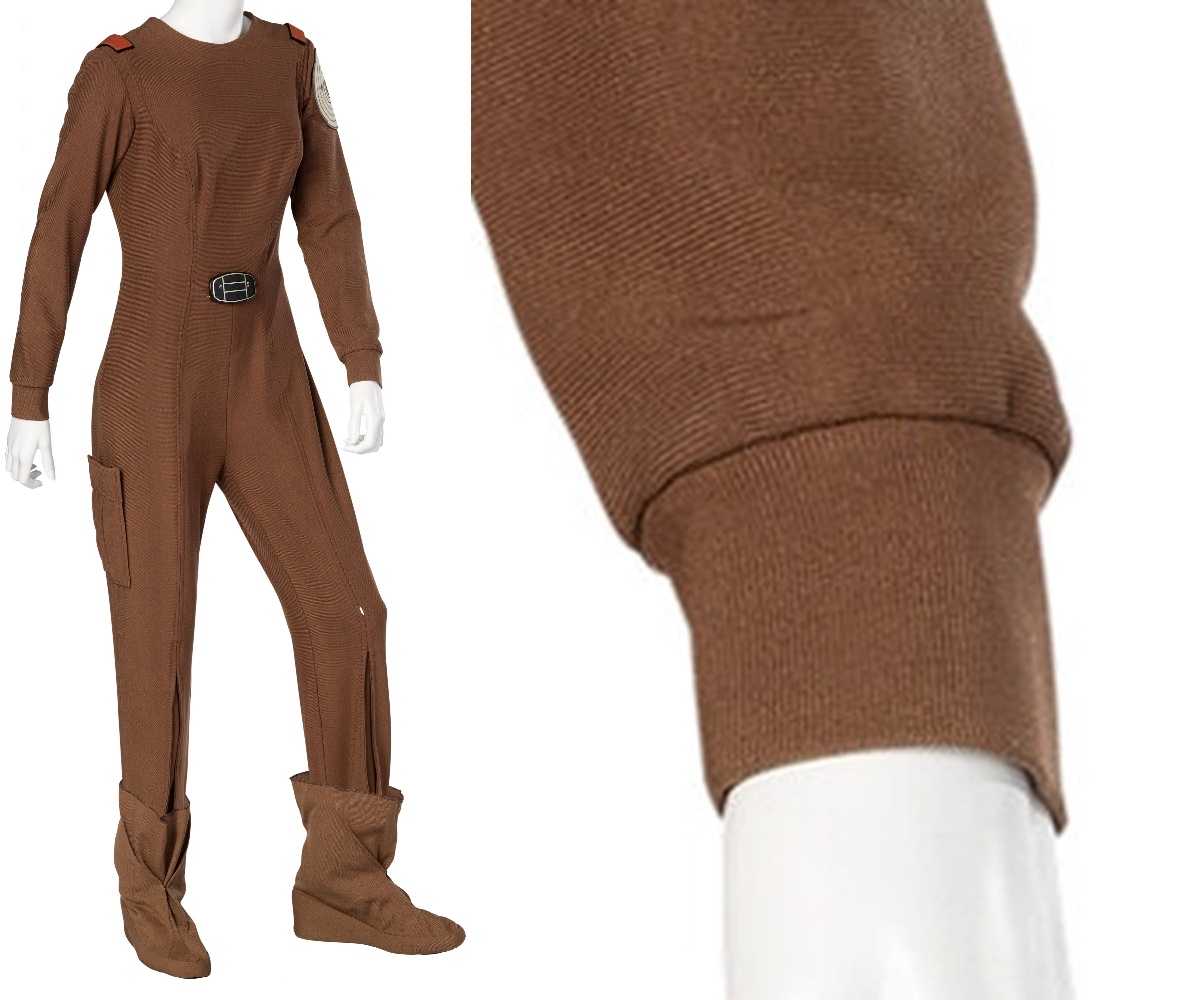
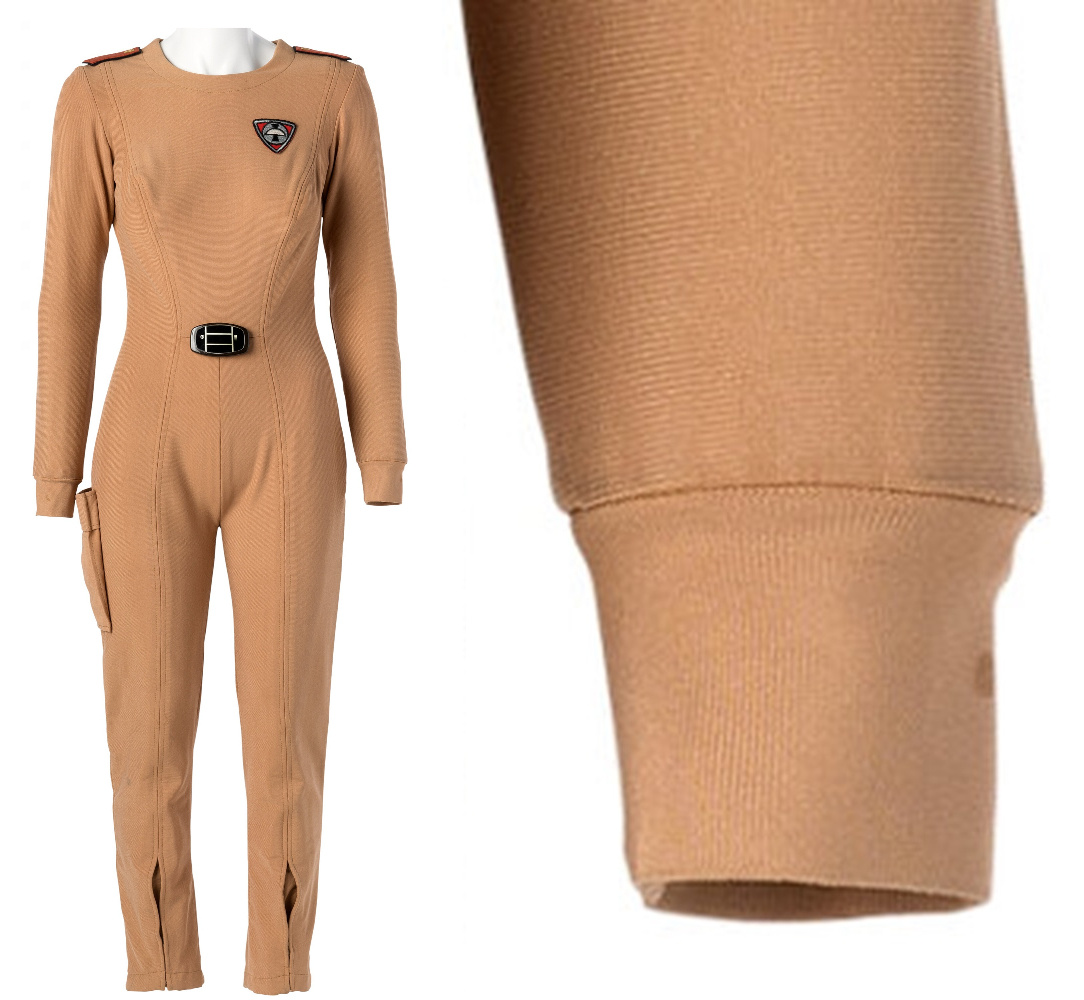
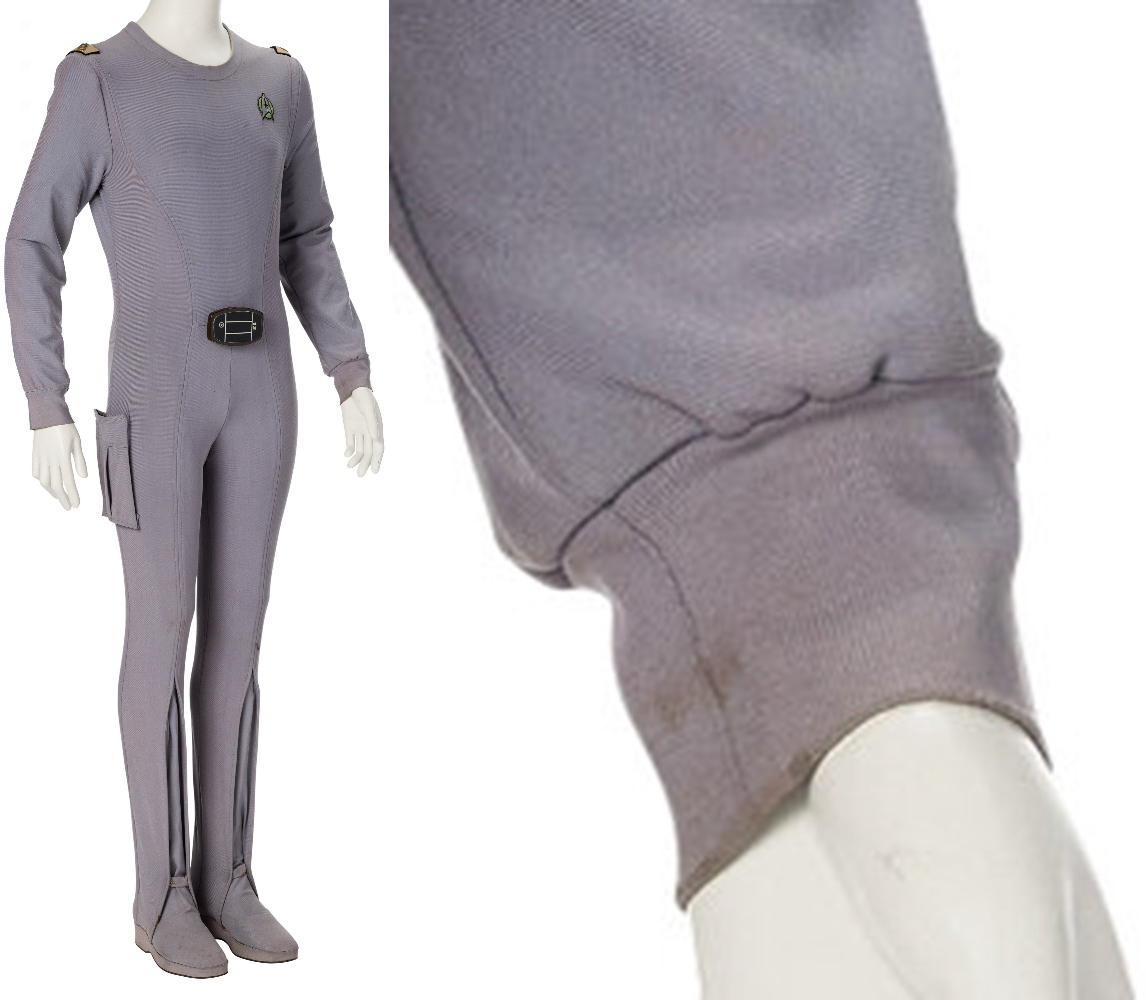
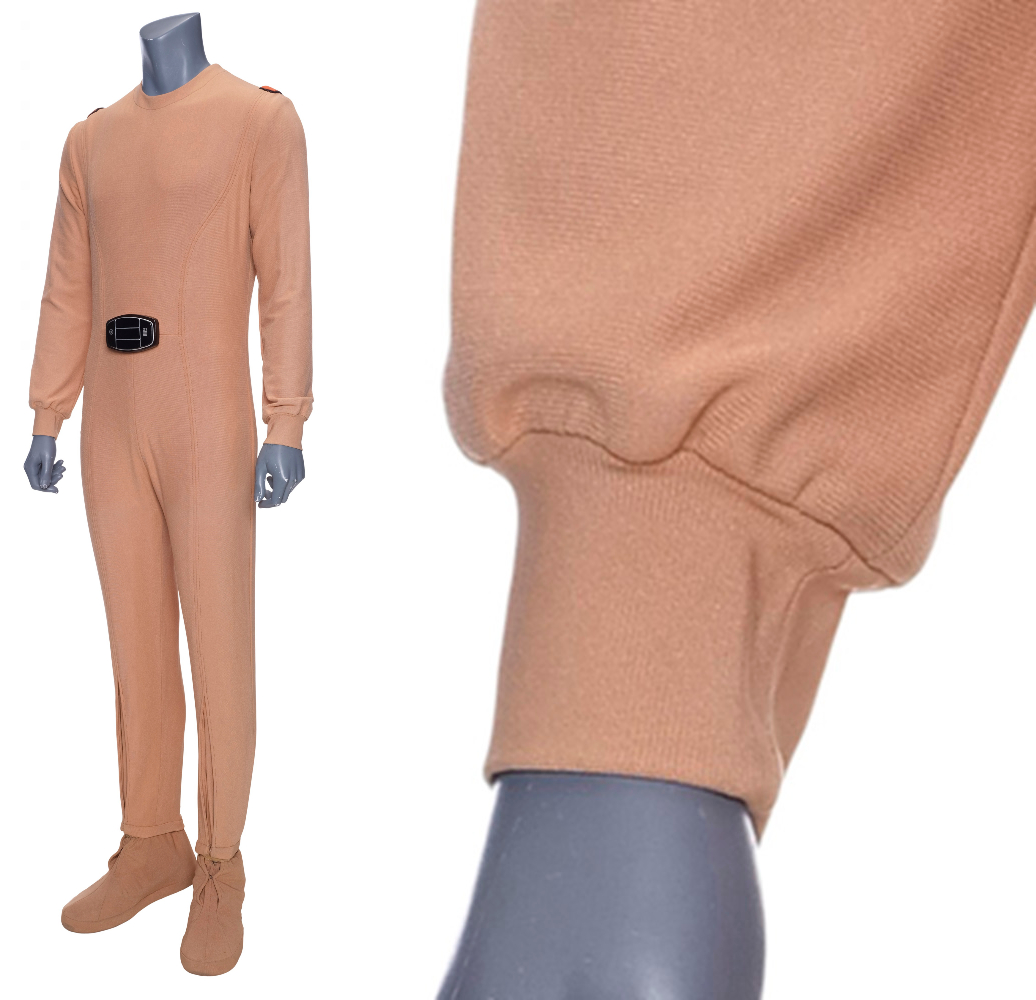
The lower sleeves were finished with sleeve cuffs, made from the same spandex as the rest of the jumpsuit.
Because the women’s sleeves were so tight, there was very little “blousing” where the cuff met the sleeve.
However, because the men’s sleeves were a bit looser, the cuff had more sleeve fullness gathered down into it.
"Perscan" Device
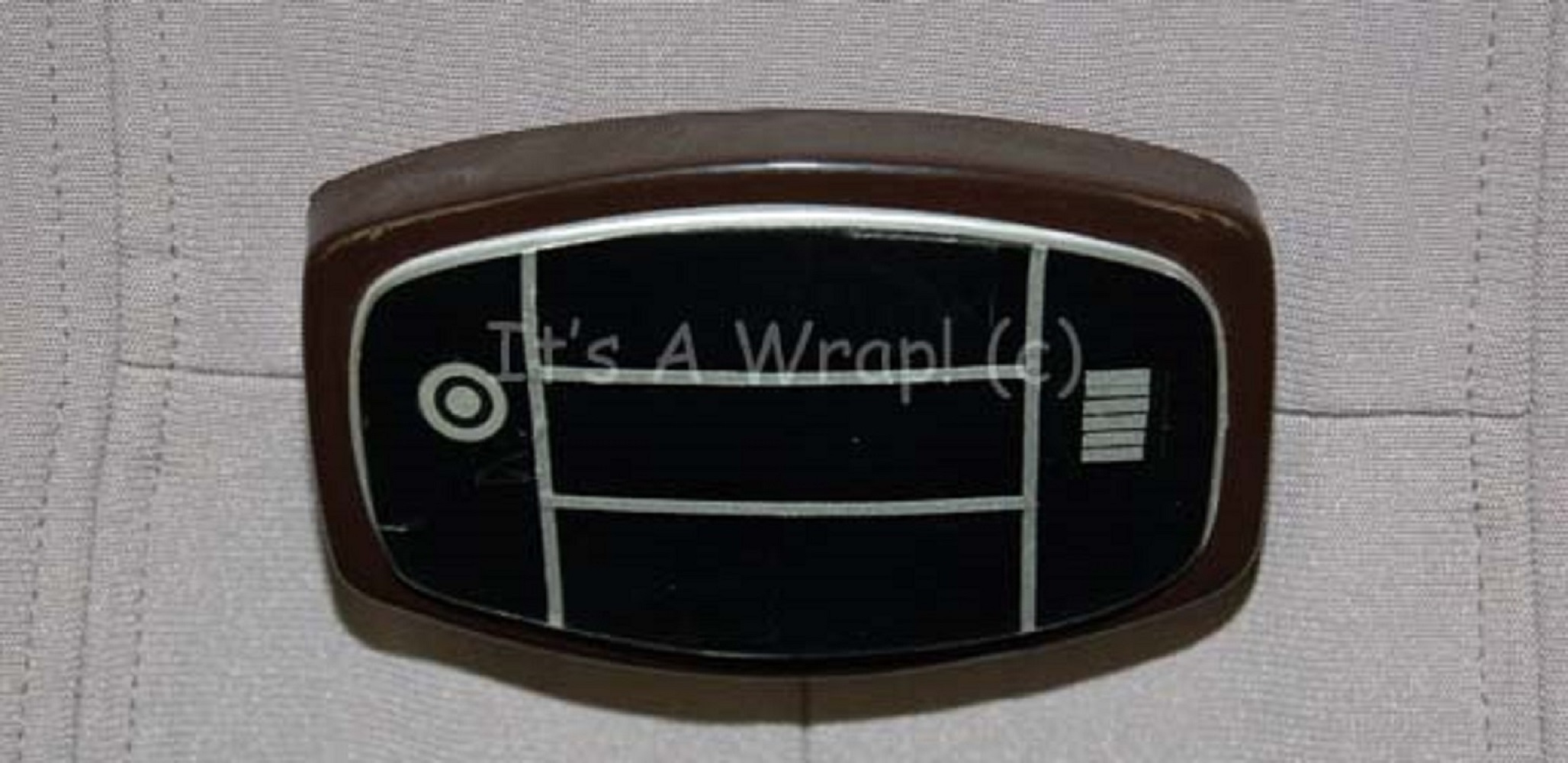
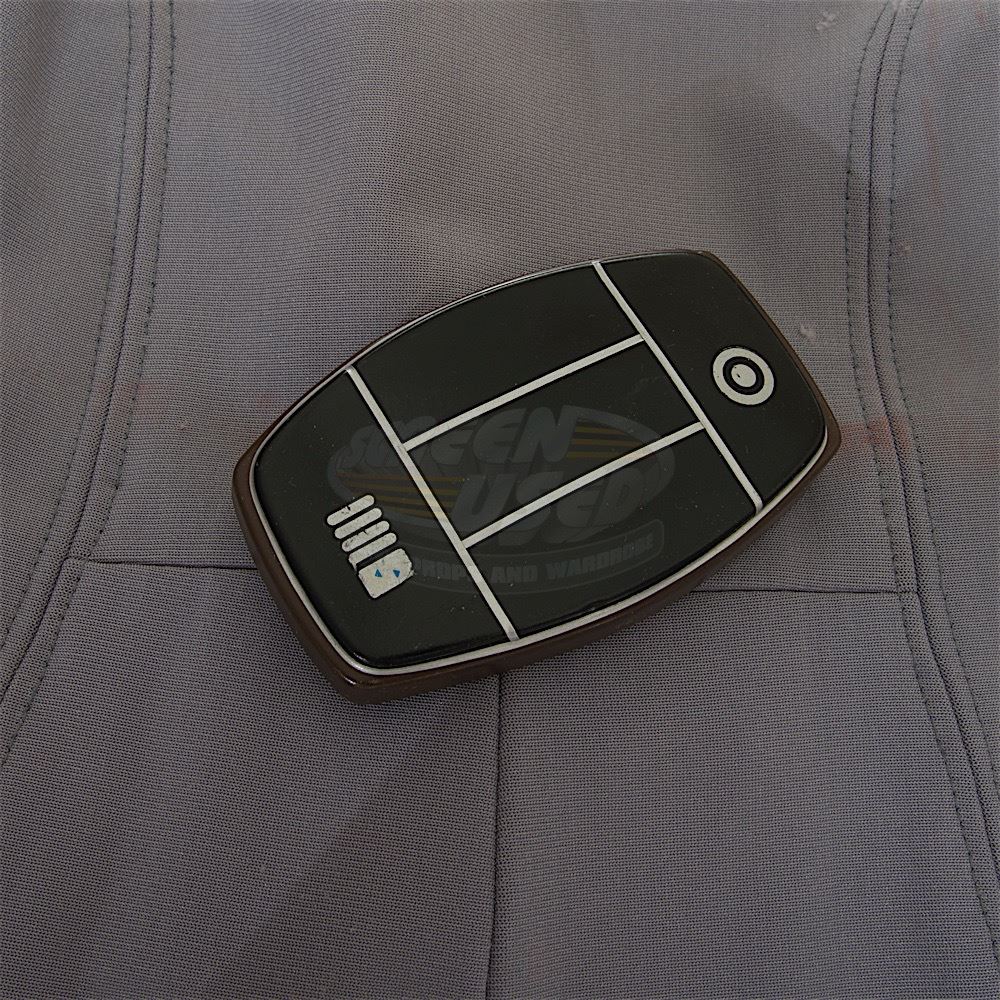
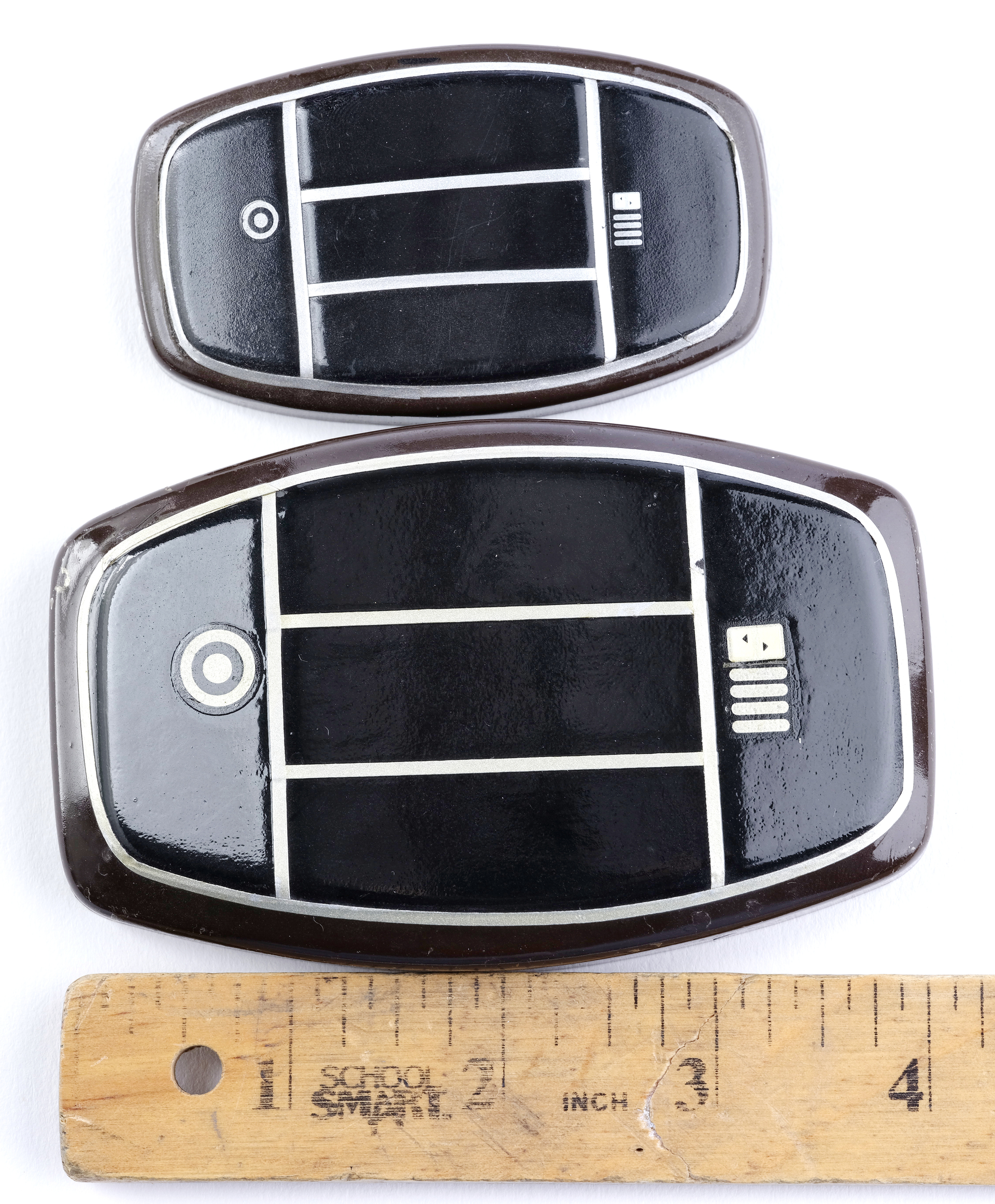
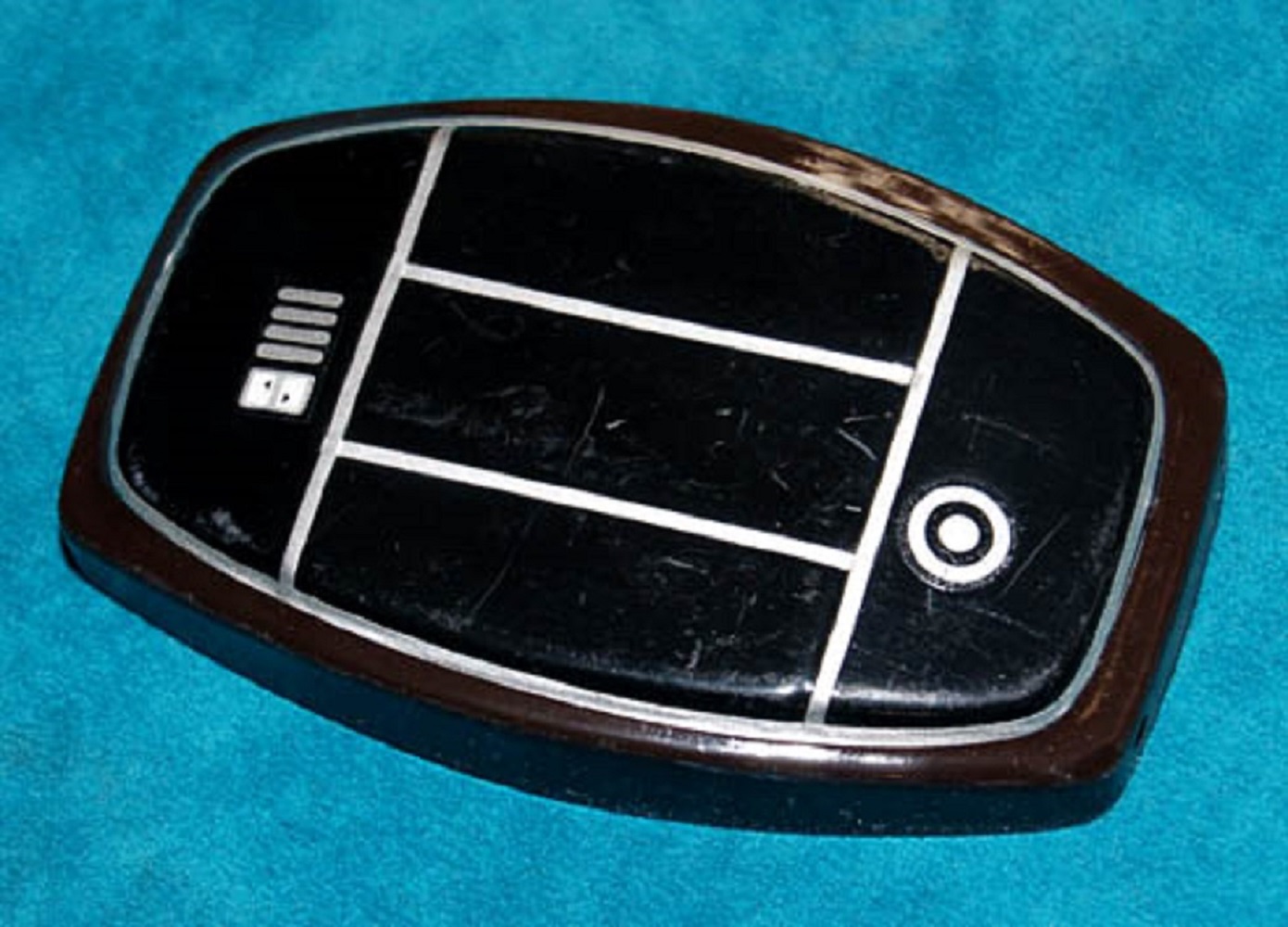
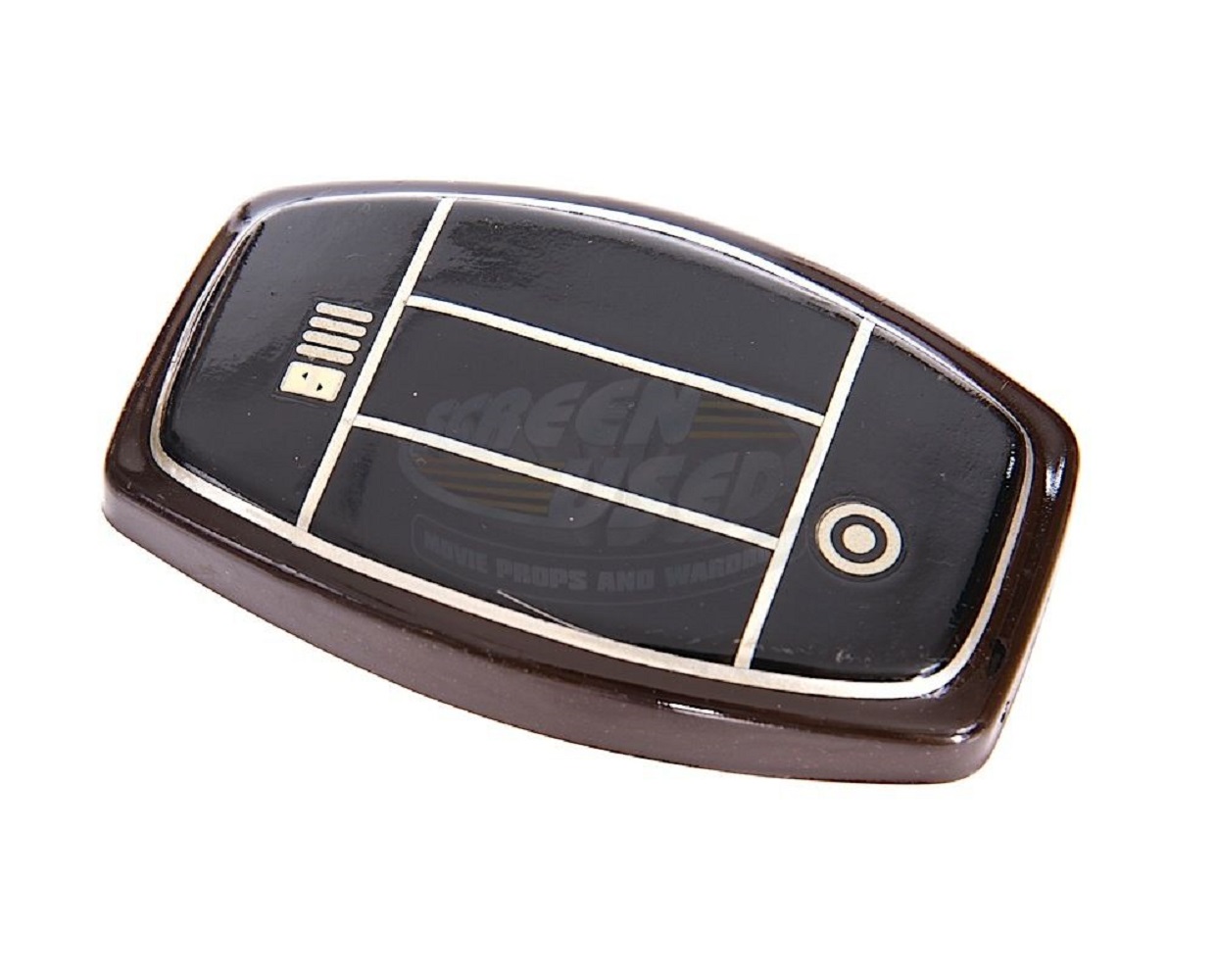
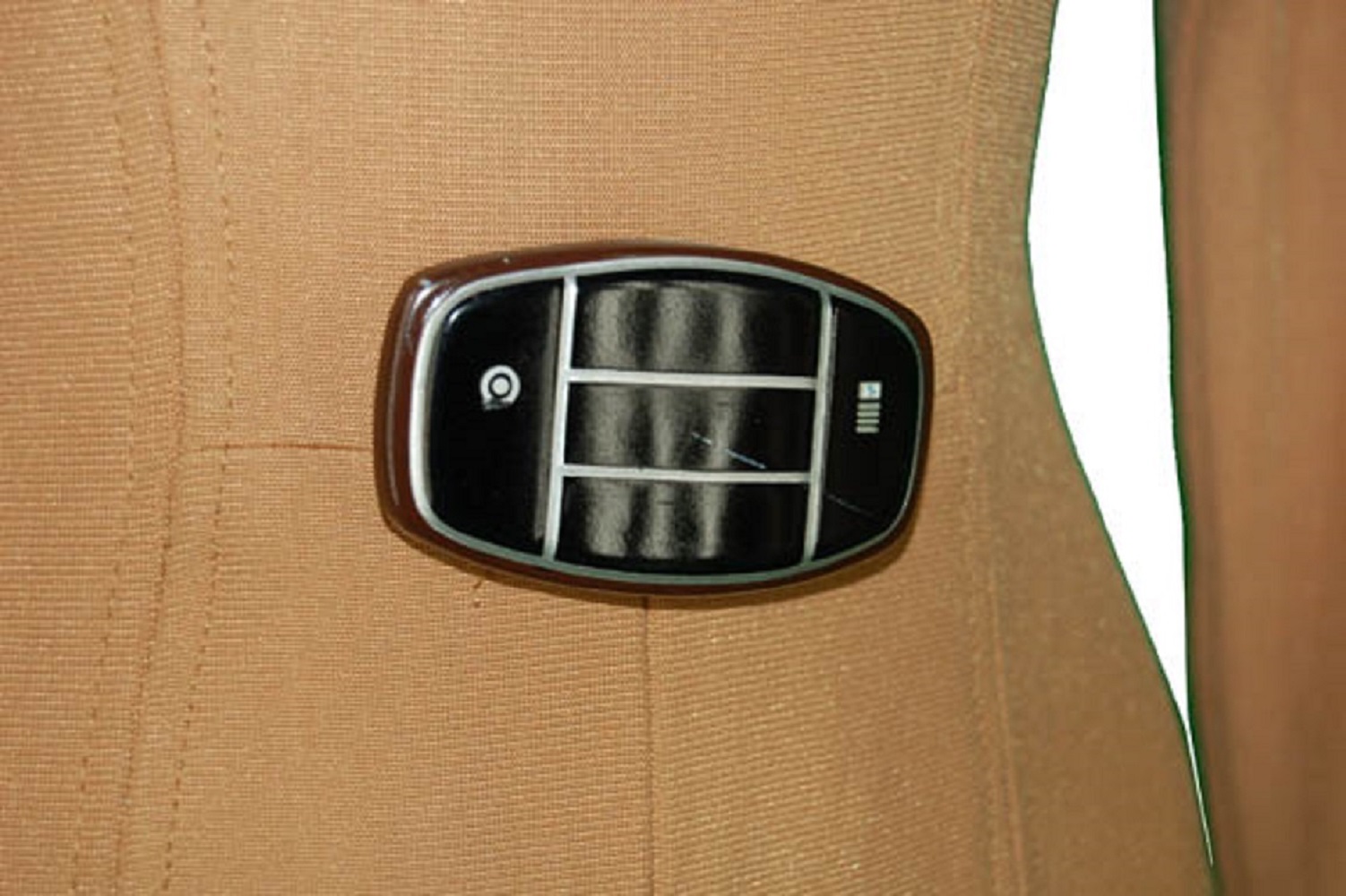
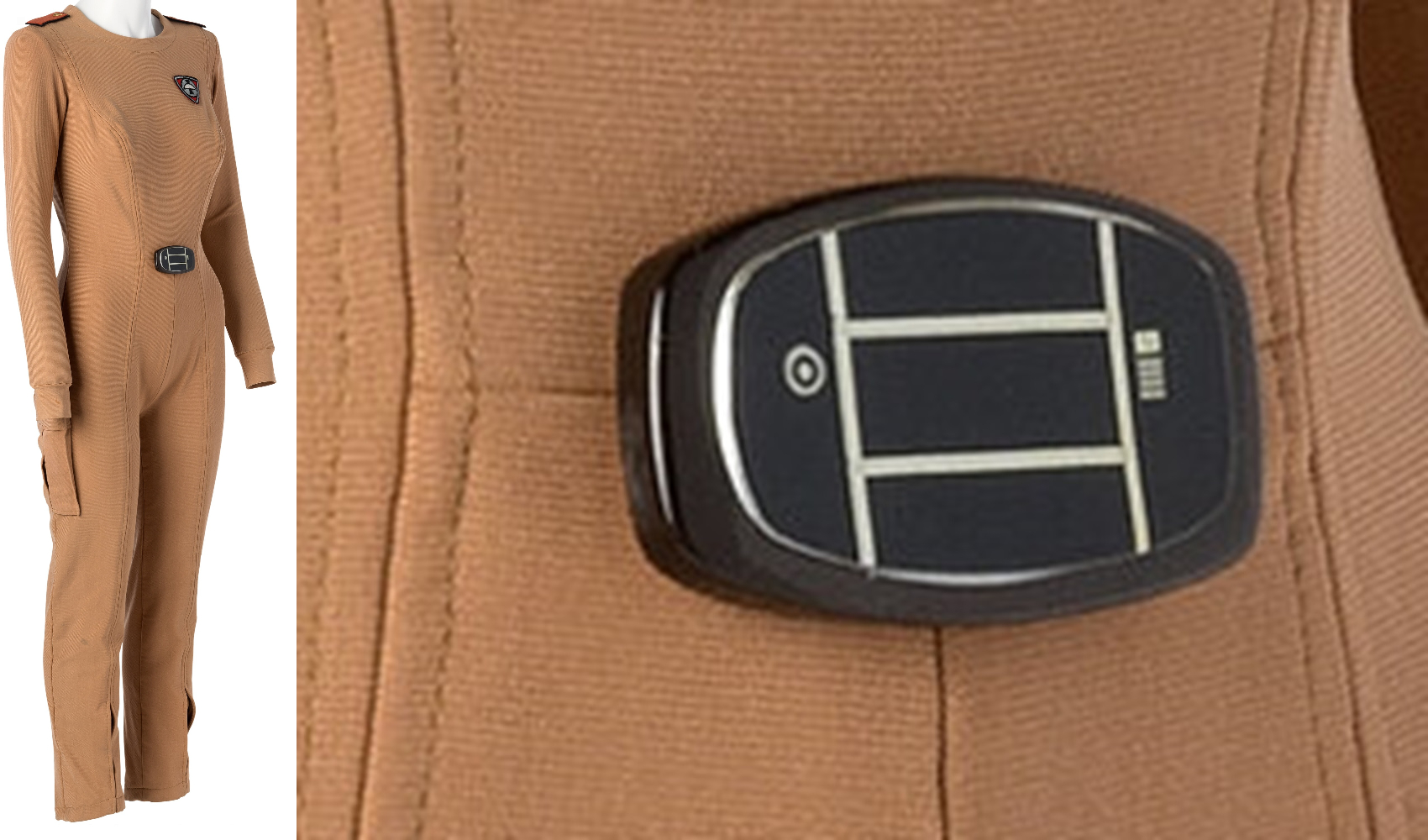
Like most of the TMP uniforms, the “Class D” jumpsuits had a small device attached to the front waist.
These were never actually referred to by name in the movie, but in the TMP novelization they were called “perscan” devices. (I’ve also heard them referred to as “bio-monitors.”)
These were made in two different sizes; the smaller ones were for the women’s uniforms, and the larger ones were for the men’s.
On the “Class A” and “Class B” uniforms, there were fabric straps that threaded through elastic loops on the back of the “perscan” device.
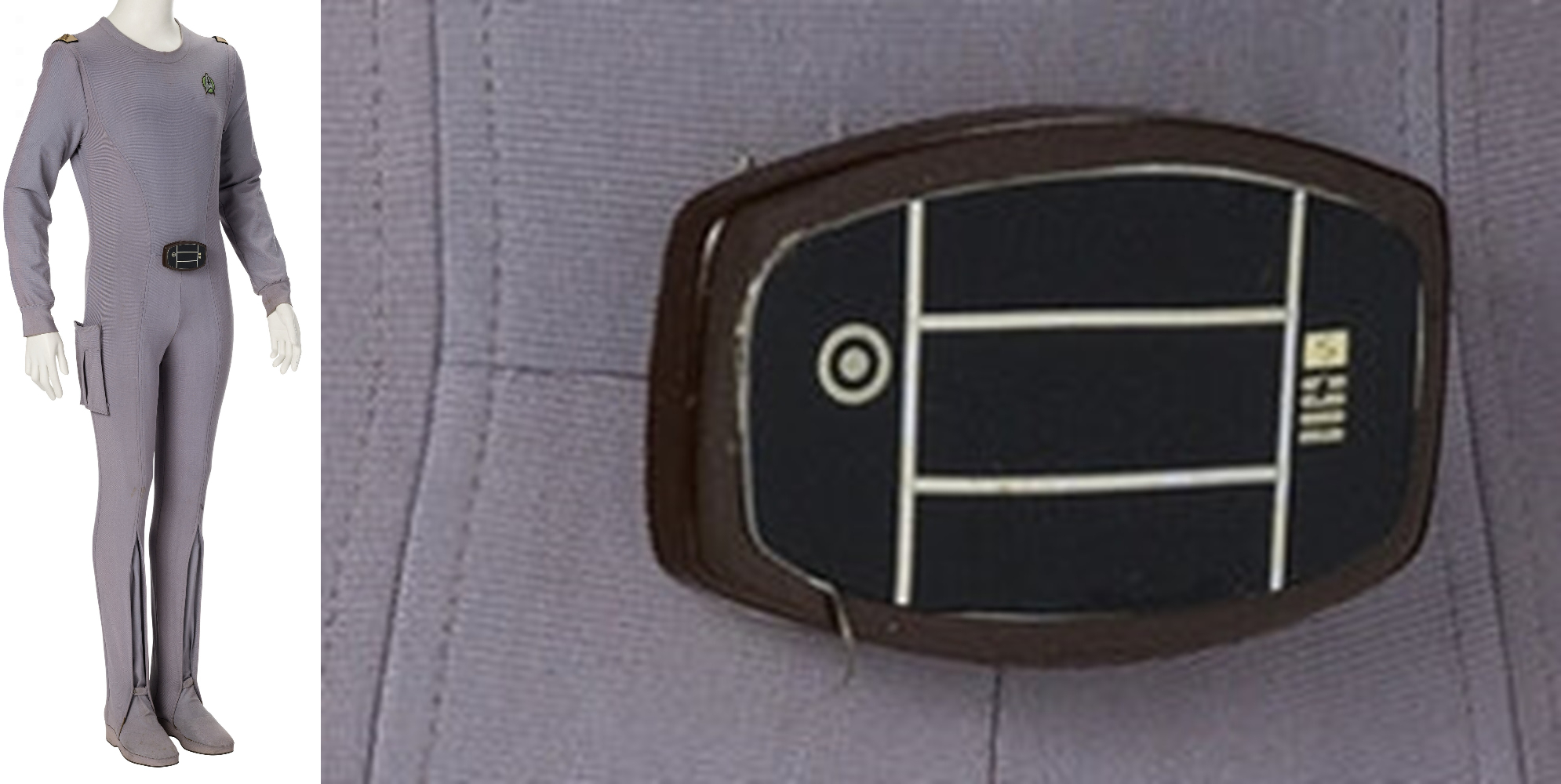
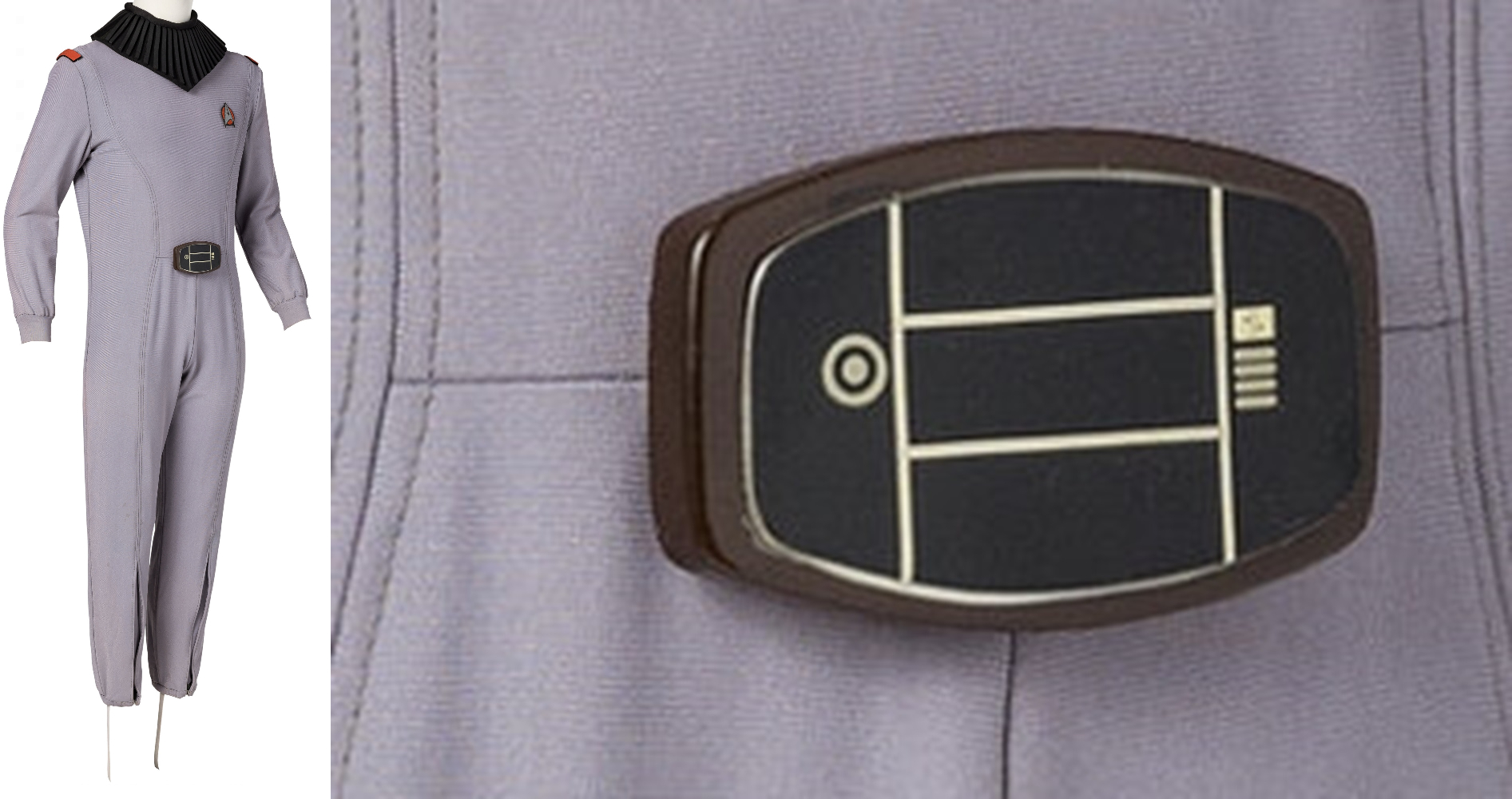
However, on these “Class D” jumpsuits, there were no fabric loops; the device attached directly to the uniform.
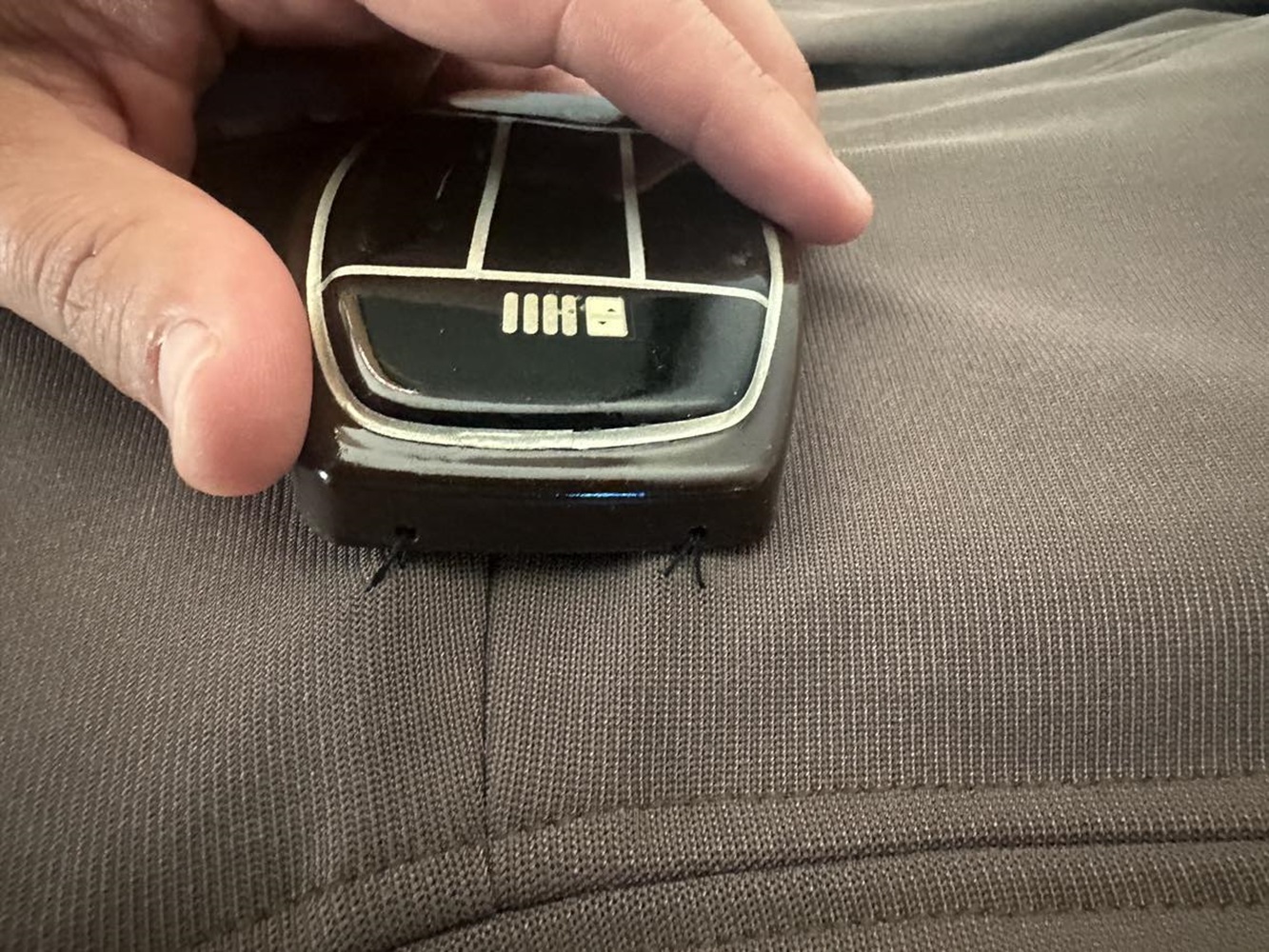
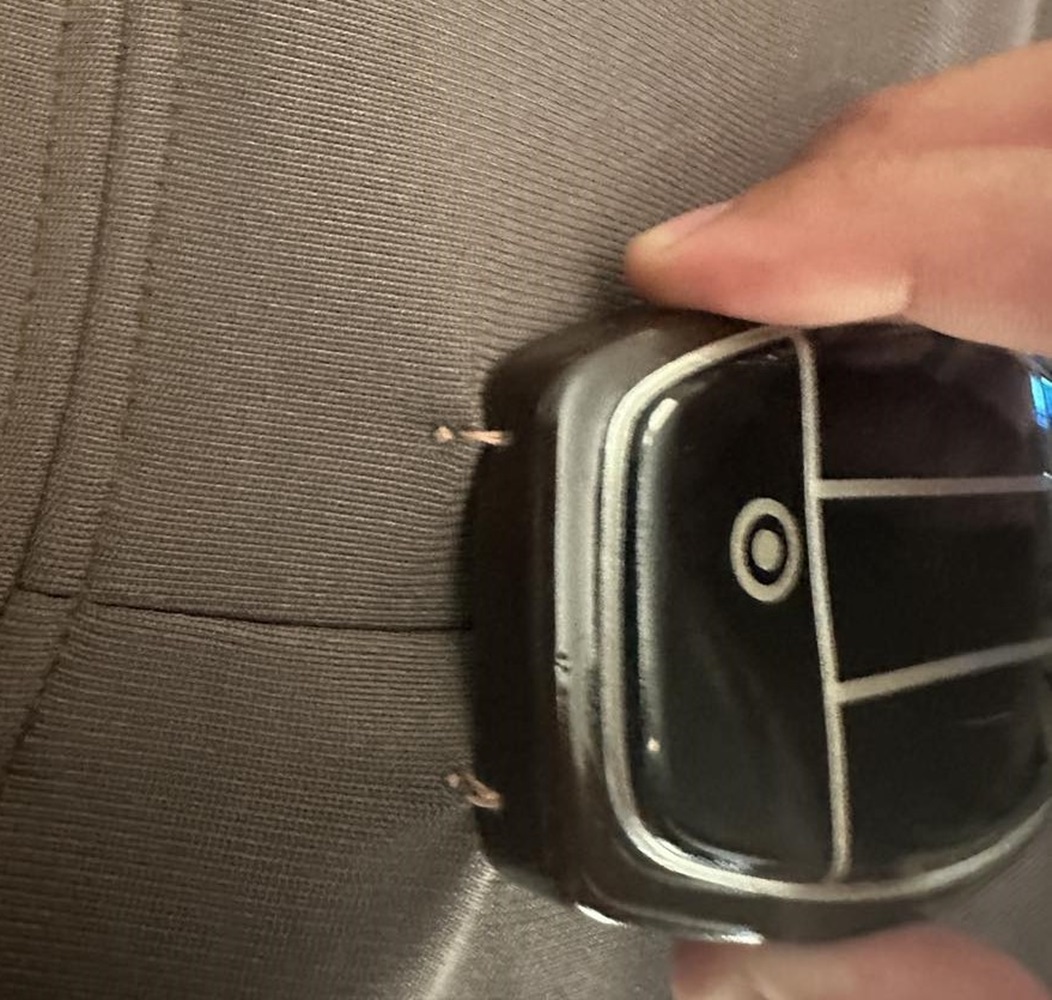
On some, a couple small holes were drilled on each side, and the “perscan” device was hand-sewn to the jumpsuit.
Photos by Jakub Holý
On these jumpsuits, we can see that the “perscan” devices were similarly attached:
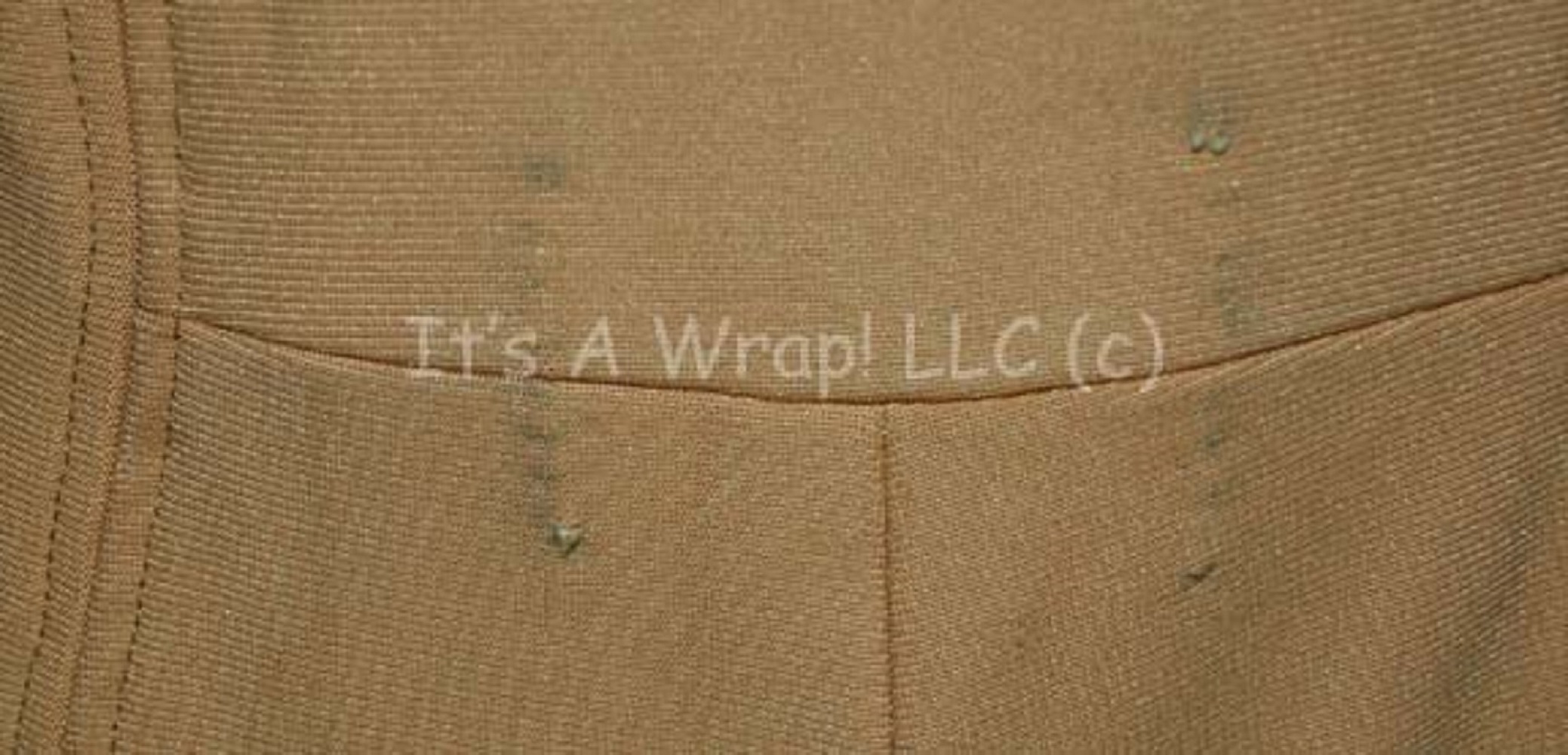
On this jumpsuit, the “perscan” device was removed, but remnants of thread remain where it was hand-sewn:
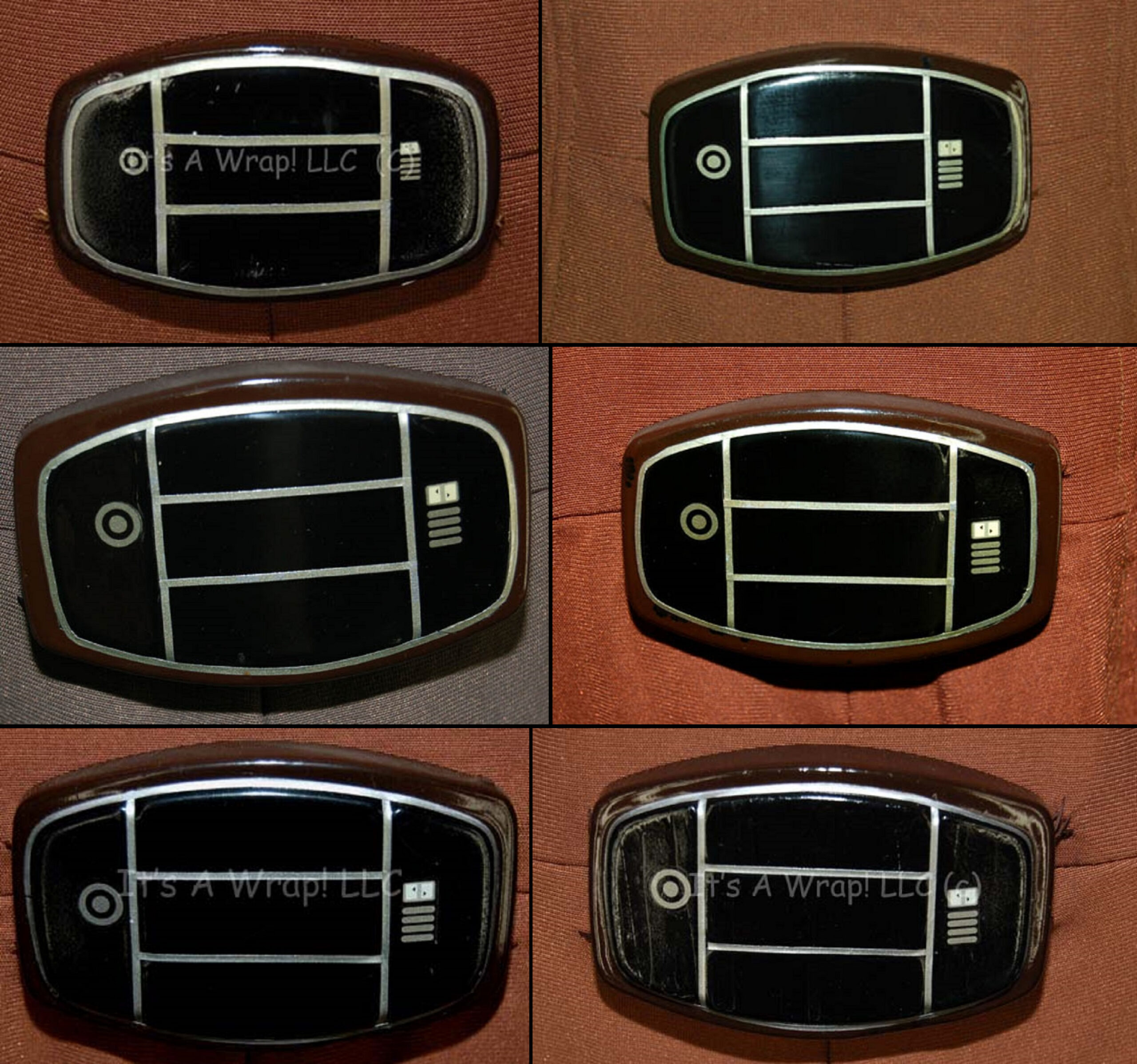
And on these detached “perscan” devices, the small holes on the sides can just barely be seen:
However, not all of the “perscan” devices were attached this way.
On these jumpsuits, there are clearly no holes or hand-sewing visible:
Unfortunately, as of the writing of this analysis, I don’t know how these “perscan” devices were attached; I have several theories, but no facts or even evidence.
If you own or have access to a screen-used “Class D” jumpsuit and are willing to send me some reference photos, I would love to hear from you!